
Clyde Fernandez’s Beneath the Pale Light
A Dream in Slow Motion
October 31, 2025
Article
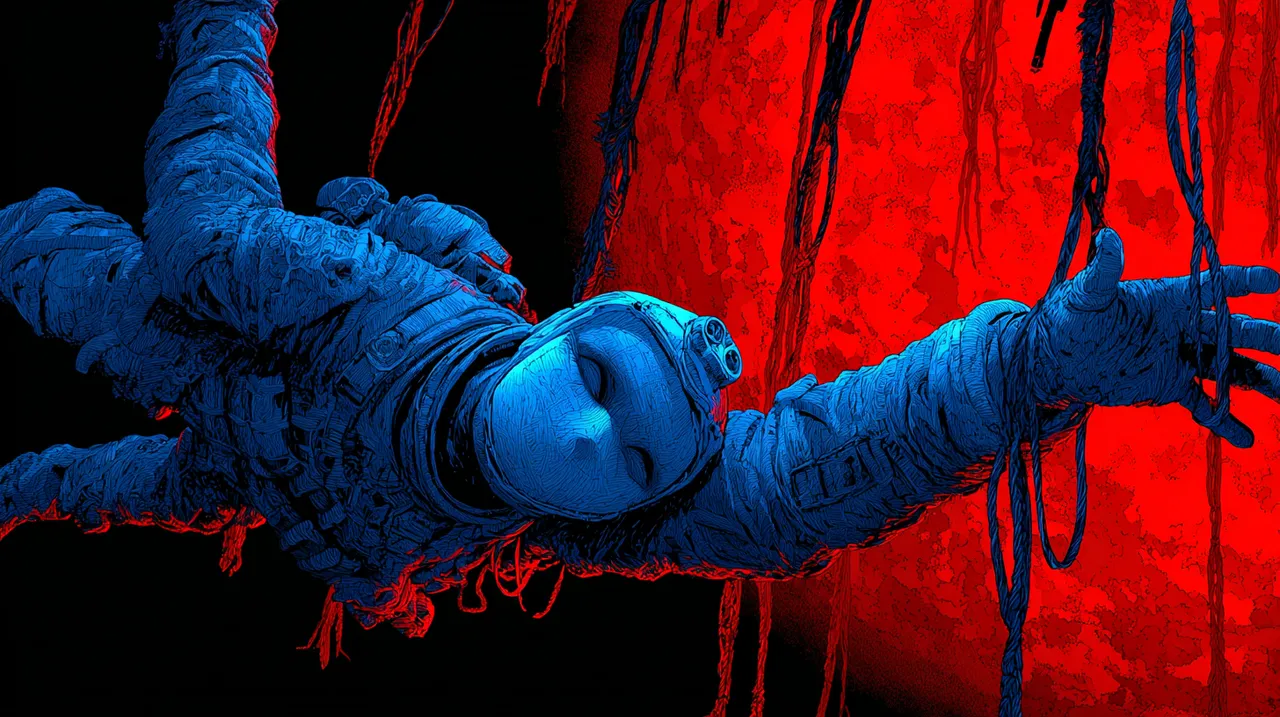
Some films tell stories; others whisper them. Beneath the Pale Light, by filmmaker Clyde Fernandez, belongs firmly to the second category — a delicate, haunting piece that feels more like a dream remembered than a narrative told. With patient pacing, painterly cinematography, and a deep emotional undercurrent, Fernandez creates a short film that invites viewers not to watch, but to feel.
At its core, Beneath the Pale Light is an exploration of grief and memory. There’s no exposition, no heavy dialogue — only fragments: a face half-lit by moonlight, a movement caught in reflection, the faint hum of something lost. Each shot seems suspended in time, as though the film itself were reluctant to move forward, afraid that doing so might erase the past it’s trying to hold onto. Fernandez uses this stillness to powerful effect. His imagery lingers — a dimly lit corridor, a window fogged by breath, a body dissolving into the light — turning the familiar into the otherworldly.
Visually, the film is stunning in its restraint. The cinematography is intentionally minimal, letting light and shadow do the emotional work. The titular “pale light” becomes both metaphor and motif — a representation of fading memory and illumination, of what is gone and what remains. Fernandez has an intuitive sense for visual rhythm, using contrast and negative space to make every frame feel like a painting. The result is an atmosphere thick with longing and quiet tension.
What sets Beneath the Pale Light apart from many indie shorts is its refusal to offer resolution. Fernandez doesn’t attempt to explain his imagery or clarify the emotional journey. Instead, he trusts his audience to inhabit the ambiguity. This open-endedness transforms the film into a shared space between filmmaker and viewer — one where interpretation becomes collaboration. It’s the kind of storytelling that lingers long after the credits fade, inviting you to revisit not for answers, but for resonance.
On Get Abyss, where independent filmmakers present bold work in competition and community, Beneath the Pale Light stands as a quiet counterpoint to spectacle. It reminds audiences that cinema’s greatest power lies not in what it shows, but in what it evokes. Fernandez’s film doesn’t chase attention; it earns it, drawing the viewer closer through silence and sincerity.
As audiences vote and engage on the platform, works like Beneath the Pale Light redefine what it means to compete in storytelling. Here, emotional honesty becomes the measure of impact, and subtlety becomes strength. For Fernandez, this project isn’t just a film — it’s an act of remembrance, a cinematic echo of something deeply human: the need to hold onto what fades.
In a world driven by noise and speed, Beneath the Pale Light dares to slow down. It asks viewers to listen — not to dialogue or sound design, but to the spaces between. It’s in those spaces that the heart of the film resides, flickering softly, like the last light of dusk.
To watch Beneath the Pale Light is to step into someone’s memory — or perhaps your own. Experience Clyde Fernandez’s luminous, melancholic masterpiece exclusively on Get Abyss, where films compete and viewers decide what deserves to be remembered.