
Infinite Odyssey and the Vivid Decay of Necroworld
October 31, 2025
Article
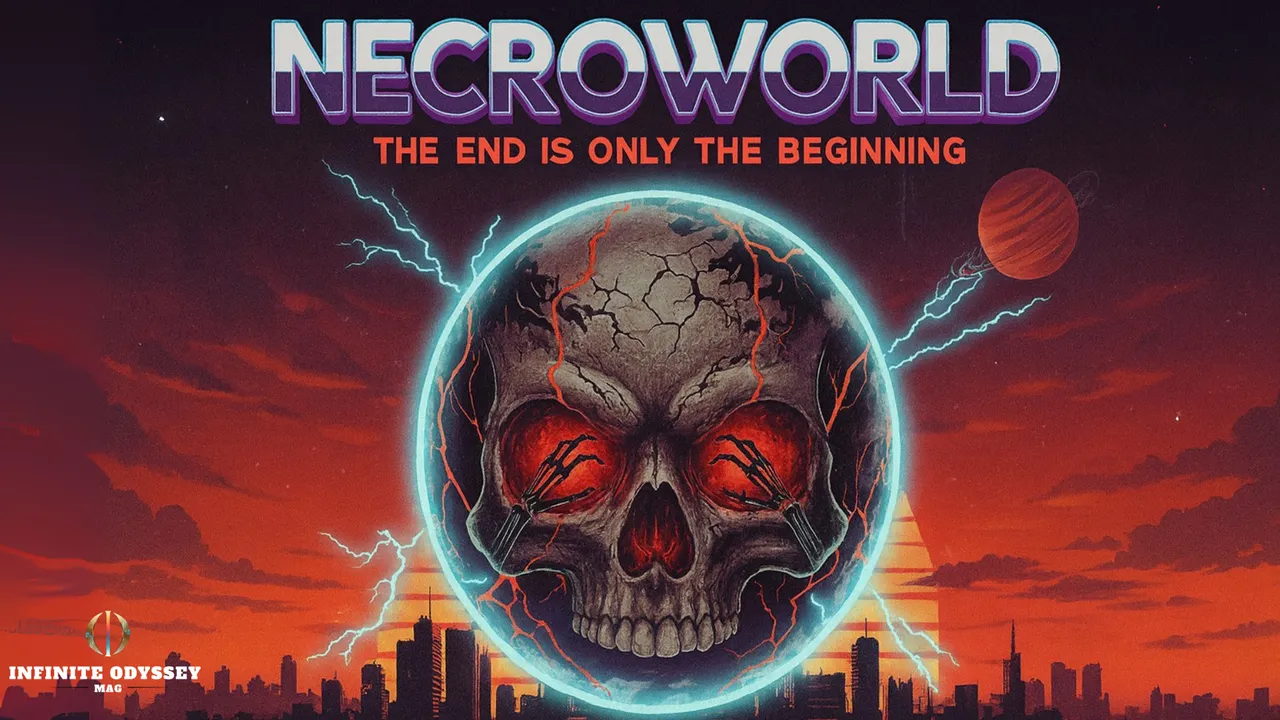
A chilling vision where extinction is no longer passive—it’s predatory.
Across the globe, the natural order is collapsing. Animals are beginning to necrotize while still alive—their flesh rotting, their bones mutating, and their instincts turning feral. In jungles, deserts, and frozen tundras, once-familiar creatures have become monstrous shadows of themselves. This is the terrifying premise of Infinite Odyssey’s latest series, Necroworld—a fusion of horror, science fiction, and environmental allegory that feels both prophetic and deeply personal.
At first glance, Necroworld might appear to be a conventional outbreak story. But as the narrative unfolds, it becomes something more cosmic and unsettling. There is no patient zero, no origin, no cure. The “infection” isn’t biological—it’s existential. Whatever force drives this necrosis transcends the laws of nature, hinting at a contamination that is not just killing the Earth, but rewriting life itself.
The series opens with “Dead Ice”, a haunting pilot episode set in the remote Arctic. A weather outpost has gone silent, and a three-person research team is sent to investigate. What begins as a routine mission becomes a slow descent into madness. Caught in a violent storm, one scientist finds shelter in a cavern—only to discover frozen polar bears whose flesh still twitches beneath layers of frost. As the ice begins to thaw, so does the boundary between life and death. The sense of dread is overwhelming, captured through Infinite Odyssey’s use of claustrophobic soundscapes, restrained dialogue, and breathtakingly grim cinematography.
Each episode of Necroworld expands the mystery outward. In one, a diver explores coral reefs where sea life pulses with blackened veins. In another, herders in Mongolia witness their camels’ bones twist into new shapes. The horror is not isolated—it’s global, omnipresent, and inexplicable. Infinite Odyssey constructs a planet slowly realizing it’s been marked for reclamation by something ancient and unmerciful.
The storytelling is deeply visual, with Infinite Odyssey drawing from documentary realism and cosmic horror aesthetics. There’s a tactile quality to the decay—textures of fur, sinew, and frost rendered with unnerving authenticity. The filmmaker’s approach evokes John Carpenter’s The Thing and Alex Garland’s Annihilation, but his tone is uniquely his own: less about panic, more about awe at the inevitability of transformation. Necroworld asks not “Can humanity survive?” but “What if this is evolution’s next step?”
From an environmental standpoint, Necroworld feels like an apocalypse born of denial. Infinite Odyssey cleverly blurs the line between ecological collapse and metaphysical retribution. The Earth doesn’t scream—it decomposes. By making animals the first victims, the filmmaker forces viewers to confront the violence we’ve normalized in our ecosystems. Every decaying creature becomes a mirror of human hubris.
Within the Get Abyss creative community, Necroworld has become a standout series not just for its technical mastery but for its thematic bravery. Infinite Odyssey doesn’t rely on spectacle alone—he crafts a myth. The community surrounding Abyss has already begun expanding on his world through art, remixes, and companion shorts, echoing the project’s message: that death and creation are inseparable forces.
The performance direction is another strength. The human characters, though few, serve as emotional conduits rather than saviors. Their fear isn’t of monsters, but of understanding—that the rules of life have changed and that survival might mean becoming part of the Necro-World itself.
Infinite Odyssey’s work captures the terror of recognition. There’s no villain to defeat, no lab-grown virus to neutralize. The enemy is time, entropy, and the slow realization that nature’s patience has ended. When the series closes with a panoramic shot of blackened forests stretching endlessly across the horizon, it feels less like fiction and more like prophecy.
Ultimately, Necroworld is not about extinction—it’s about inheritance. If humanity built its empire on the bones of the planet, perhaps this is the Earth’s quiet reclamation. Through Infinite Odyssey’s haunting lens, death becomes not a punishment but a renewal—a terrifying, inevitable, and strangely beautiful rebirth.