
JoshTheTaleWeaver’s MONOLITH
The Weight of the Unknown
October 31, 2025
Article
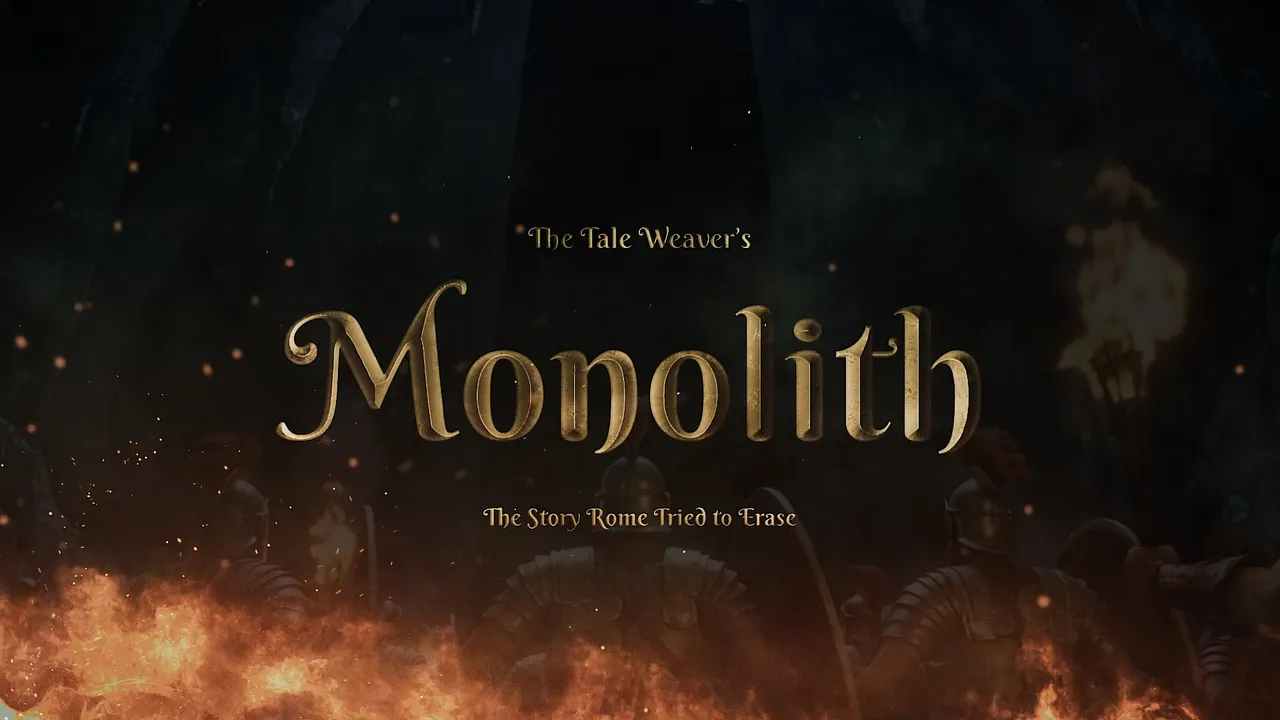
In MONOLITH, JoshTheTaleWeaver transforms mystery into meditation. A minimalist sci-fi short where silence meets awe, the film explores humanity’s confrontation with the incomprehensible. Stream it now on Get Abyss.
The desert stretches endlessly. A single shape interrupts the horizon — a monolith, motionless yet heavy with meaning. From the first frame, JoshTheTaleWeaver’s MONOLITH announces itself as a film of atmosphere and implication, a short that trades exposition for experience. It is not a film that tells you what to think; it invites you to look, to listen, and to feel the immensity of what you don’t understand.
The premise is simple but potent: a lone figure encounters an ancient structure of unknown origin. What unfolds is less an event than a reckoning — between human fragility and the vastness of the unknown. TaleWeaver captures this encounter with poetic minimalism. Wide, still compositions dominate the frame, echoing both the grandeur of classic science fiction and the intimacy of a personal revelation. The result is a cinematic paradox: enormous in scale, yet deeply inward.
Sound plays as crucial a role as image. The sparse ambient score hums beneath the silence like a heartbeat under static, grounding the immaterial in something human. Every rustle of wind or crunch of sand is weighted with significance. In a landscape stripped of dialogue, these small sounds become sacred. They remind us that even in isolation, we are never free from the physical world’s whisper.
Thematically, MONOLITH draws from the rich lineage of speculative cinema — echoes of Tarkovsky’s Solaris, Kubrick’s 2001: A Space Odyssey, and the meditative tone of early Terrence Malick. Yet TaleWeaver’s vision feels distinctively modern, shaped by digital textures and the intimacy of independent filmmaking. The monolith itself, rendered with practical subtlety, becomes less an object and more an idea: a symbol of human curiosity, fear, and the compulsion to seek meaning where there may be none.
What makes MONOLITH remarkable is its refusal to provide answers. Instead of explaining the artifact, TaleWeaver focuses on the emotional fallout of encountering the incomprehensible. The protagonist’s silent awe — equal parts terror and transcendence — mirrors our own. It’s a cinematic dialogue between the viewer and the void. This humility before mystery transforms the short from simple sci-fi into spiritual allegory.
Visually, TaleWeaver achieves an impressive balance between austerity and beauty. The camera lingers on textures — sand, stone, skin — as though searching for patterns that might decode the enigma. The lighting, pale and diffused, softens the world into abstraction. By the film’s midpoint, it’s unclear whether we are watching reality, memory, or metaphor. That ambiguity is intentional. MONOLITH invites surrender: to image, to rhythm, to unknowing.
Premiering on Get Abyss, MONOLITH exemplifies what the platform celebrates — independent filmmaking driven by vision rather than formula. In a competitive space where audiences determine what resonates, TaleWeaver’s film stands out not by shouting the loudest but by saying the least. It trusts its audience to meet it halfway, to let silence speak.
As the credits roll, viewers are left with more questions than they began with — and that’s the point. MONOLITH is not about revelation; it’s about recognition. Recognition that wonder and fear are two sides of the same instinct: to look up at something greater and realize how small we are. It’s an act of humility disguised as science fiction.
For those seeking cinematic contemplation — a film that breathes, pauses, and reverberates long after it ends — MONOLITH offers an experience that is as mysterious as it is moving.
Watch JoshTheTaleWeaver’s MONOLITH exclusively on Get Abyss, where independent films compete for your imagination and remind us that the unknown is not meant to be solved — only seen.