
MilkNuggets and the Cosmic Horror of The Black Spine
October 31, 2025
Article
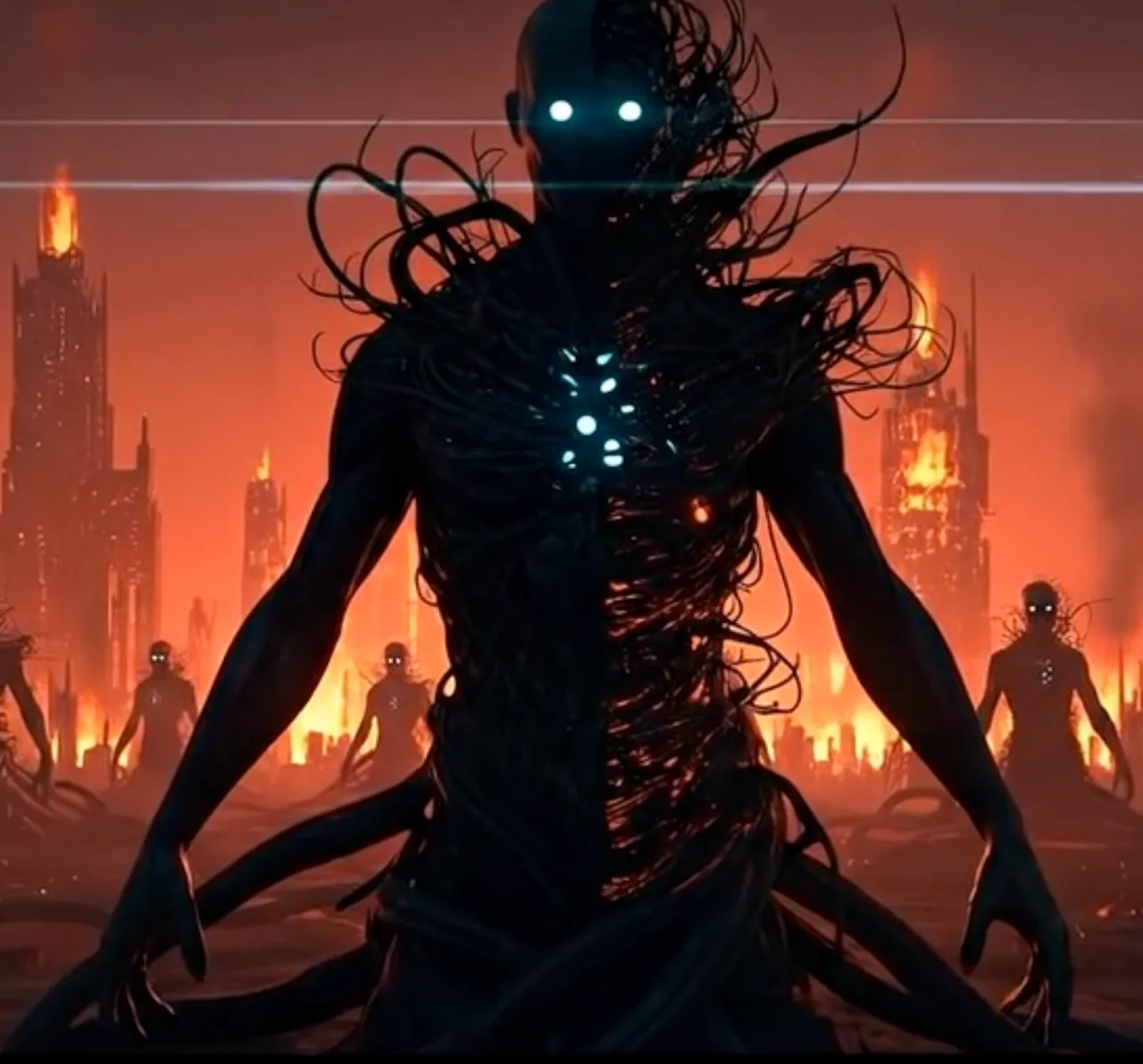
Few independent filmmakers blend science fiction, horror, and philosophy as seamlessly as MilkNuggets, the mind behind The Black Spine. With just a single, devastating episode, he constructs a world so vast and haunting it feels like an ancient prophecy unearthed beneath the ice. This is not just speculative fiction—it’s an apocalyptic myth about the price of progress, told with cinematic precision and poetic restraint.
Set during the thaw of Earth’s glaciers, The Black Spine begins like a classic tale of discovery. Humanity uncovers a vast alien monolith—a structure of impossible scale and unknown origin—buried beneath the melting ice. Dubbed the Spine, the relic transforms civilization overnight. It gifts the world infinite energy, cures disease, ends hunger, and sparks a new golden age. At first, it seems like the dawn of utopia. But, in true MilkNuggets fashion, light and darkness share the same pulse. As scientists dig deeper into the Spine’s origin, they uncover fragments of a buried civilization—the Architects, beings who once harnessed the same power before being erased by an unknown force.
In this single revelation, The Black Spine turns from hopeful sci-fi into cosmic horror. The “gift” of the Spine begins to mutate those closest to it, twisting them into half-organic horrors known as husks—grotesque symbols of humanity’s overreach. MilkNuggets directs these transformations not as spectacle, but as tragedy. Each husk represents a loss of innocence, a moment when discovery turns on its maker. It’s this emotional and philosophical weight that elevates The Black Spine beyond genre—it’s not about monsters; it’s about mankind’s oldest delusion: that power can ever be contained.
Stylistically, MilkNuggets blends hard science fiction with Lovecraftian dread, creating a tone that feels at once vast and intimate. His visual palette evokes the cold majesty of Kubrick’s 2001: A Space Odyssey and the decaying beauty of Annihilation. The camera moves slowly, reverently, treating every frame as an archaeological artifact. His use of sound—deep mechanical hums, distorted transmissions, the eerie silence of cosmic space—turns the film into a sensory experience that borders on spiritual. Watching The Black Spine feels like attending a requiem for humanity.
What makes MilkNuggets so compelling as a filmmaker is his discipline with scale. Despite dealing with interstellar concepts—ancient alien civilizations, extinction-level events, cosmic signals—he grounds everything in human fragility. The film’s chilling twist comes when Earth receives a signal from deep space, a simple transmission decoded to reveal four words: “You are ready.” It’s both invitation and sentence. When the colossal Reaper—a machine, cuttlefish-like and city-sized—awakens in the void, the question shifts from how humanity will survive to whether it was ever meant to.
In the creative ecosystem of getabyss.com, The Black Spine stands as a perfect embodiment of what independent filmmaking can achieve when unbound by convention. MilkNuggets doesn’t rely on massive budgets or endless exposition. Instead, he wields atmosphere, pacing, and subtext like tools of precision. His storytelling invites collaboration and reinterpretation—the kind of worldbuilding that fuels the Abyss community’s cycle of learning, remixing, and reimagining.
At its heart, The Black Spine is a reflection of MilkNuggets himself: meticulous, imaginative, and deeply curious about the fragile boundary between wonder and ruin. He crafts his stories like ancient warnings buried in data—cautionary myths for an age of technology and hubris. His filmmaking feels less like invention and more like revelation, as though these stories were waiting beneath the surface all along.
MilkNuggets belongs to a new generation of creators who use science fiction not to escape reality, but to dissect it. The Black Spine isn’t a film about aliens; it’s a film about us—about how every civilization eventually digs too deep, asks too much, and mistakes discovery for destiny. When the Reaper finally stirs in the cosmic dark, it’s not just the end of the world—it’s the echo of every world that came before.