
20 episodes
jollybusyperch
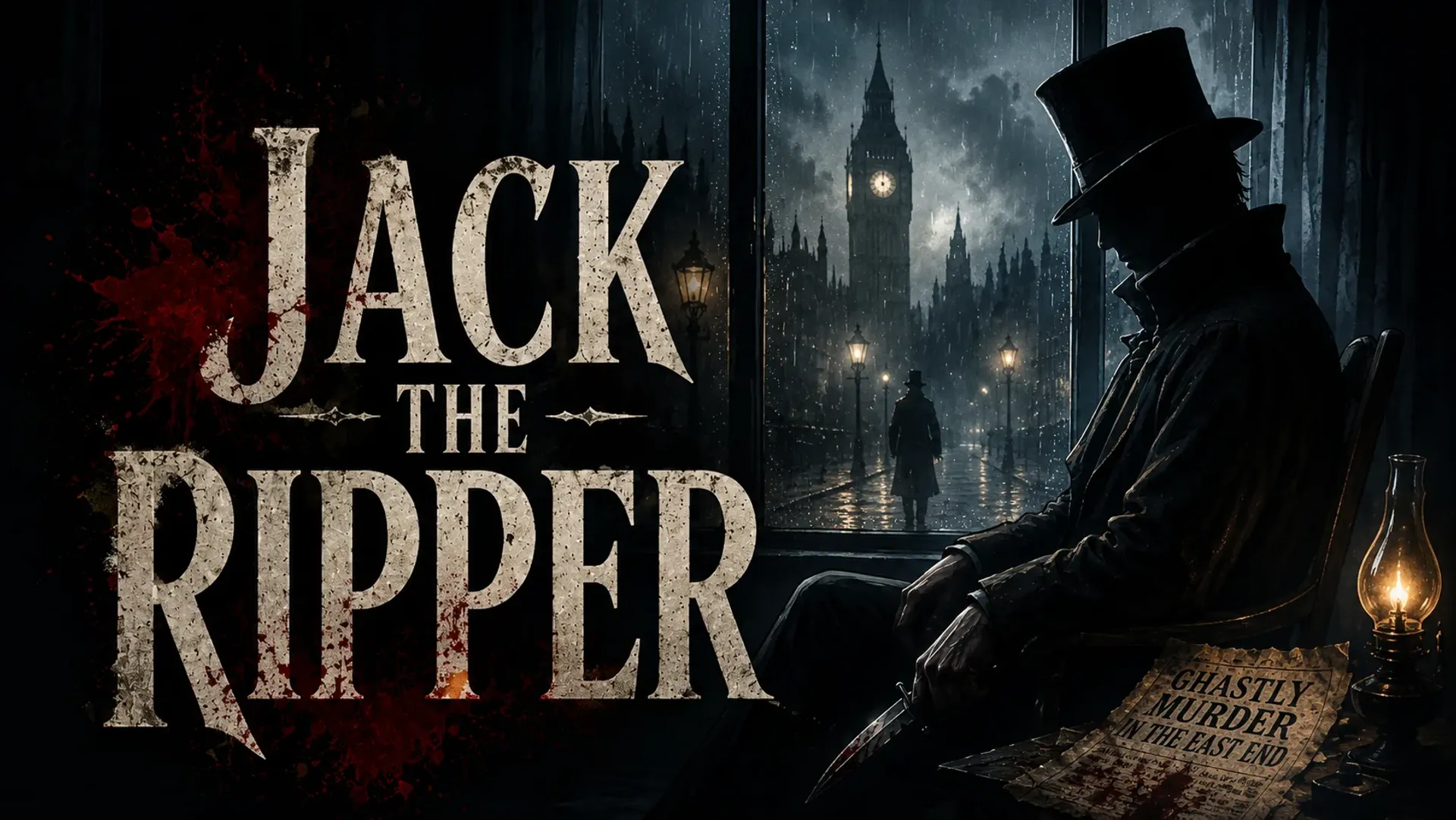
Five women. Eleven weeks. Half a square mile. No arrest. No trial. No name. Jack the Ripper: The First Serial Killer of the Modern Era traces the case that invented serial murder as a modern concept — a nameless killer who operated inside a seventy-seven-day window in the autumn of 1888, butchering five prostitutes in the gaslit back yards and cobblestone courts of Whitechapel, removing their organs in the dark with a precision that divided Scotland Yard's own surgeons, and vanishing into the most densely surveilled half-mile in British policing history without leaving a fingerprint, a footprint, or a drop of his own blood. Told entirely through narration across twenty episodes, this micro-drama series follows the case from both sides of the gas lamp — through the streets where 76,000 people slept in beds rented by the hour, through the methodical brutality that escalated from thirty-nine stab wounds on a tenement landing to a two-hour disembowelment behind a locked door, and through the investigation led by Inspector Frederick Abberline, a man who knew every rookery and doss-house keeper by name and still could not catch what was walking past him in the fog. Unlike every other killer in this series, Jack the Ripper was never identified, never charged, and never stopped by police work. He wrote two letters that gave the case its name and the press its greatest circulation spike since the Crimean War. He mailed half a human kidney to the president of a citizen patrol. He left a single chalk sentence on a tenement wall — and the Commissioner of Police personally ordered it erased before dawn. He was caught by no one. The case files were sealed for ninety-nine years. Over a hundred suspects have been named across a century of investigation. He has been a barrister, a barber, a royal duke, a Polish hairdresser, an American quack, and Lewis Carroll. He has never been a man with proof beside his name.
20 episodes
1:03
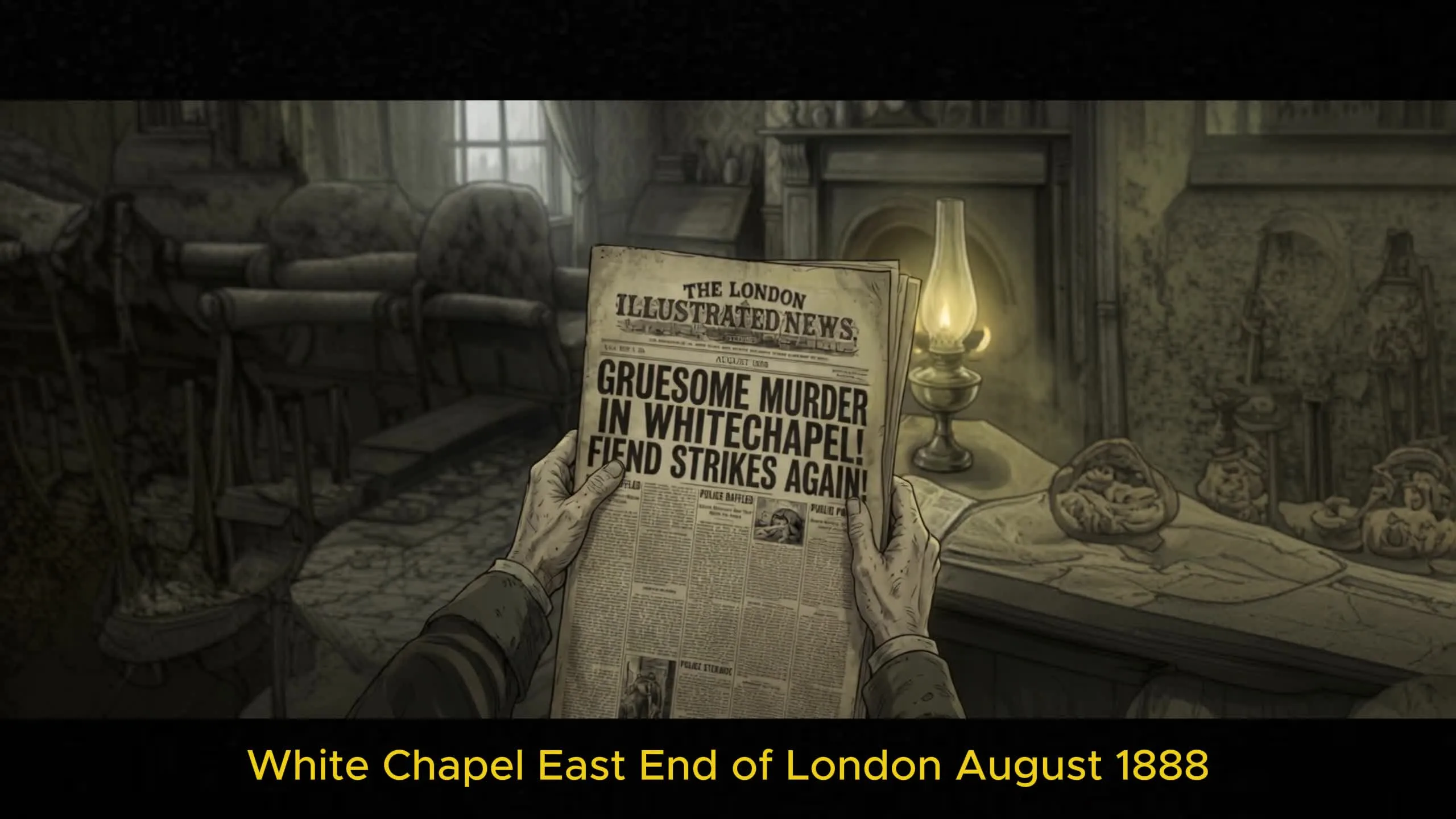
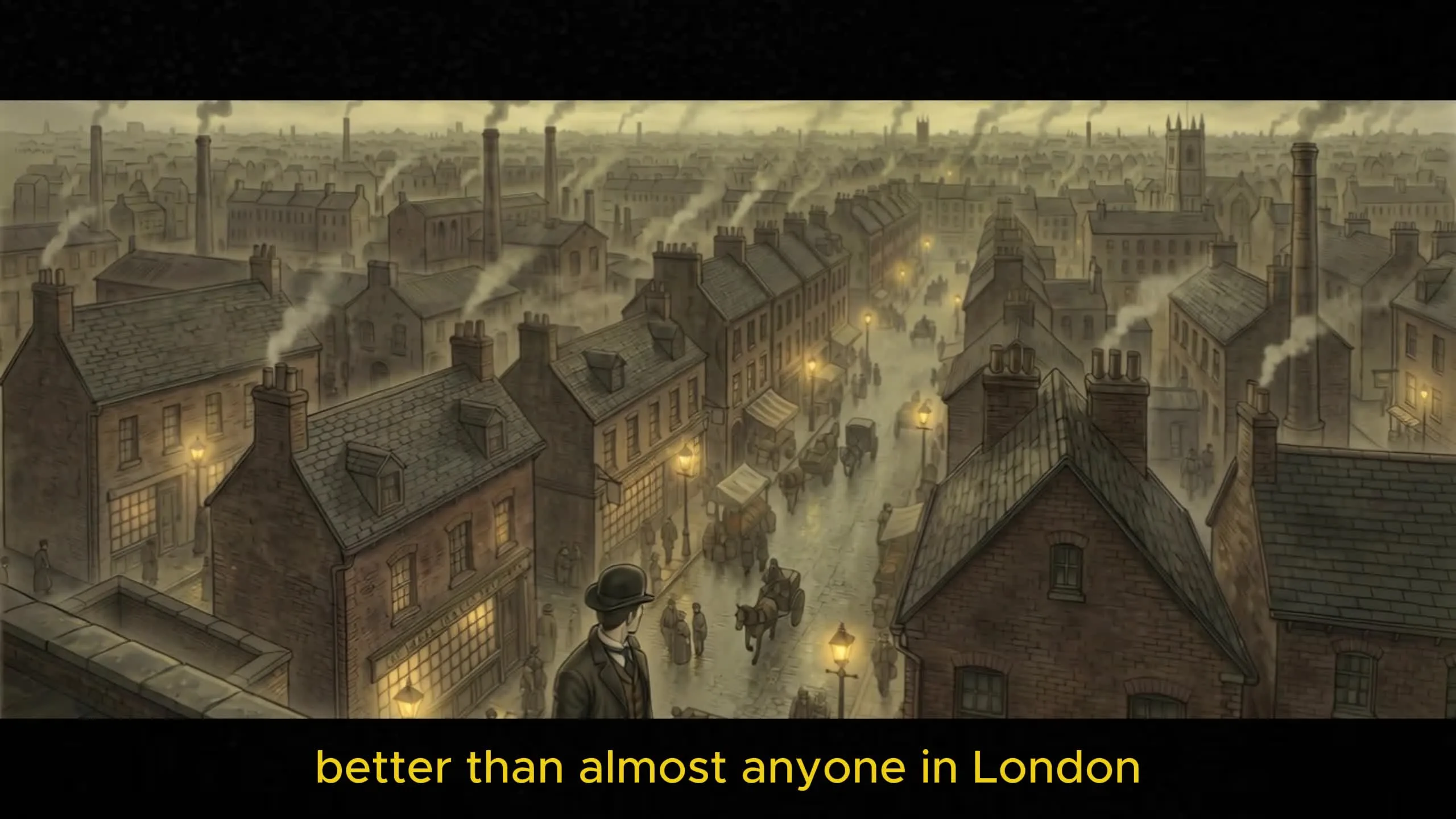
Whitechapel. East End of London. August 1888. Half a square mile of brick, soot, gas-lamps, and rooming houses held 76,000 people, most of them sleeping in doss-house beds rented by the hour at fourpence a night. The streets ran open sewers. Children worked at six. Tuberculosis killed twenty residents a week. Sir Charles Warren, Commissioner of the Metropolitan Police, called it the worst quarter mile in the British Empire. The local force was H Division — 587 officers for nearly a quarter million residents — and the streets were lit by paraffin gas-lamps spaced eighty yards apart, leaving fifty yards of complete blackness between each one. In those fifty yards, a woman could be killed and emptied without anyone hearing. He had been walking these streets long before he started. He knew which lamps were broken, which constables walked which beats, which yards had a back exit. He was patient, local, and preparing. On August 7, 1888, at twenty minutes past two in the morning, a soldier’s widow named Martha Tabram became the rehearsal.
1:07
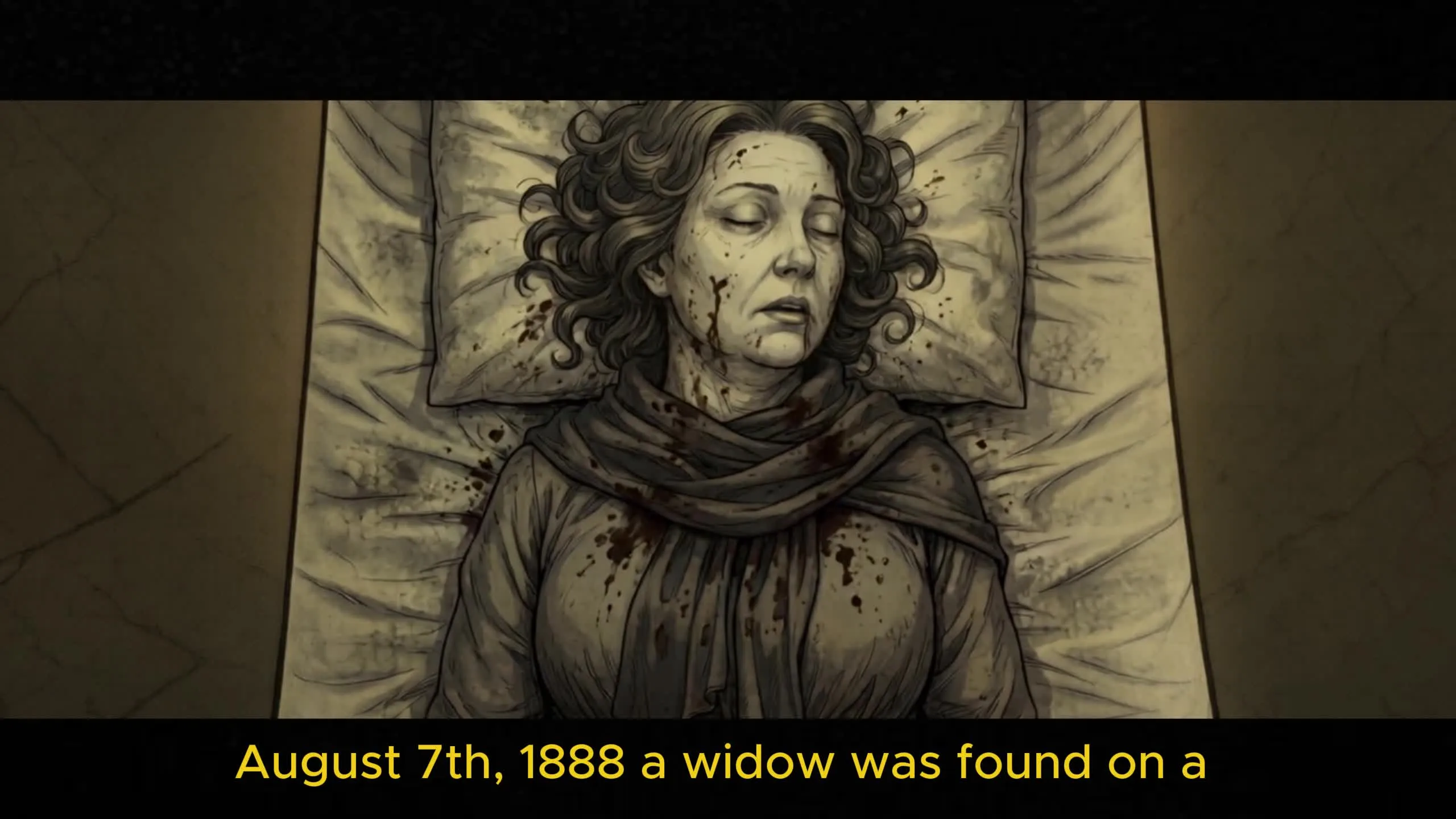
August 7, 1888. George Yard Buildings, off Commercial Street, Whitechapel. A cab driver named Alfred Crow climbed the stairs of a four-storey tenement at 3:30 a.m. and stepped over what he thought was a sleeping woman on the first-floor landing. At 5 a.m. a labourer named John Reeves came down the same stairs and noticed the pool of blood. Martha Tabram, thirty-nine, a soldier’s widow and prostitute, had been stabbed thirty-nine times — in the throat, the chest, the abdomen, the genitals. Most of the wounds had been inflicted after death. Two different weapons had been used: one an ordinary pocket knife, the other a longer blade, possibly a bayonet. Inspector Edmund Reid of H Division CID took the case. He canvassed every soldier on leave that week and interviewed every prostitute on the strip. He had no fingerprint science, no blood typing, no photographs of the body in place. Three weeks later, on August 31, he was called to a stable gateway on Buck’s Row. The body there was different. The cuts were different. They were perfect.
1:01
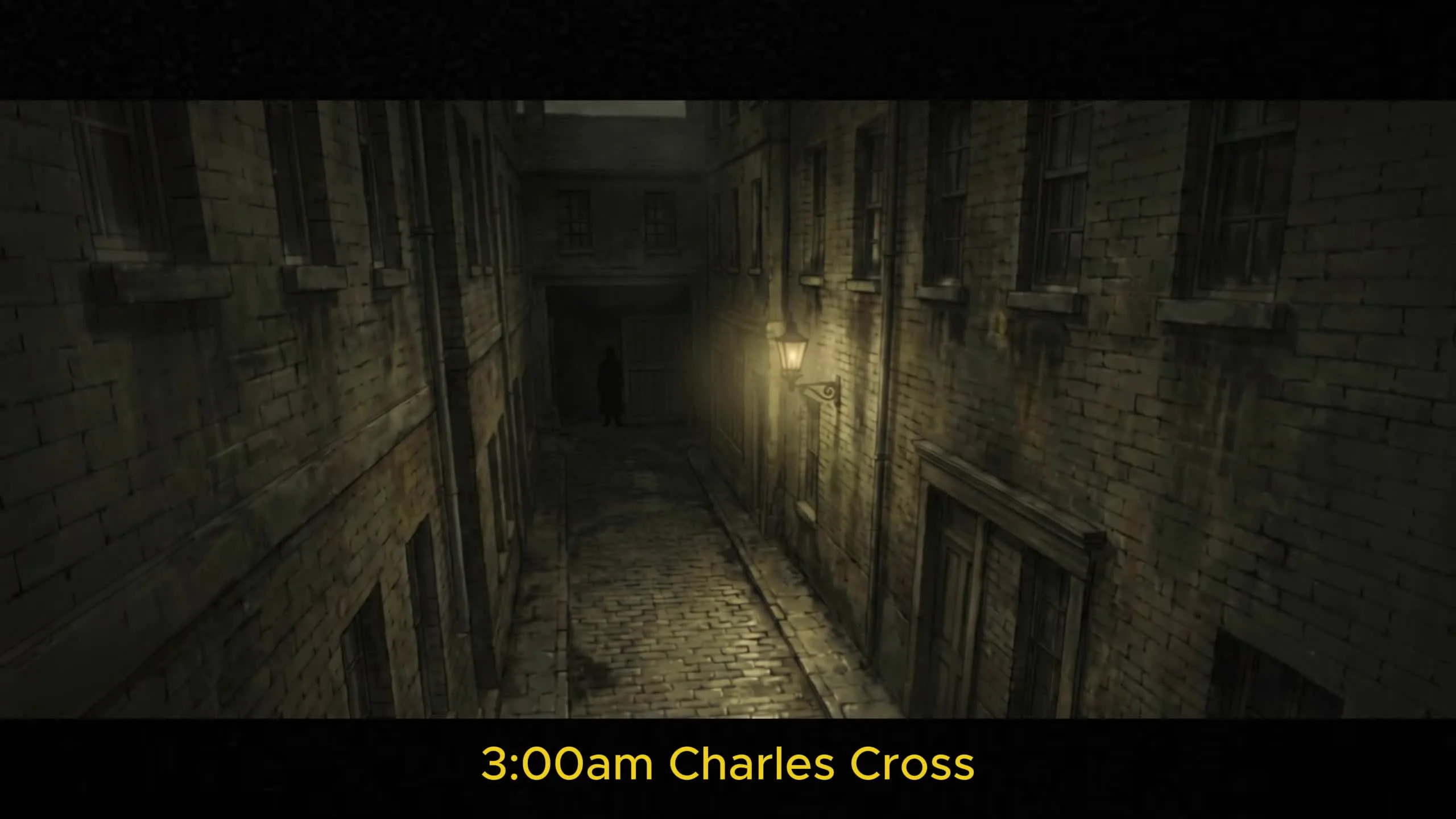
August 31, 1888. 3:40 a.m. Buck’s Row, Whitechapel. A carman named Charles Cross, walking to work at Pickfords delivery yard, saw a shape in a stable gateway and thought it was a tarpaulin. Then he saw the legs. He flagged down another carman, Robert Paul. They examined her in the dark and thought she was drunk. Police Constable John Neil arrived with his lantern and saw the truth — her throat had been cut twice, both wounds running ear to ear, the second severing her windpipe and going almost through to the spine. She had been disembowelled. The cuts had been made with anatomical precision. Her body was still warm. She was identified at the mortuary as Mary Ann ‘Polly’ Nichols, forty-three, five teeth missing. She had been seen alive at 2:30 a.m. by another prostitute, who said Polly didn’t have her doss money yet. Polly had laughed and said she’d get it soon enough — look what a jolly bonnet she had. She had been killed within an hour of saying it. Detective Inspector Frederick Abberline of Scotland Yard arrived in Whitechapel that afternoon. He had never seen wounds like these.
1:02
Inspector Frederick George Abberline. Forty-five years old. Originally from Dorset. Joined the Metropolitan Police in 1863 and spent fourteen years working H Division before transferring to Scotland Yard the previous year. He knew the rookeries, the doss-house keepers by name, and the slang. He set up a temporary office at Leman Street Police Station with three inspectors under him — Henry Moore, Walter Andrews, and a twenty-five-year-old detective constable named Walter Dew who would later become the man who caught Dr. Crippen. Abberline’s method was shoe leather. He interviewed every prostitute on the strip between Whitechapel Road and Commercial Street. He interviewed every butcher, slaughterman, and surgeon within a mile. He had detectives shadow every man with a known history of violence against women. He had no fingerprints, no blood science, no photographs of the scene. The killer had left no shoe prints, no fibres, not a drop of his own blood. He had walked in, killed, and walked out. Eight days later, Abberline received a 6 a.m. telegram — a second body had been found in the back yard of 29 Hanbury Street. He had not even finished interviewing the first set of witnesses.
1:01
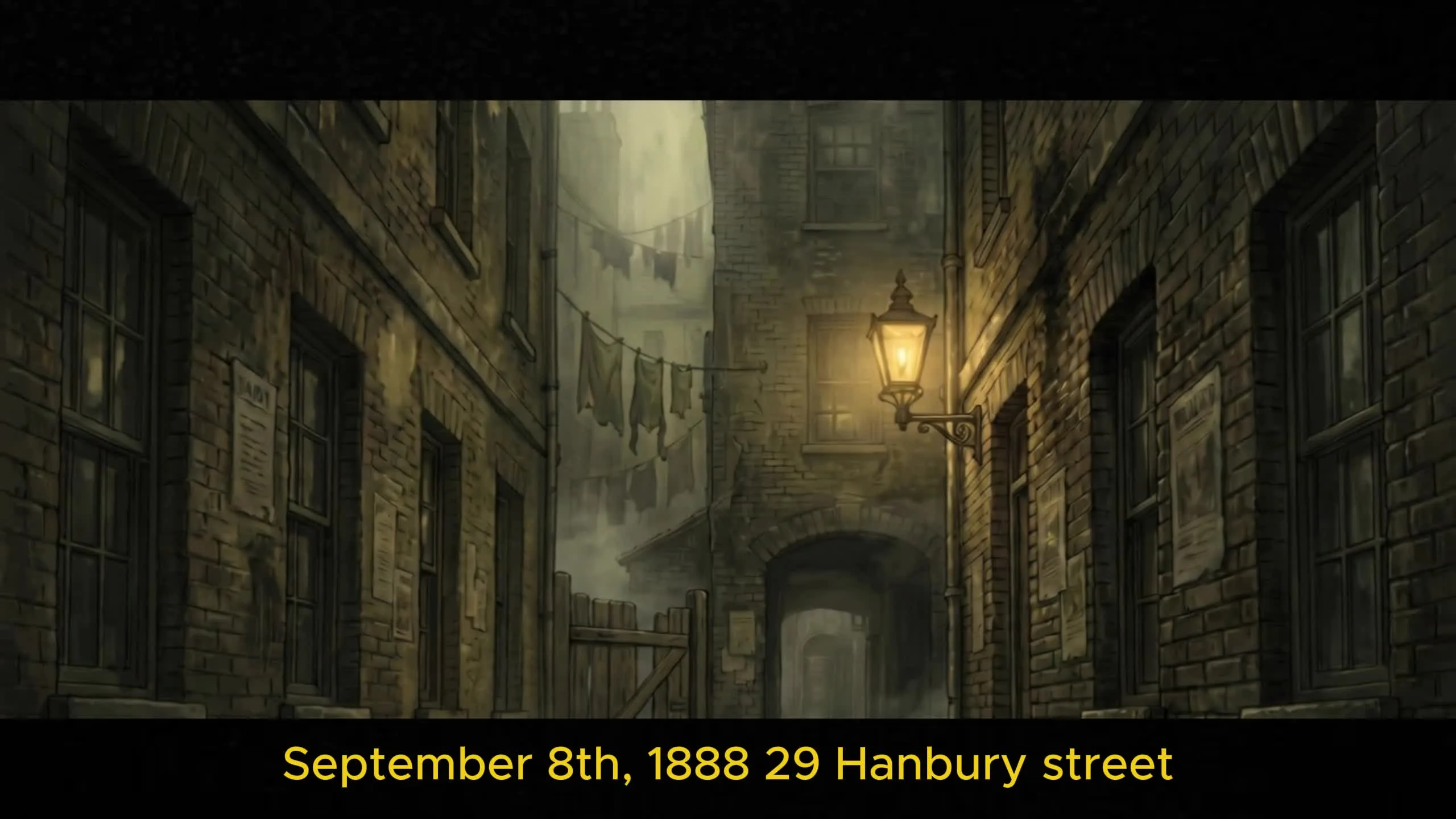
September 8, 1888. 29 Hanbury Street, Whitechapel. A four-storey lodging house with a small back yard between the rear steps and a wooden fence. At 5:55 a.m., a market porter named John Davis came down the stairs to use the privy, stopped in the doorway, and saw Annie Chapman — forty-seven, prostitute, doss-house resident — lying between the steps and the fence. Her throat had been cut ear to ear. Her abdomen had been laid open. Her intestines had been pulled out and placed over her left shoulder. Her uterus and parts of her bladder had been removed and taken away. Dr. George Bagster Phillips, police surgeon for H Division, concluded the killer had anatomical knowledge — possibly that of a surgeon, possibly that of a butcher. The mutilation had taken at most fifteen minutes. Annie had been seen alive at 5:30 a.m. by a witness named Elizabeth Long, talking to a man in a dark deerstalker hat at the front of the building. He had killed her, opened her, removed her organs, and walked out through Hanbury Street past dozens of waking houses in under thirty minutes. He was not running.
0:57
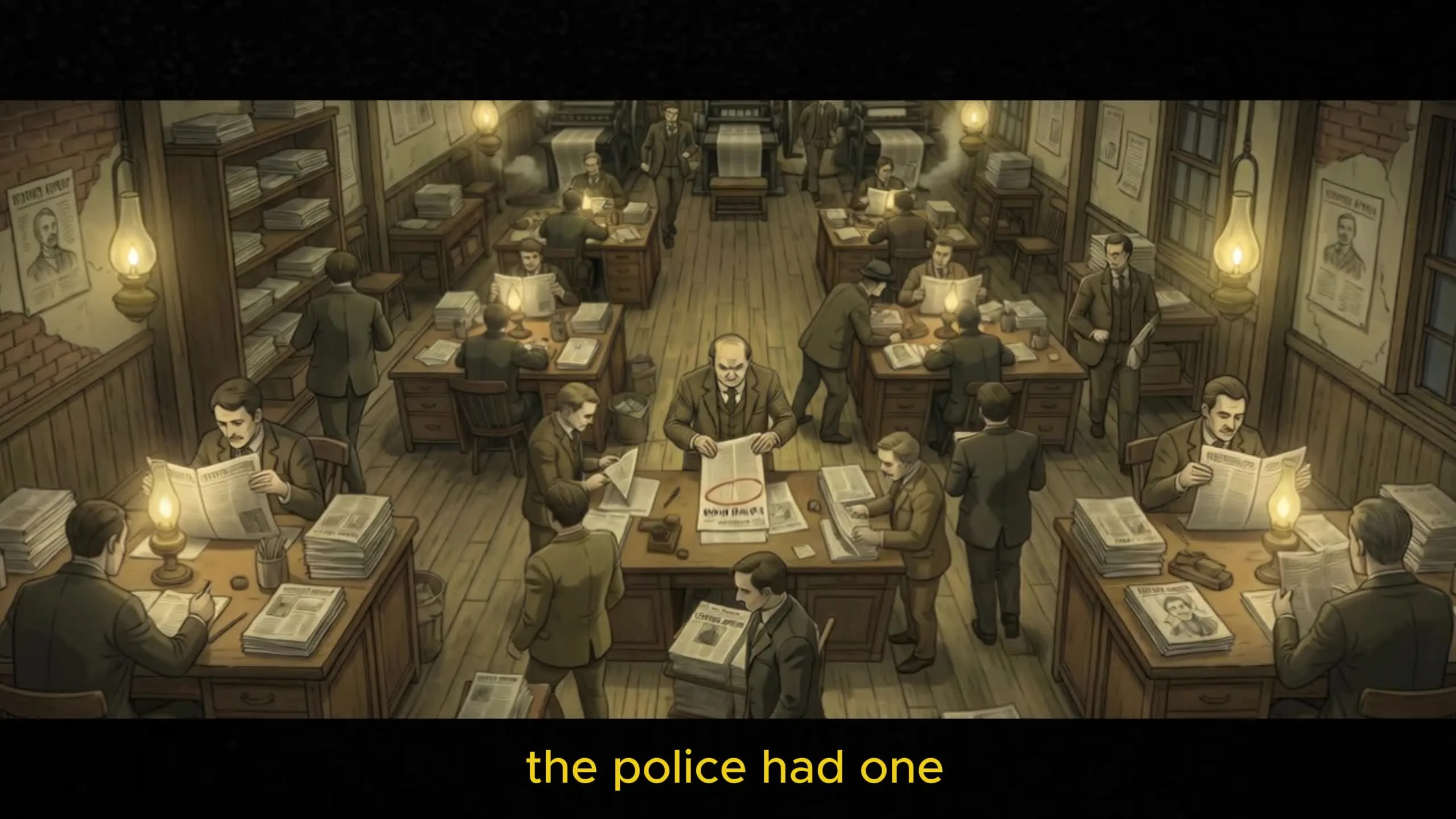
Early September 1888. The press needed a name. The Star, a halfpenny evening paper, published an article describing a Jewish slipper-maker who beat local prostitutes and called him ‘Leather Apron.’ Within forty-eight hours every newspaper in London was running the story. Mobs roamed Whitechapel attacking Jewish residents, smashing shop windows, demanding any Jewish-looking man explain himself. The Metropolitan Police arrested a man named John Pizer at his Mulberry Street home — a Jewish bootmaker with a documented mental illness who sometimes wore a leather apron because he worked with leather. Detective Sergeant William Thick questioned him for hours. Pizer had alibis for every murder — his sister’s house, a coffee stall, a fire — and every alibi checked out. He was released without charge. His name had already been printed in every newspaper in Britain. He sued two papers for libel and won fifty pounds from each. The press needed a better name for the killer. Within three weeks, the killer himself would supply it.
1:08
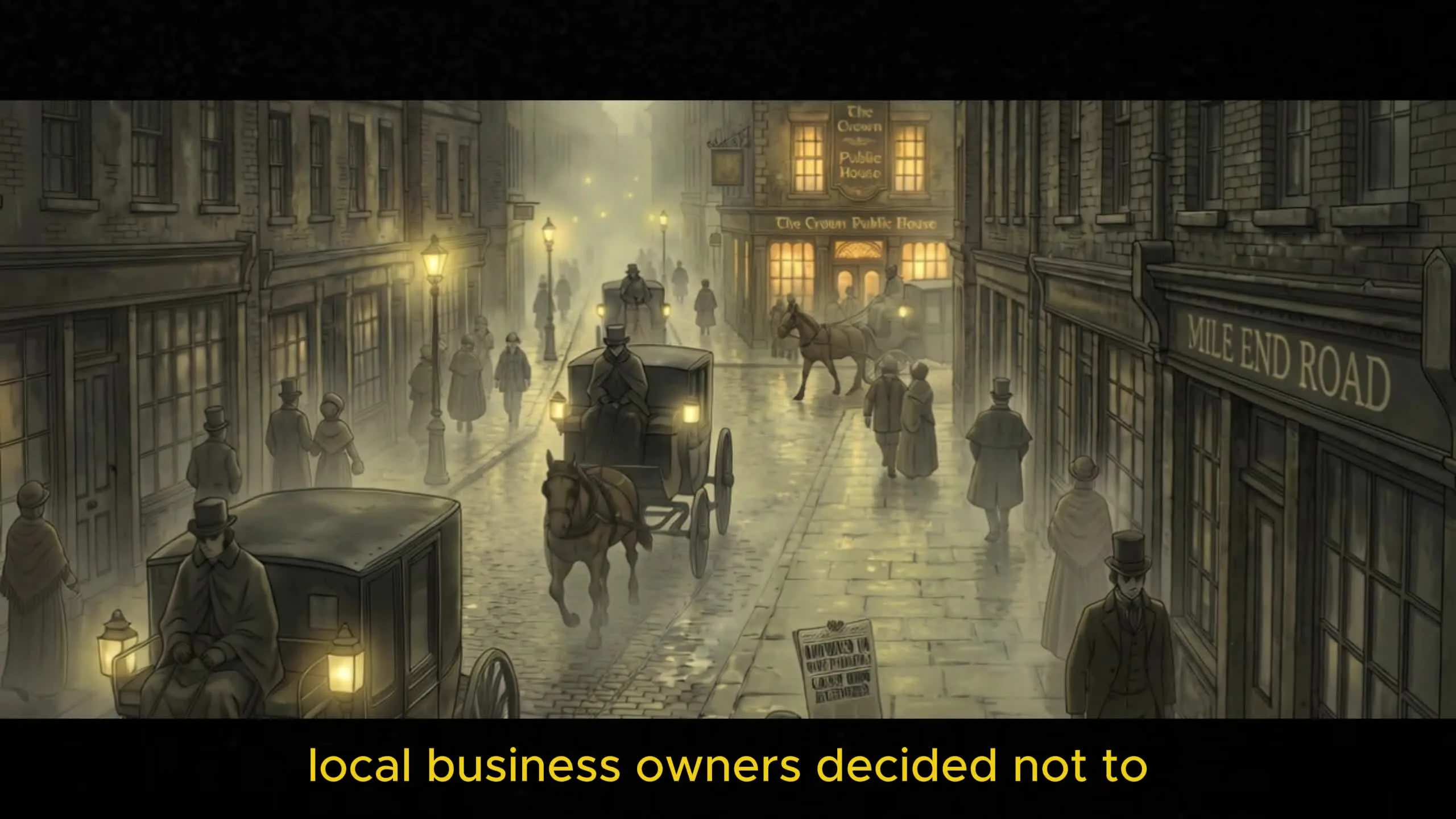
September 10, 1888. The Crown Public House, Mile End Road. Sixteen Whitechapel businessmen met to discuss the killings and formed the Whitechapel Vigilance Committee under the presidency of George Lusk, a forty-nine-year-old builder and decorator. They hired ex-soldiers and retired constables at a shilling a night, issued whistles, torches, and stout walking sticks, raised funds from local businesses, and posted reward notices on every street corner offering one hundred pounds for information leading to capture. The patrols began on September 12 and walked in pairs from midnight to dawn. They saw nothing. They heard nothing. The killer continued to operate beneath them. Inspector Abberline met privately with Lusk and told him the patrols would help. He did not tell him the patrols were also driving the killer’s movements — every footstep on cobblestones at 2 a.m. now belonged to someone with a club and a whistle. The Vigilance Committee would last six months and never see him. But on October 16, George Lusk would open a small cardboard box mailed to his home.
1:03
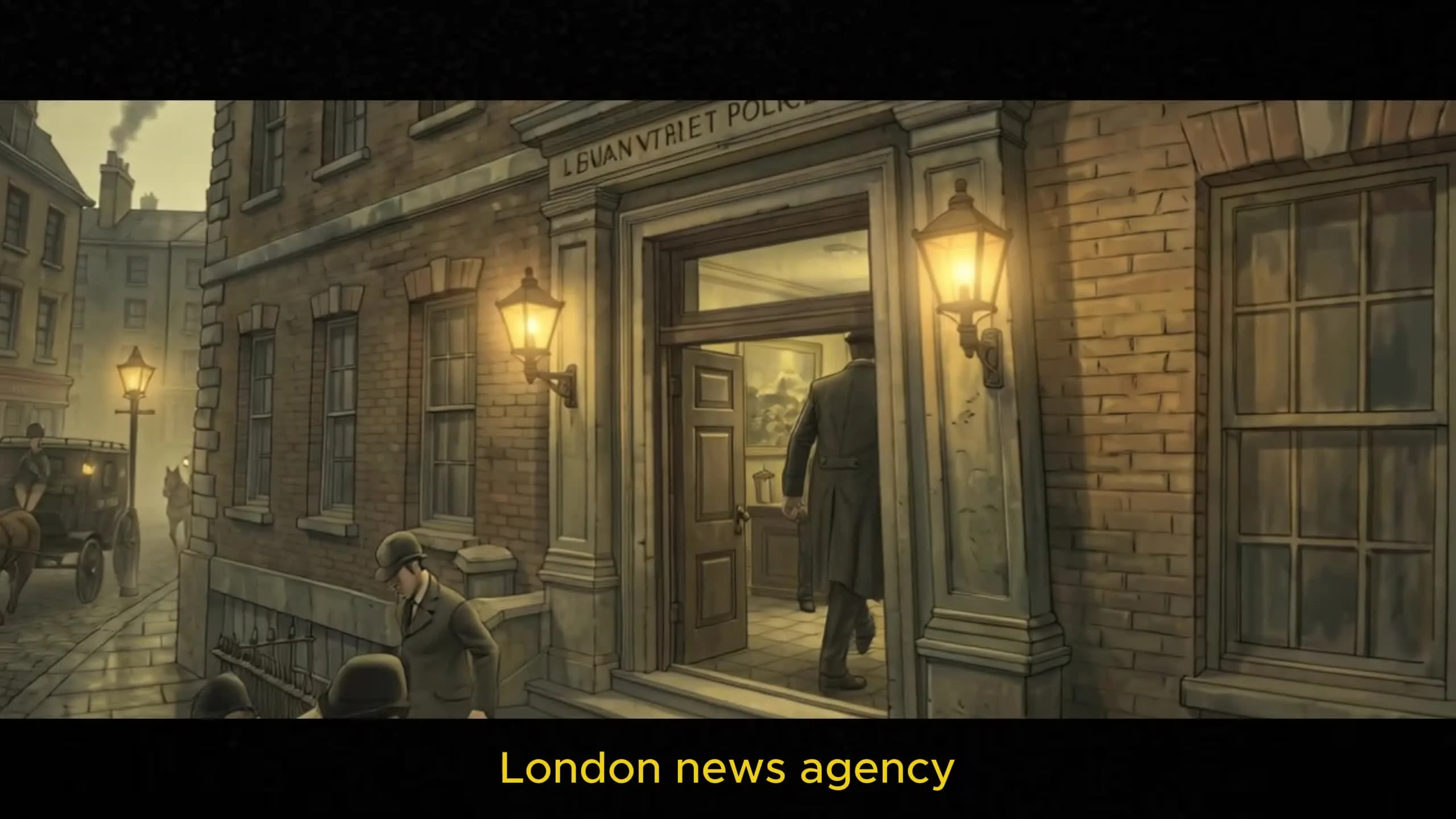
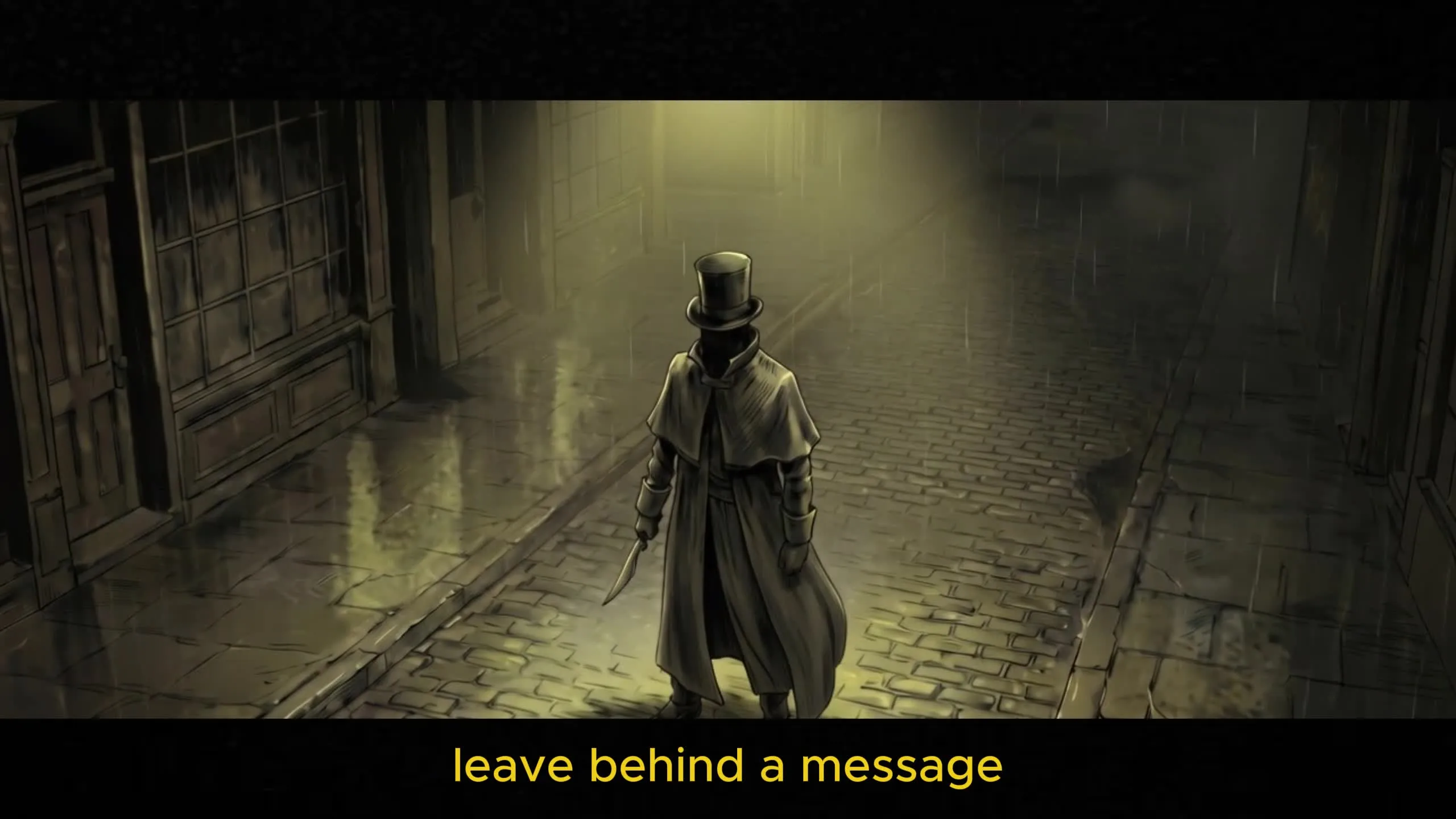
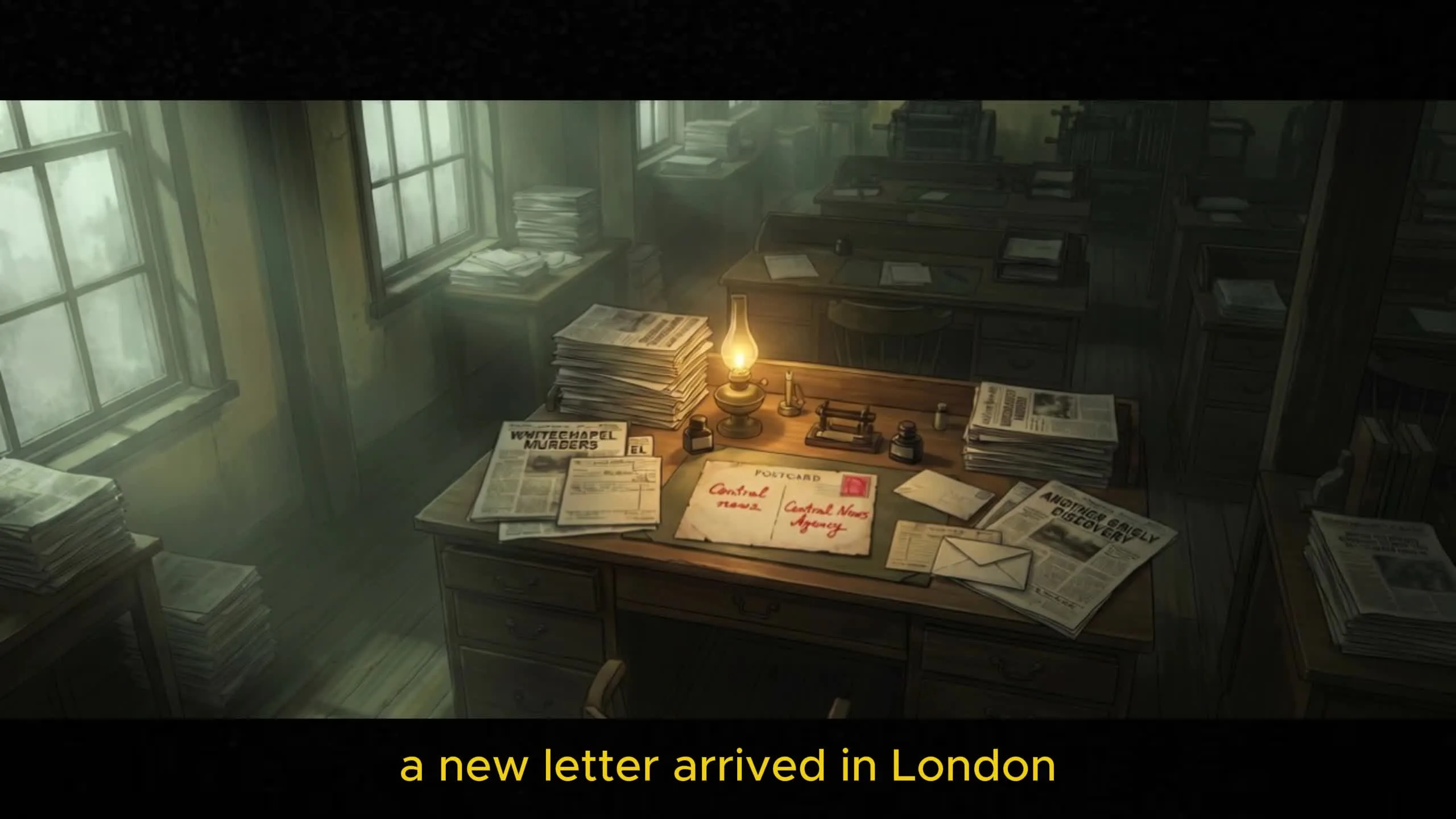
September 27, 1888. The Central News Agency, Fleet Street, London. A letter arrived, written in neat handwriting on good paper, dated September 25 and addressed to ‘The Boss.’ The author boasted about saving some of the proper red stuff to write with but apologised for using regular ink instead. He promised to send the next victim’s ears to the police. He signed off with the name that would outlast every detective, every suspect, and every theory that followed — Jack the Ripper — and added a postscript asking them not to mind him giving the trade name. The Central News Agency sat on the letter for two days before forwarding it to Scotland Yard. Chief Inspector Donald Swanson read it and thought it was probably a hoax. The decision was made not to publish it. Then on the morning of September 30, two more women were dead — one mutilated, one not. The killer had been interrupted. Scotland Yard now had a problem: the letter had predicted exactly the kind of attack that had just happened. Either it was the killer, or someone close to the case had written it.
0:58
September 30, 1888. 12:35 a.m. Berner Street, off Commercial Road. Louis Diemschutz, a steward of the International Workingmen’s Educational Club, drove his pony cart into Dutfield’s Yard. The pony shied at something dark beside the wall. Diemschutz prodded with his whip and felt a body. He ran inside the club and came back with a candle and three men. Elizabeth ‘Long Liz’ Stride, forty-four, Swedish-born, prostitute — her throat cut once, deep, ear to ear. But her body had not been touched. No mutilation. No organ removal. The blood was still flowing. Dr. Frederick Blackwell estimated she had been dead twenty minutes at most. The killer had been interrupted by Diemschutz’s pony cart — he had heard the wheels coming, pressed against the wall, and slipped out down the alley as the pony shied. Police flooded Berner Street. Every alley was searched, every door knocked. He was already gone. He was already walking west. He had been denied his trophy. He needed to finish his night’s work. Forty-five minutes later, three quarters of a mile west, PC Edward Watkins of the City of London Police walked into Mitre Square.
1:05
September 30, 1888. 1:45 a.m. Mitre Square, City of London. Police Constable Edward Watkins had crossed the square at 1:30 a.m. and it had been empty. He returned fifteen minutes later. His lantern showed a woman on her back in the south corner. Her face had been slashed. Her ear had been cut. Her throat had been opened to the spine. Her abdomen had been laid open from breastbone to pubis. Her intestines had been pulled over her right shoulder. Her left kidney had been removed. Her uterus had been removed. A portion of her intestines had been arranged in a deliberate pattern beside her body. She was Catherine Eddowes, forty-six, prostitute — released from Bishopsgate Police Station, where she had been held for drunkenness, at 1:00 a.m. He had cut her throat, opened her, removed her organs, and walked out in approximately ten minutes. A few hundred yards away, at the entrance of a tenement block on Goulston Street, a constable named Alfred Long found something the killer had left behind — a piece of bloody apron, and on the wall above it, chalk writing.
1:05
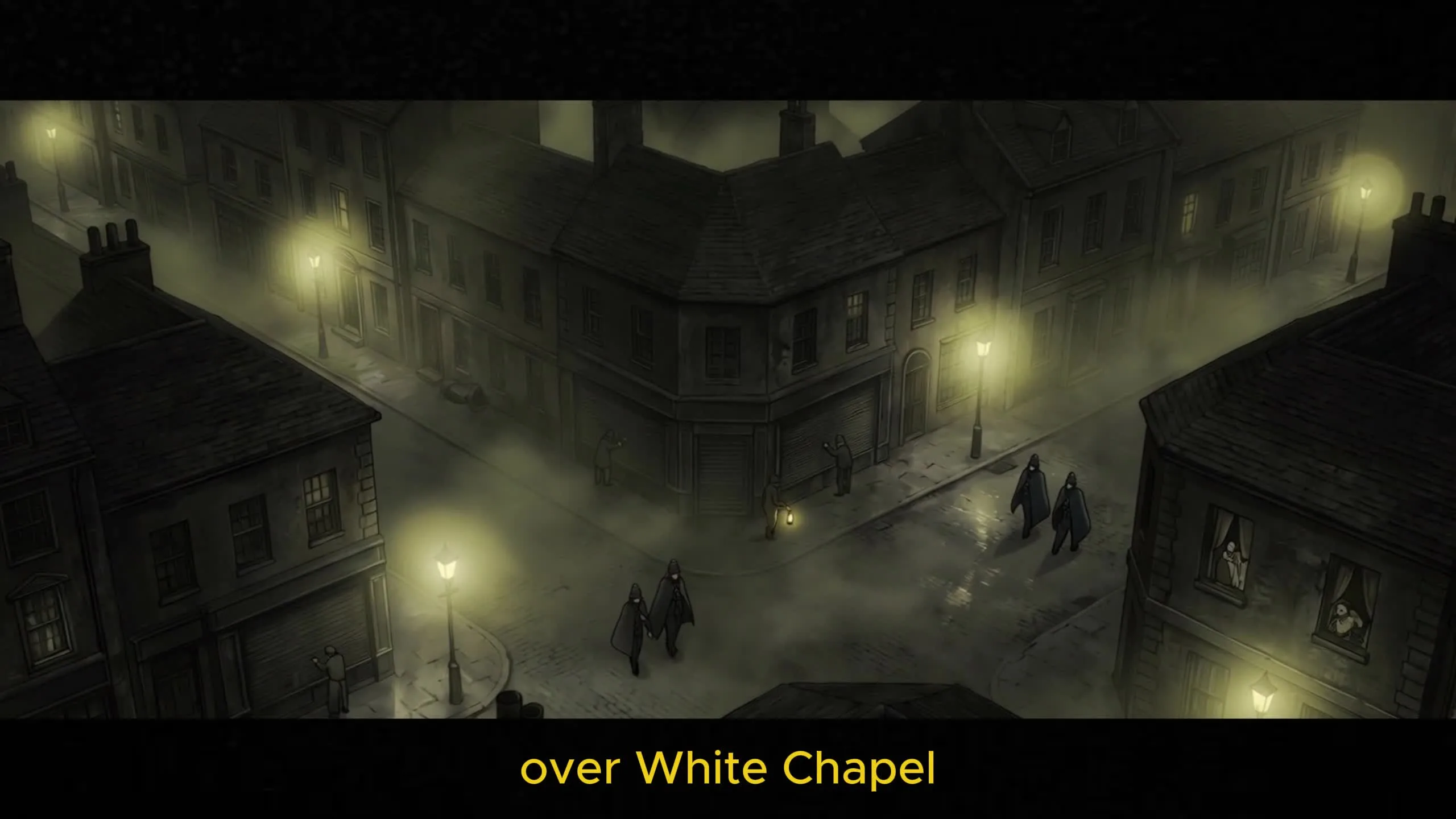
September 30, 1888. 2:55 a.m. Goulston Street, the Wentworth Model Dwellings. Police Constable Alfred Long passed the building doorway and his lantern caught a piece of cloth on the ground — a section of Catherine Eddowes’ bloody apron. Then he saw the wall. Chalked in white, three short lines: ‘The Juwes are the men That Will not be Blamed for nothing.’ The misspelling was deliberate. Or it wasn’t. The City Police wanted to photograph the writing before erasing it. Sir Charles Warren, Commissioner of the Metropolitan Police, arrived personally at 5:30 a.m. The block was largely Jewish. The borough was on the edge of riot. Warren made a decision that would haunt his career — he ordered the writing erased before it could be photographed. The detective inspector at the scene argued with him for ten minutes. Warren overrode him. The wall was wiped clean at dawn. The only piece of physical evidence the killer ever left behind was washed off a brick wall on orders from the Commissioner of Police. Sir Charles Warren would resign within two months.
1:02
October 1, 1888. The Central News Agency, London. A postcard arrived — same red ink, same handwriting as the Dear Boss letter. It described both murders of the double event before they had been publicly reported. He wrote that number one had squealed a bit and he couldn’t finish straight off, that he hadn’t had time to get ears for the police. He signed it Jack the Ripper. The postcard had been postmarked at 8 a.m. on October 1 — written and posted within hours of the killings. Scotland Yard now released both the Dear Boss letter and the Saucy Jacky postcard to the public. Copies appeared in every newspaper in Britain on October 3. Wanted posters featuring the handwriting were pasted on lamp posts across London. The Jack the Ripper name became permanent — he had given himself a brand. Inspector Abberline now had a name and a possible handwriting sample. But he did not have a face. And he was about to face the worst weeks of his career.
1:03
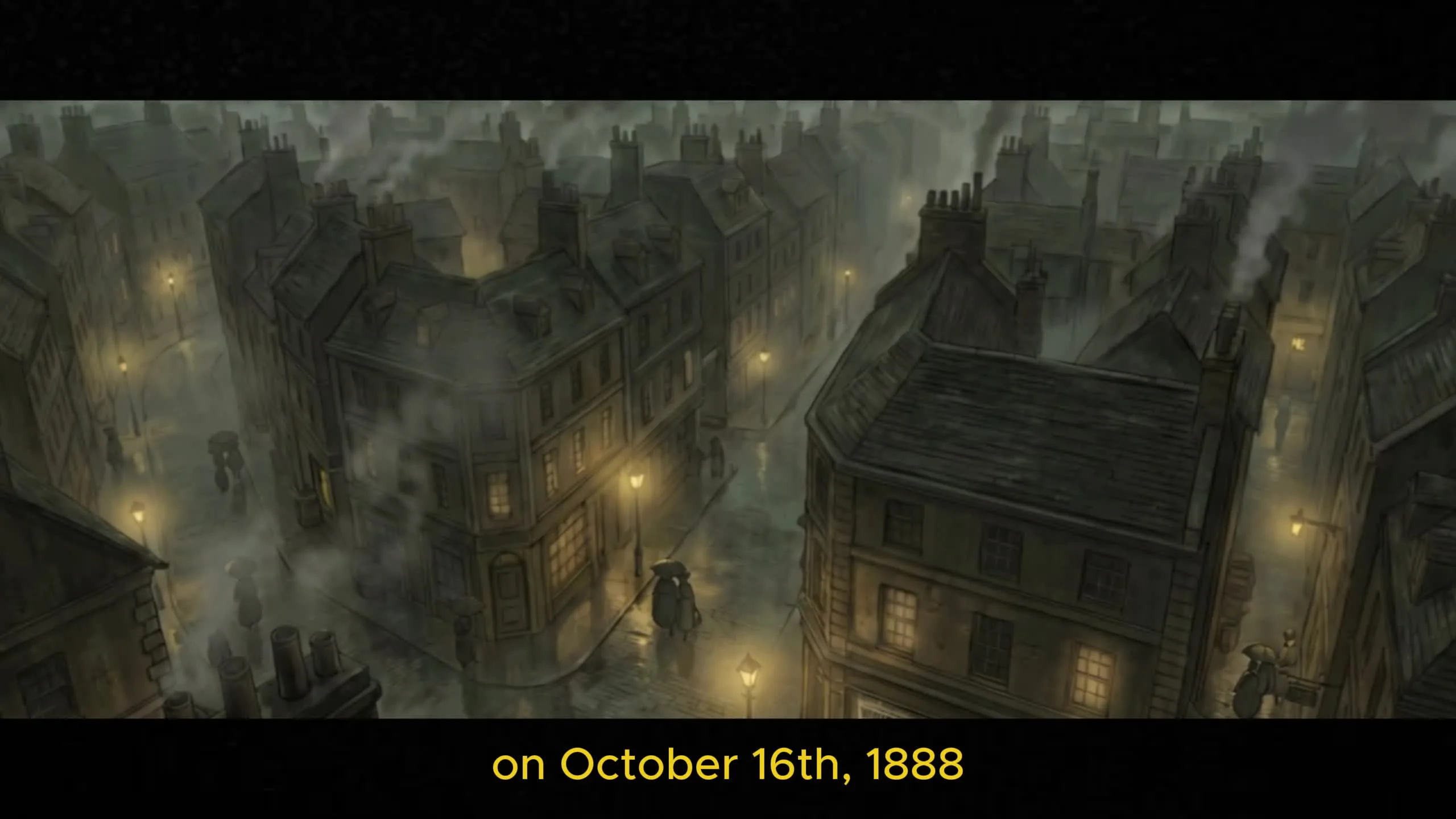
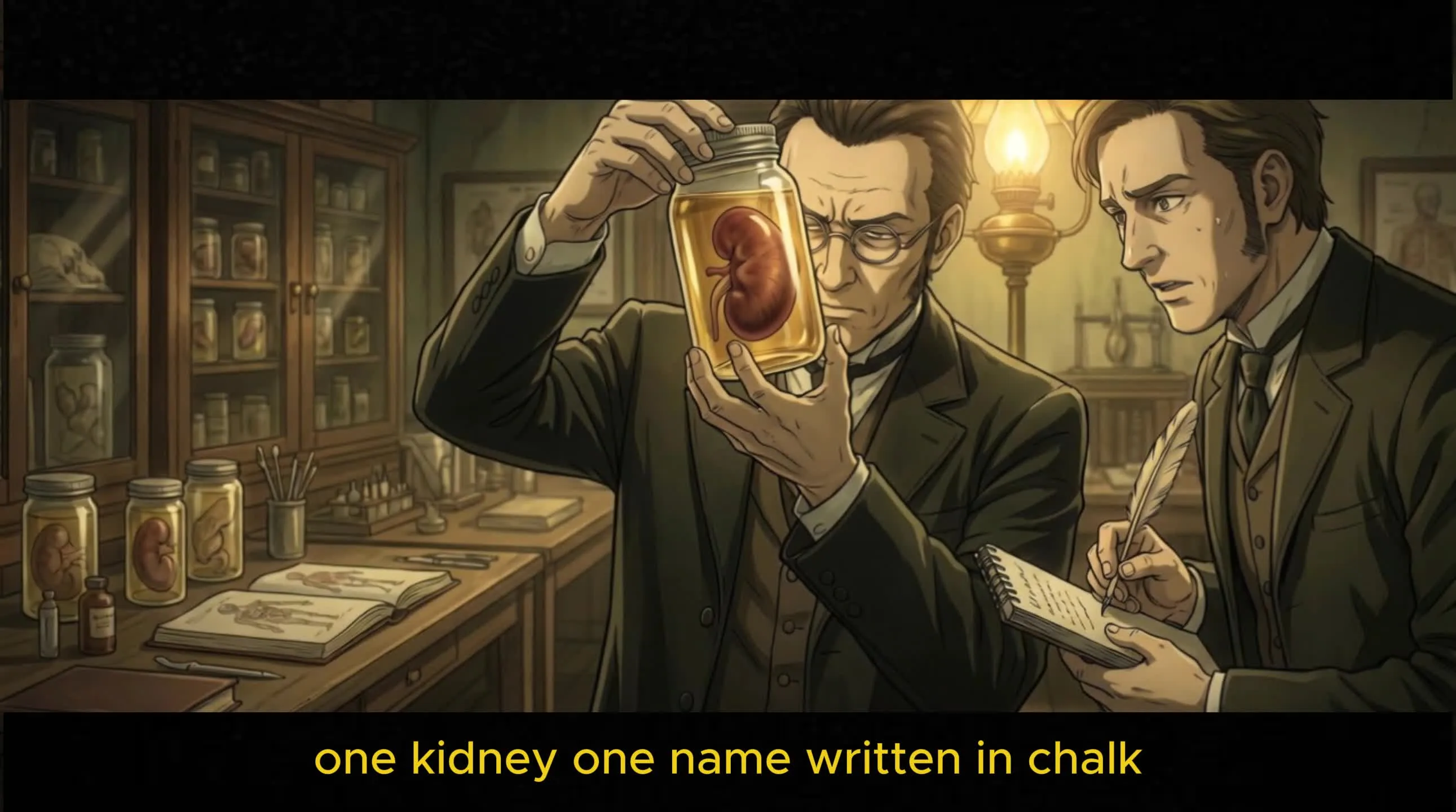
October 16, 1888. George Lusk’s home, 1 Tollet Street, Mile End. A small cardboard box arrived in the post, wrapped in brown paper, postmarked London East, no sender. Lusk opened it on his kitchen table. Inside — half of a kidney, preserved in spirits of wine, and a letter written in poor English with different handwriting from the Dear Boss letter. The letter was headed ‘From hell’ and claimed the writer had fried and eaten the other piece of the kidney. Lusk initially thought it was a prank. He took the box to Dr. Frederick Wiles, who sent it to Dr. Thomas Openshaw of the London Hospital. Openshaw confirmed it was a left kidney from a woman with Bright’s disease. Catherine Eddowes, killed sixteen days earlier, had been missing her left kidney. Catherine Eddowes had Bright’s disease. Scotland Yard’s forensic capabilities in 1888 could not prove it conclusively — they believed it, but they couldn’t prove it. For the first time, the killer was sending the police body parts of his victims through the post. This was not robbery. This was not a sex crime. This was theatre.
1:08
October 1888. Whitechapel after dark. Newspapers carried daily Ripper coverage. Etchings of mutilated bodies sold copies. Tourists from Mayfair began touring Whitechapel on day trips and ‘Ripper hunting’ became a fashionable phrase in the wealthier districts. Prostitutes started travelling in groups. Many left London entirely. Customers stopped coming. Doss-house rents went unpaid. The Whitechapel Vigilance Committee expanded to over four hundred patrolling members and posted lookouts at every alley between Aldgate and Spitalfields. The Metropolitan Police flooded H Division with reinforcements — six hundred plainclothes officers worked Whitechapel by night. Some constables disguised themselves as prostitutes in long skirts and shawls. The killer made no move. For forty-one days he was silent. Then on the evening of November 8, a twenty-five-year-old prostitute named Mary Jane Kelly was seen drinking at the Britannia public house. At approximately 4 a.m. on November 9, behind the locked door of a single small room at 13 Miller’s Court, the killer had as much time as he wanted. He used it.
1:07
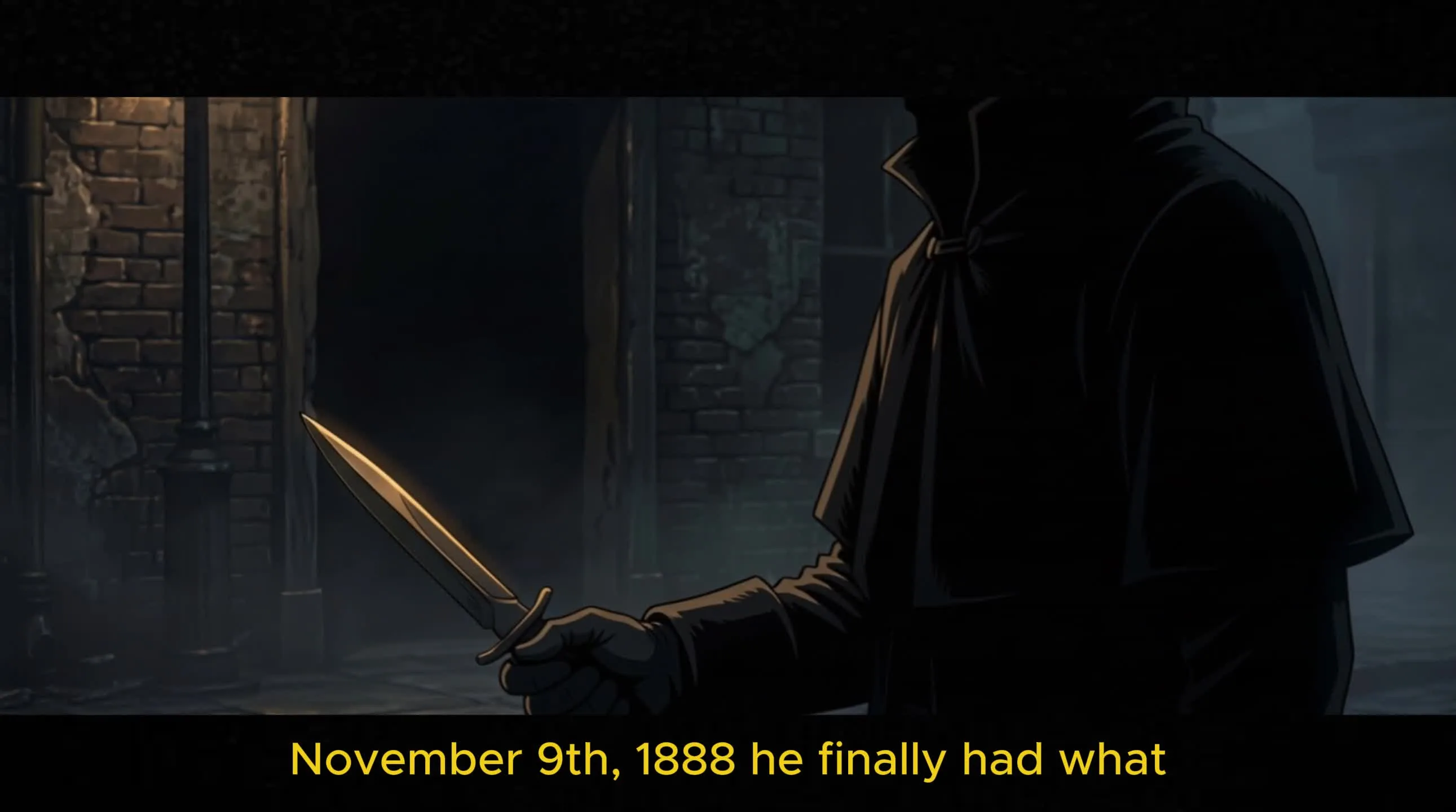
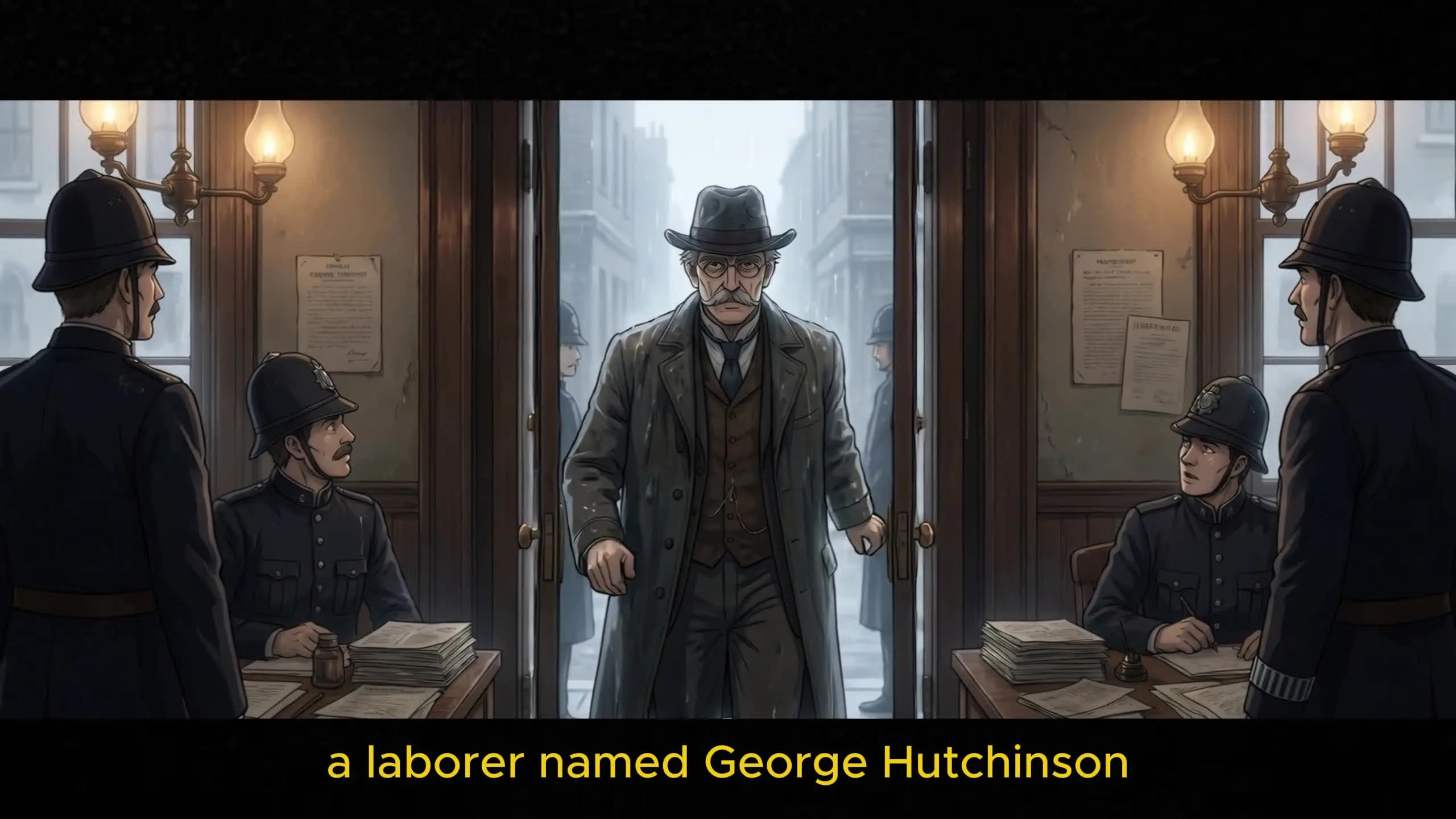
November 9, 1888. 13 Miller’s Court. A small back room rented for four shillings sixpence a week. At 10:45 a.m., Thomas Bowyer, sent by the landlord John McCarthy to collect overdue rent, knocked on Kelly’s door. No answer. He reached through the broken window pane, pushed aside the makeshift curtain, and saw what was on the bed. He ran for McCarthy. McCarthy ran for the police. Inspector Walter Beck arrived, then Abberline, then Commissioner James Monro. Mary Jane Kelly was on the bed — most of her. She had been disembowelled. Her face had been almost entirely removed. Her breasts had been cut off. Her organs had been arranged around her body. Her heart had been removed and was missing. Dr. Thomas Bond estimated the killer had spent close to two hours on the body. He had used the small fire in the grate for light — there was a teakettle melted in the embers. He had washed his hands in a basin and left. Two days later a man named George Hutchinson walked into Commercial Street Police Station and gave Inspector Abberline the most detailed description of any suspect in the entire case. Abberline believed every word of it.
1:18
November 12, 1888. George Hutchinson, an unemployed labourer who lived at the Victoria Home on Commercial Street four blocks from Miller’s Court, walked into the police station and told Inspector Abberline he had seen Mary Kelly on the night of her murder. At 2 a.m. on November 9, she had asked him for sixpence on Commercial Street. He had been broke and refused. She had walked on and a man had approached her from the opposite direction. They had laughed. He had put his arm around her shoulders. Hutchinson had stood under a gas lamp and watched. The man was about thirty-four or thirty-five, five foot six, dark complexion, dark eyes, slight moustache curled up at each end, dark hair. Dark coat. White collar. Black tie with a horseshoe pin. A red handkerchief. Polished boots. He looked like a gentleman — Jewish in appearance. Hutchinson had followed the couple to the entrance of Miller’s Court and stood outside watching for forty-five minutes. He saw no one else enter or leave. Abberline interrogated him personally, believed the statement entirely, and had detectives walk him through Whitechapel for three days hoping he could spot the man again. He never did. The man Hutchinson described has been the working portrait of Jack the Ripper for 138 years. He has never been identified.
1:05
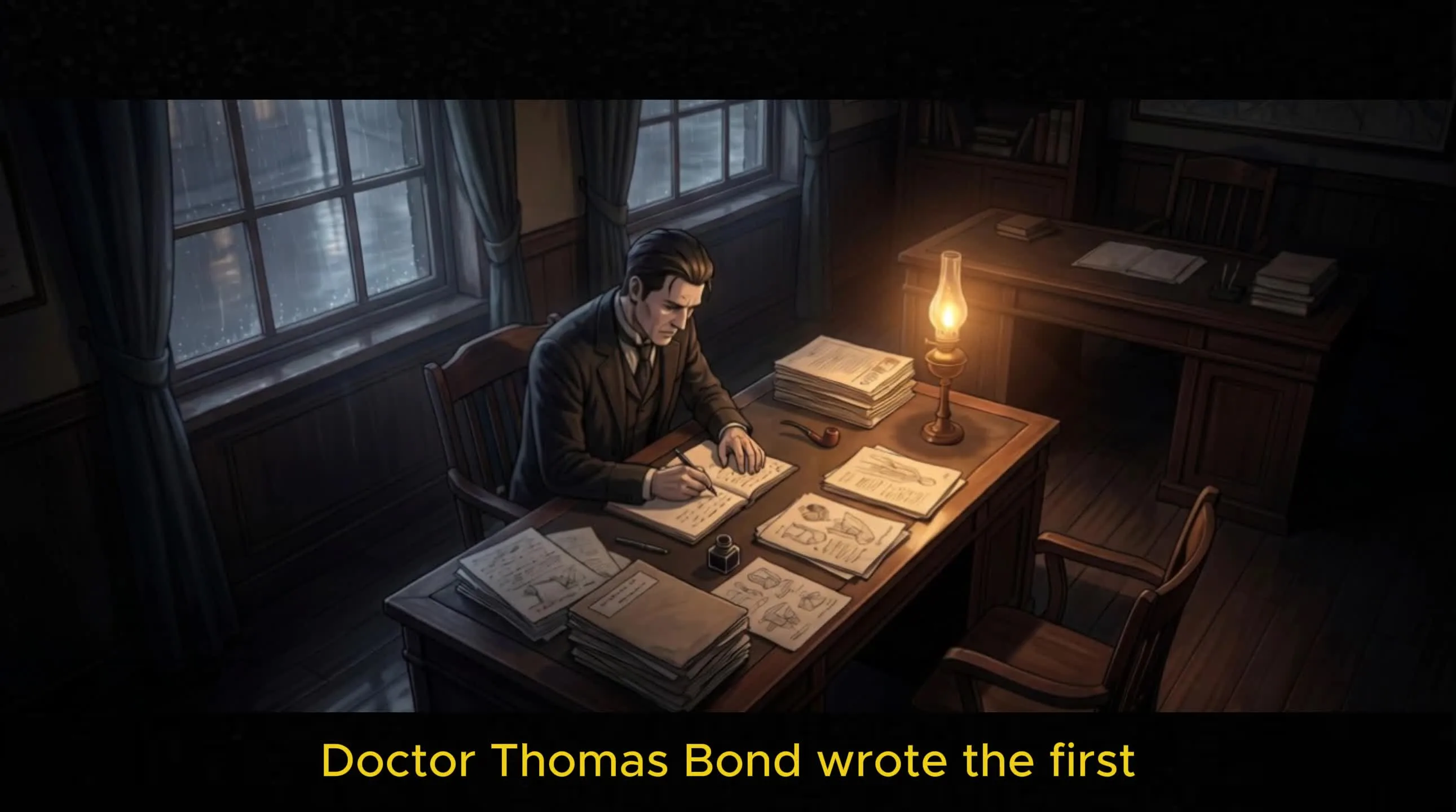
November 10, 1888. Scotland Yard. Dr. Thomas Bond, police surgeon, submitted a five-page handwritten report on the Whitechapel killings to Robert Anderson, Assistant Commissioner — the first criminal profile in police history. His conclusions: the killer was probably middle-aged, probably solitary, probably eccentric, probably habitually quiet and inoffensive in appearance, probably neat and respectable in dress, a man of physical strength and great coolness and daring. Bond believed the killer had no formal surgical training and that the wounds were the work of someone using a butcher’s knife, not a scalpel. He estimated the killer lived locally, within walking distance of every murder scene, and was likely subject to recurrent fits of homicidal mania. The Whitechapel murders, in Bond’s estimation, were going to continue. Then they stopped. After November 9, no more canonical Ripper murders occurred. Ever. Scotland Yard would never know if the killer had stopped, moved, died, or simply got better at hiding the bodies.
1:02
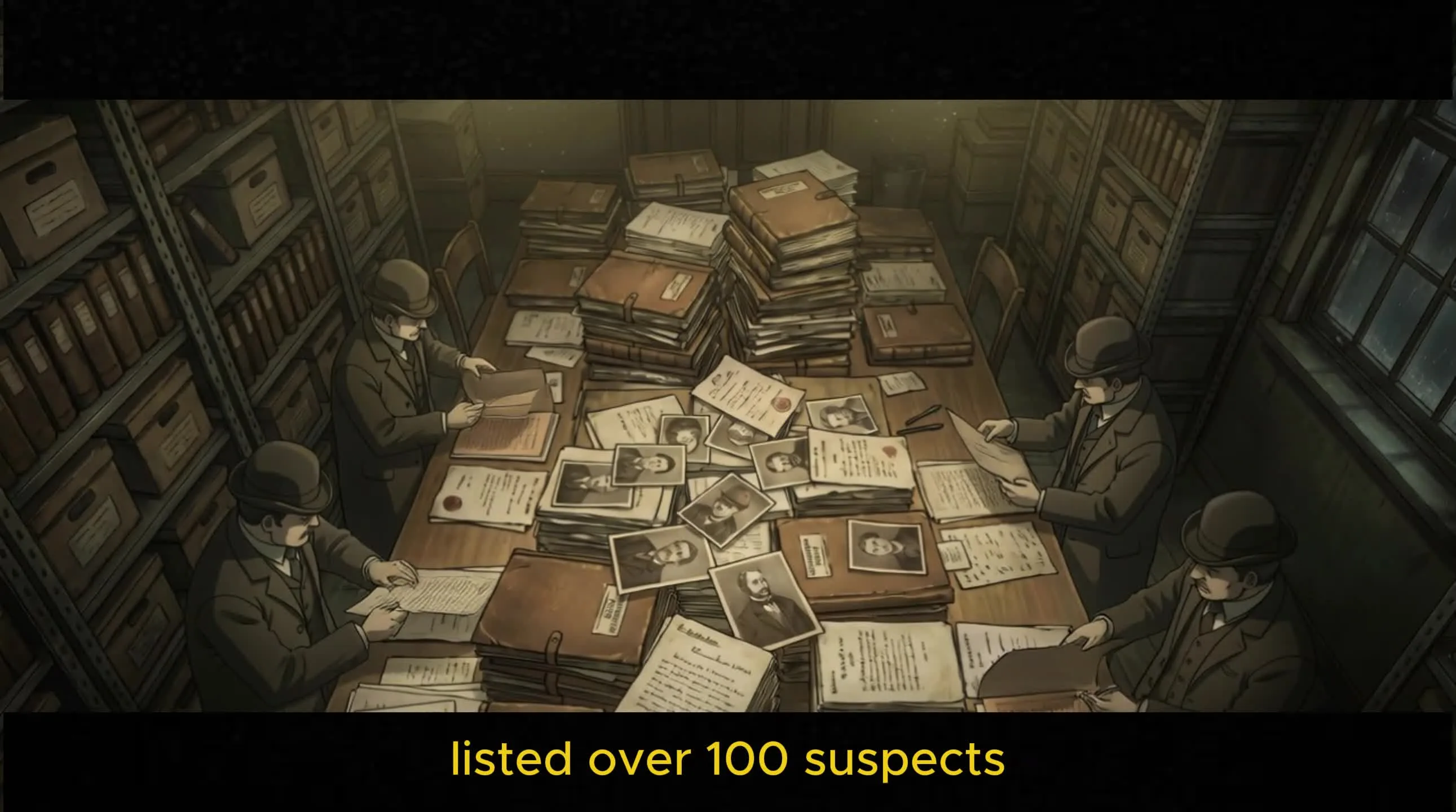
1888 to 1894. Scotland Yard’s case files eventually listed over a hundred suspects. The Macnaghten Memorandum, written in February 1894 by Chief Constable Sir Melville Macnaghten, named three principal suspects. Montague John Druitt, a thirty-one-year-old barrister and schoolmaster who drowned himself in the Thames on December 1, 1888, three weeks after Mary Kelly — family members reportedly believed him to be the killer. Aaron Kosminski, a twenty-three-year-old Polish-Jewish hairdresser, severely mentally ill, committed to Colney Hatch Asylum in 1891, dead in an asylum in 1919 — a witness allegedly identified him and then refused to testify in court. Michael Ostrog, a Russian-born conman, repeatedly institutionalised — modern researchers have largely ruled him out, as he was in a French prison during at least one of the murders. Inspector Abberline himself favoured a fourth suspect, Severin Klosowski, a Polish barber later hanged as serial poisoner George Chapman. Sir Robert Anderson named Kosminski in his 1910 memoirs. Macnaghten leaned toward Druitt. None of them were ever charged. In the 138 years since, the suspect list has grown to include royal princes, famous artists, and Lewis Carroll. The killings have been pinned on every kind of man except a man with proof.
1:02
1892. The Whitechapel murders file is officially closed. The remaining files — witness statements, autopsies, suspect notes, surveillance reports — are sealed and stored in the basement of New Scotland Yard. During the Blitz they are moved to a vault in Kingsway and survive the bombing. In 1908 Sir Robert Anderson publishes his memoir naming Kosminski. In 1939 retired Detective Constable Walter Dew publishes his own memoir and refuses to name the killer. In 1959 the case files are formally retired to the Public Records Office and sealed under the hundred-year rule. In 1988, the centenary of the murders, the National Archives finally permits researchers limited access to selected file boxes. Major papers are missing. Witness statements have been lost. Autopsy reports are incomplete. In 1991 a man in Liverpool produces a diary supposedly written by James Maybrick claiming to be the Ripper — most forensic experts consider it a modern forgery. In 2014 an amateur researcher claims DNA on a shawl supposedly belonging to Catherine Eddowes matches Aaron Kosminski — his evidence is published in a non-peer-reviewed paper and widely disputed. 138 years after Mary Kelly died, the most famous killer in British history has never been formally named, never been charged, and never been ruled out. The files are open. The conclusion is missing.
1:02
The canonical five. Mary Ann Nichols, forty-three, Buck’s Row, August 31. Annie Chapman, forty-seven, Hanbury Street, September 8. Elizabeth Stride, forty-four, Berner Street, September 30. Catherine Eddowes, forty-six, Mitre Square, September 30. Mary Jane Kelly, twenty-five, Miller’s Court, November 9. Each of them a prostitute. Each of them a doss-house resident. Each of them living on the edge of starvation in the wealthiest empire in the world. He killed them in the same half square mile inside an eleven-week window. The investigators who hunted him — Abberline, Warren, Reid, Moore, Andrews, Dew — all died without an answer. Sir Charles Warren resigned within two months. Frederick Abberline retired in 1892 and died in Bournemouth in 1929 at eighty-six. Every era has remade him to suit itself — he has been a doctor, a barber, a duke, a barrister, an artist, a royal cover-up. He never had to be any of those. He had to be quiet, local, punctual, educated enough to write a letter, anatomically curious enough to remove a kidney, patient enough to wait forty-one days, and smart enough to stop before being caught. He is the first serial killer of the modern era. He invented the genre. He invented the brand. And he is the only one in the genre who has ever truly disappeared.