

20 episodes
outofnowhere
Thirty-three young men. One trapdoor. Eight of them still unidentified. John Wayne Gacy: The Killer Clown traces the most chilling double life in American criminal history — a successful contractor, a twice-married father, a Democratic Party precinct captain, a volunteer clown at children's hospitals, and a man who buried thirty-three boys beneath the floorboards of his suburban Chicago home while his neighbours wondered about the smell. Told entirely through narration across twenty episodes, this micro-drama series follows Gacy from his violent Chicago childhood and a father who called him soft, through a Las Vegas mortuary, an Iowa sodomy conviction, eighteen months of a ten-year sentence, and the quiet ranch house at 8213 West Summerdale Avenue where everything was buried — literally and otherwise. Unlike the transient, rootless killers in this series, Gacy killed from inside the community that trusted him most. He was photographed with the First Lady. He gave birthday parties for neighbourhood children. He painted his own face white, drew the corners of his mouth into sharp points, and performed magic tricks with real police handcuffs. He was caught not by forensic science or profiling, but by a fifteen-year-old boy's mother who refused to let the police stop looking — and a detective who used a bathroom at the wrong moment.
20 episodes
1:24
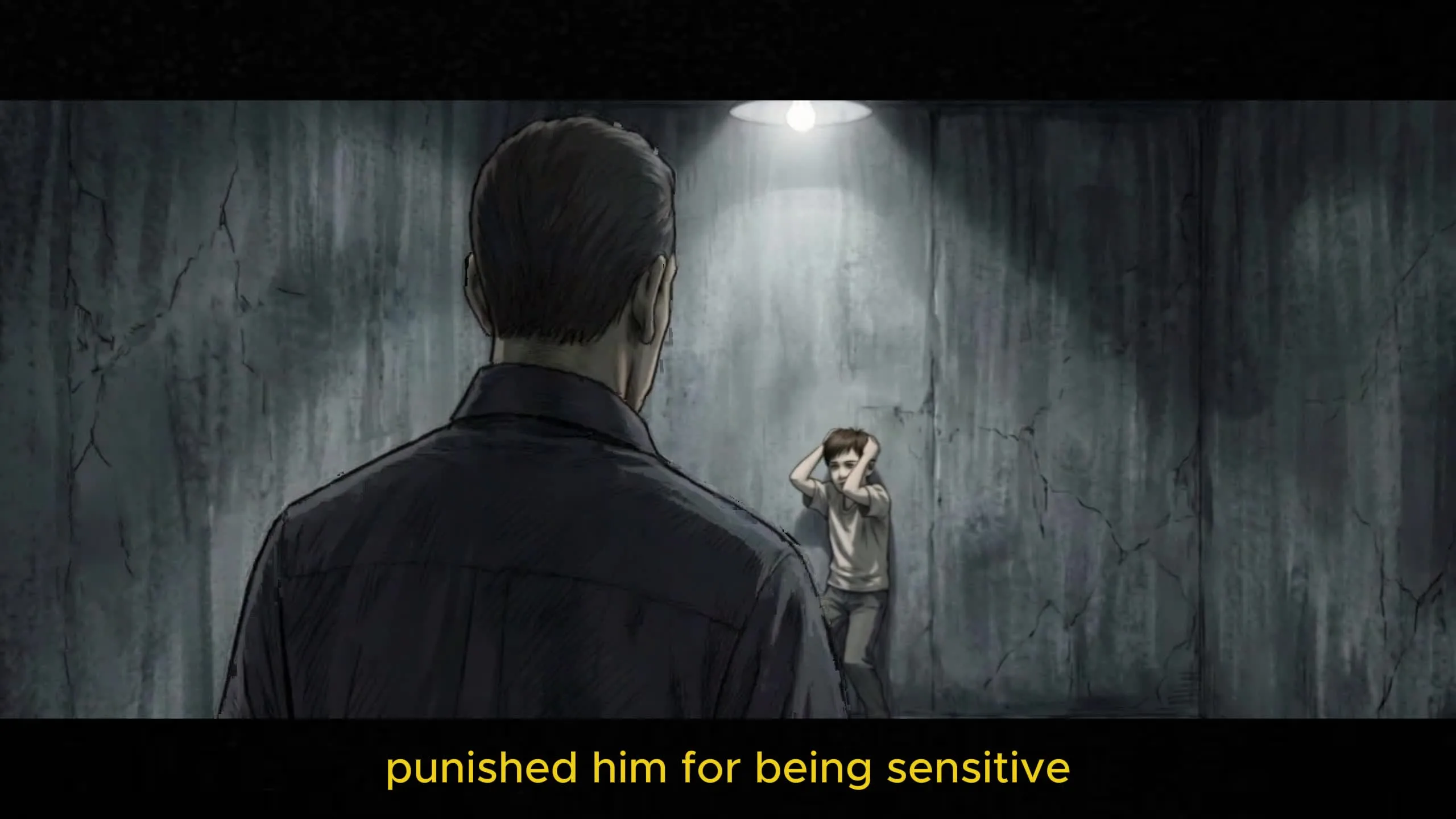
March 17, 1942. Chicago. John Wayne Gacy Jr. is born — the only son between two daughters — to a violent alcoholic father named for the actor he worshipped. John Stanley Gacy Sr. beat his wife and his son, calling the boy soft, effeminate, and a disappointment from the moment he learned to walk. When John was eight, a male family friend molested him in the garage. He told no one. When he was eleven, a playground swing struck his head and caused a blood clot on his brain — triggering years of blackouts that came whenever he was angry or overwhelmed. His mother loved him. His father did not. Inside that exact gap, something began to grow that John would spend the rest of his life trying to feed.
1:26
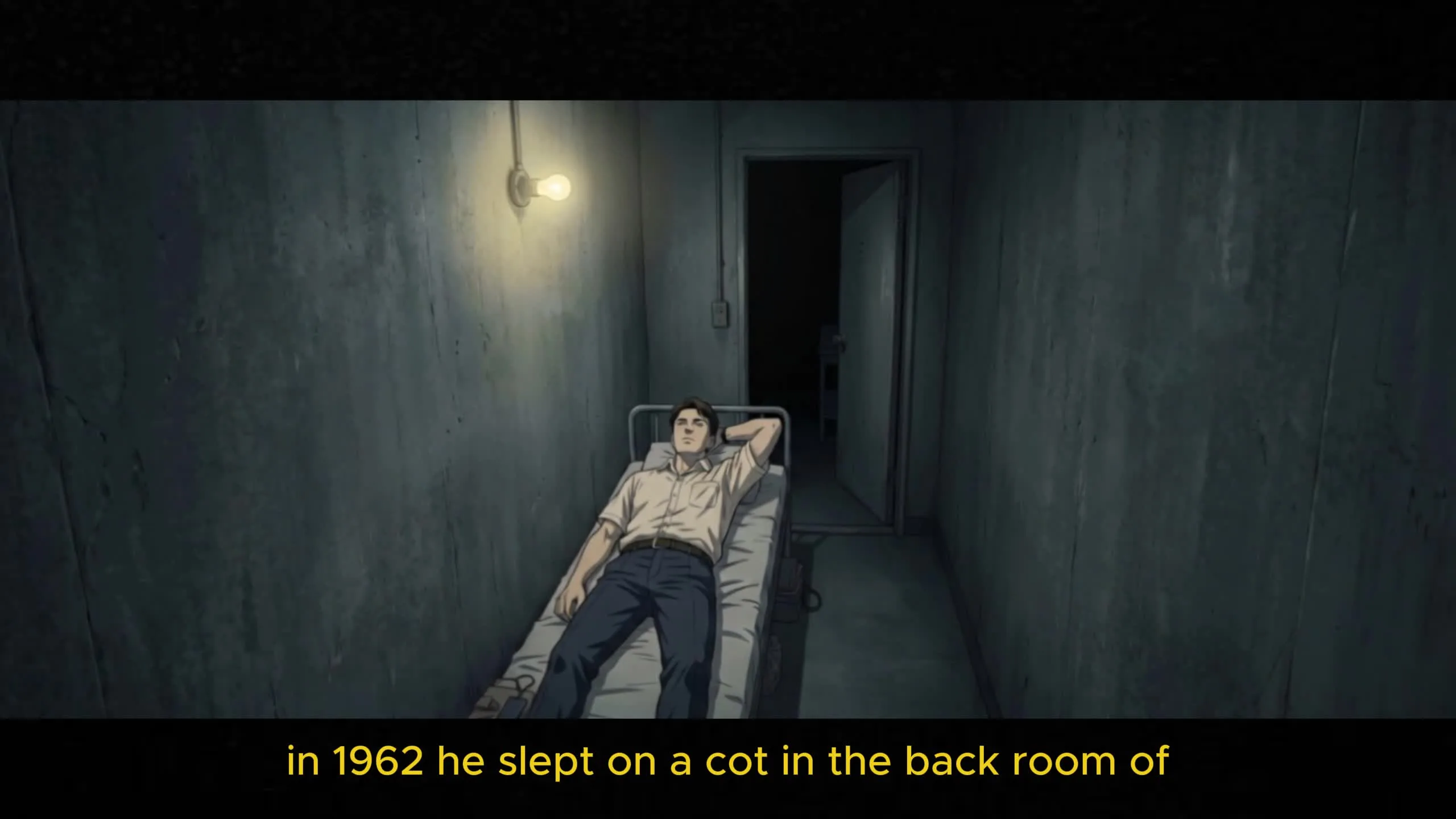
1962. Las Vegas. The 20-year-old Gacy takes a job as a mortuary assistant, hauling bodies from ambulances, preparing them for viewing, and sleeping alone on a cot in the back room every night. He later told prosecutors he became 'curious' about the bodies during those months — spending significant time alone with male corpses and stopping just short of describing what that meant in his admissions. He stays only a few months before homesickness drives him back to Chicago, where he enrols in business college, graduates in 1963, meets Marlynn Myers in 1964, and marries her that September. Her father owns three KFC franchises in Waterloo, Iowa, and offers Gacy the manager's job. For a brief, shining stretch, John Wayne Gacy becomes the man his father always demanded he be.

1:19
Waterloo, Iowa, 1966 to 1968. Gacy runs three KFC restaurants, has two children, earns his community's respect as Vice President of the Waterloo Jaycees chapter, and volunteers for every event in town. His father — who once called him soft — finally tells him he is proud. And every weekend, in the finished basement of his house, Gacy is hosting parties for teenage boys he has hired at the KFC, plying them with alcohol, showing them pornography, and paying some of them fifty dollars for what he calls 'science experiments.' In May 1968, fifteen-year-old Donald Voorhees tells his father — also a Jaycee — what Gacy has been doing. The father goes straight to police. Gacy is charged with sodomy. In a move that tells you everything: he hires another teenage boy to beat up Voorhees so he won't testify. The boy confesses. Gacy is sentenced to ten years at Anamosa State Penitentiary. His wife files for divorce the same day. He never sees his children again.
1:21
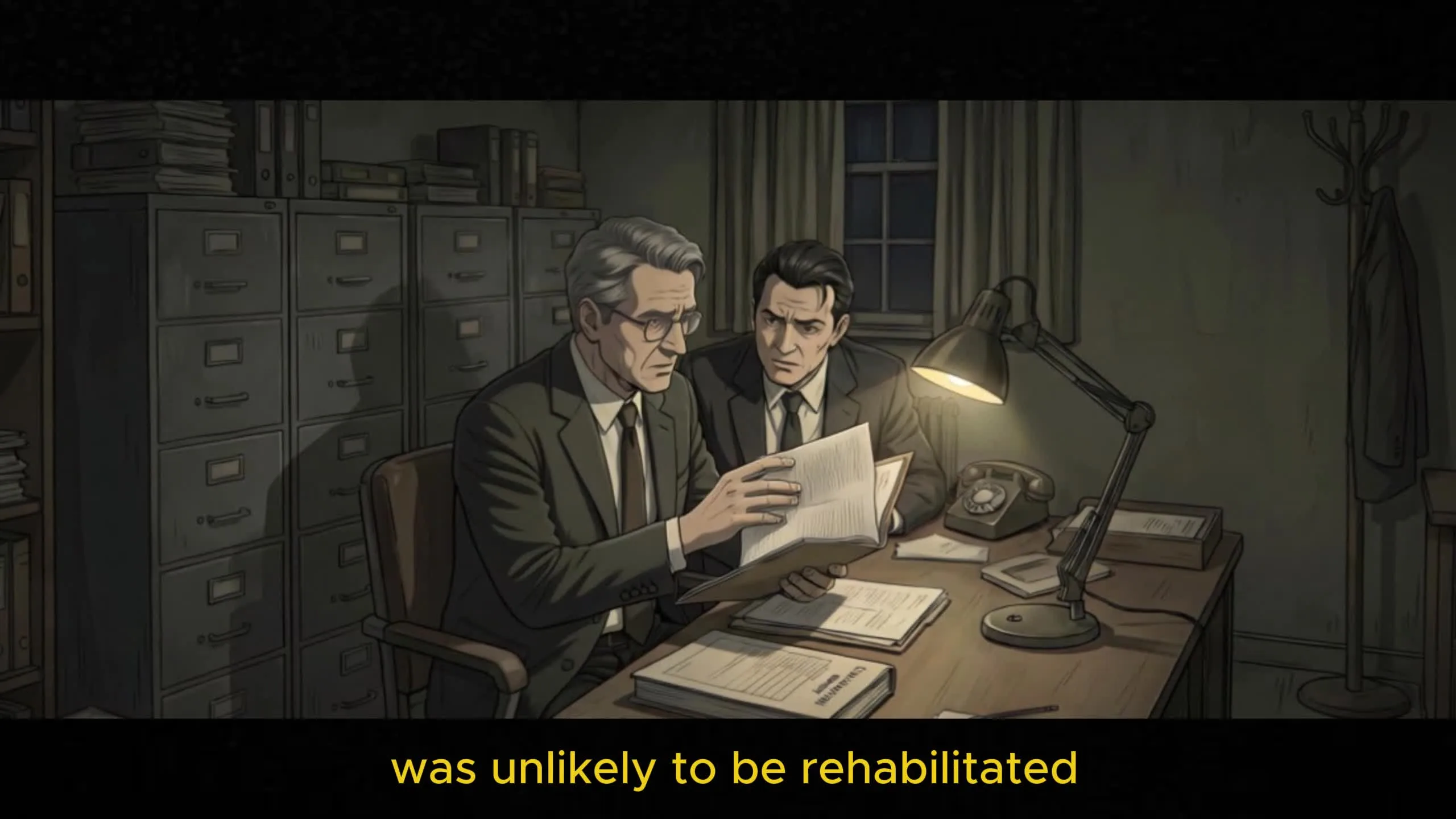
December 1968. Anamosa State Penitentiary. Gacy becomes the model prisoner — earning his high-school diploma, running the prison kitchen, joining the prison Jaycees. Two University of Iowa psychiatrists evaluate him and conclude he has severe antisocial personality disorder and is unlikely to benefit from treatment. The report is filed and sealed. Eighteen months into his ten-year sentence, the Iowa parole board grants him release. On June 18, 1970, he walks out a free man. His father has died in prison; his mother takes him in. Eight months after his release, he is arrested in Chicago for trying to force a teenage boy into sex. The boy does not appear to testify. The charges are dropped. Iowa's parole board is never informed. Shortly after, his Iowa conviction is sealed. On paper, John Wayne Gacy now has a clean record. The world has lost track of him. And he has found a new house.
1:17
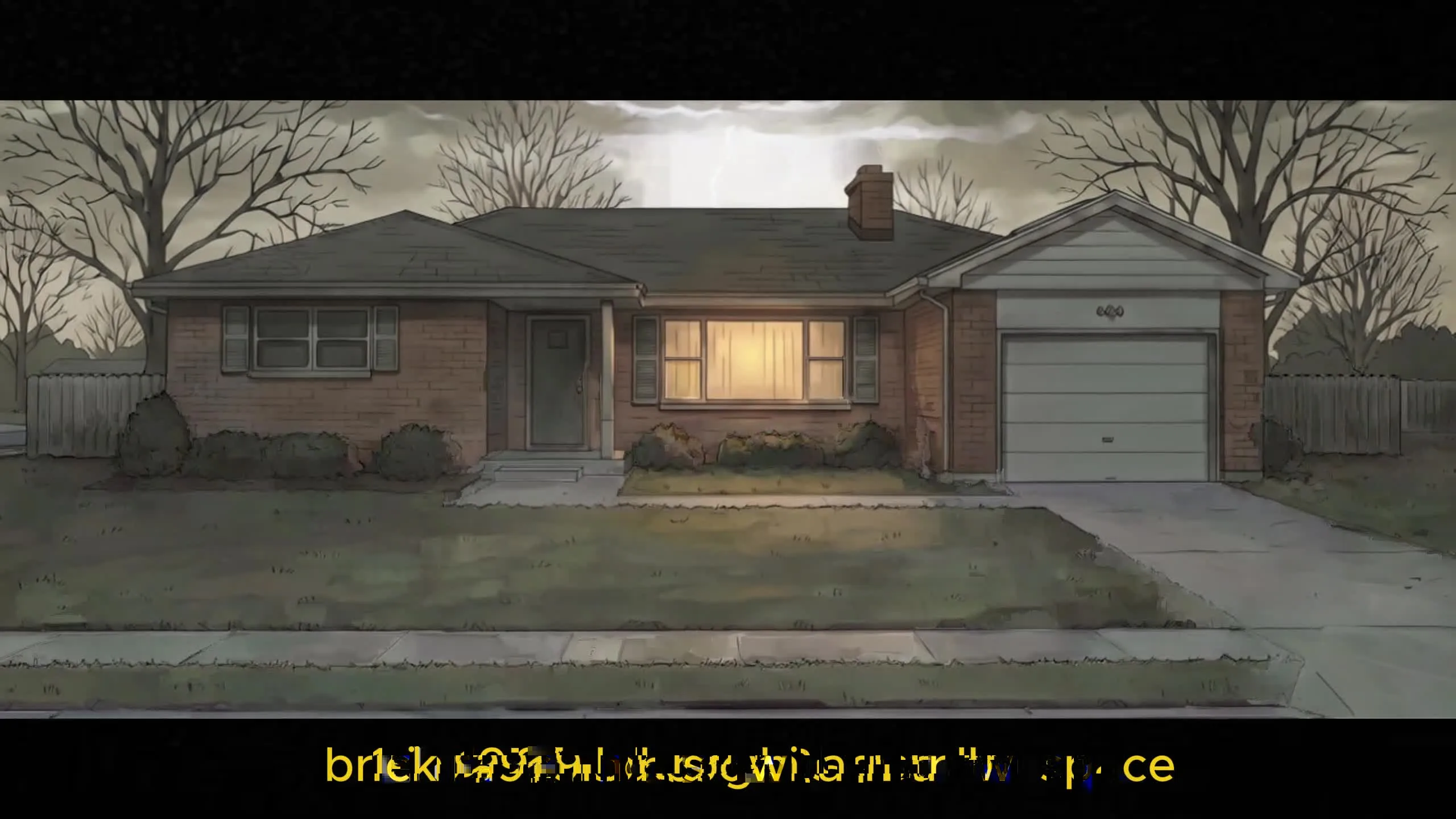
Norwood Park Township, 1971. Gacy and his mother buy a modest brick ranch house at 8213 West Summerdale Avenue — three bedrooms, a finished basement, an attached garage, and a four-foot-high dirt crawl space accessible through a wooden trapdoor in the master bedroom closet. He founds PDM Contractors, marries Carole Hoff in 1972, becomes a Democratic Party precinct captain, and volunteers at children's hospitals as Pogo the Clown. He looks, to everyone who meets him, like a community man rebuilding his life. On January 2, 1972 — six months after moving in — he picks up sixteen-year-old runaway Timothy Jack McCoy at the Greyhound bus station. Tim McCoy never makes it home to Nebraska. He becomes the first body in the crawl space at 8213 West Summerdale. The thirty-two that follow all come through the same front door.
1:33
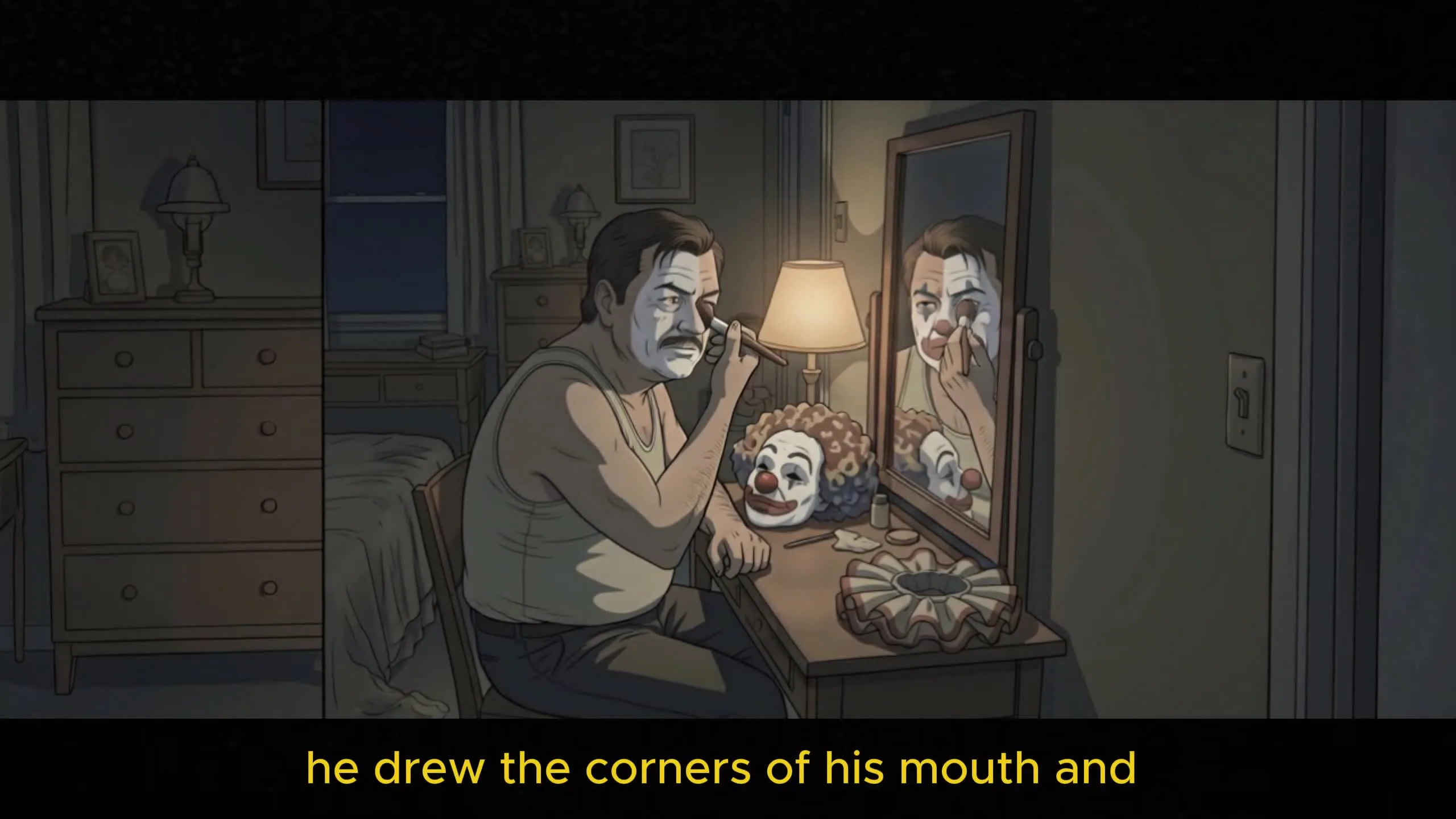
Around 1975, Gacy creates the alter ego that will become inseparable from his name: Pogo the Clown. Royal blue and red satin costume. Oversized shoes. A red wig. And the makeup — pointed white face paint, pointed eyebrows, pointed corners of the mouth. Professional clowns are trained to soften every corner to avoid frightening children. Gacy deliberately uses sharp points. He performs at hospitals, birthday parties, local parades, and charity fundraisers. Photographs of him in costume circulate around Norwood Park as proof of his community spirit. He also wears the Pogo costume alone, in his own house, in private. Some of his victims are dead in the crawl space below him while he is upstairs in face paint. Every clown has a signature trick. Gacy's is a pair of real police handcuffs.
1:20
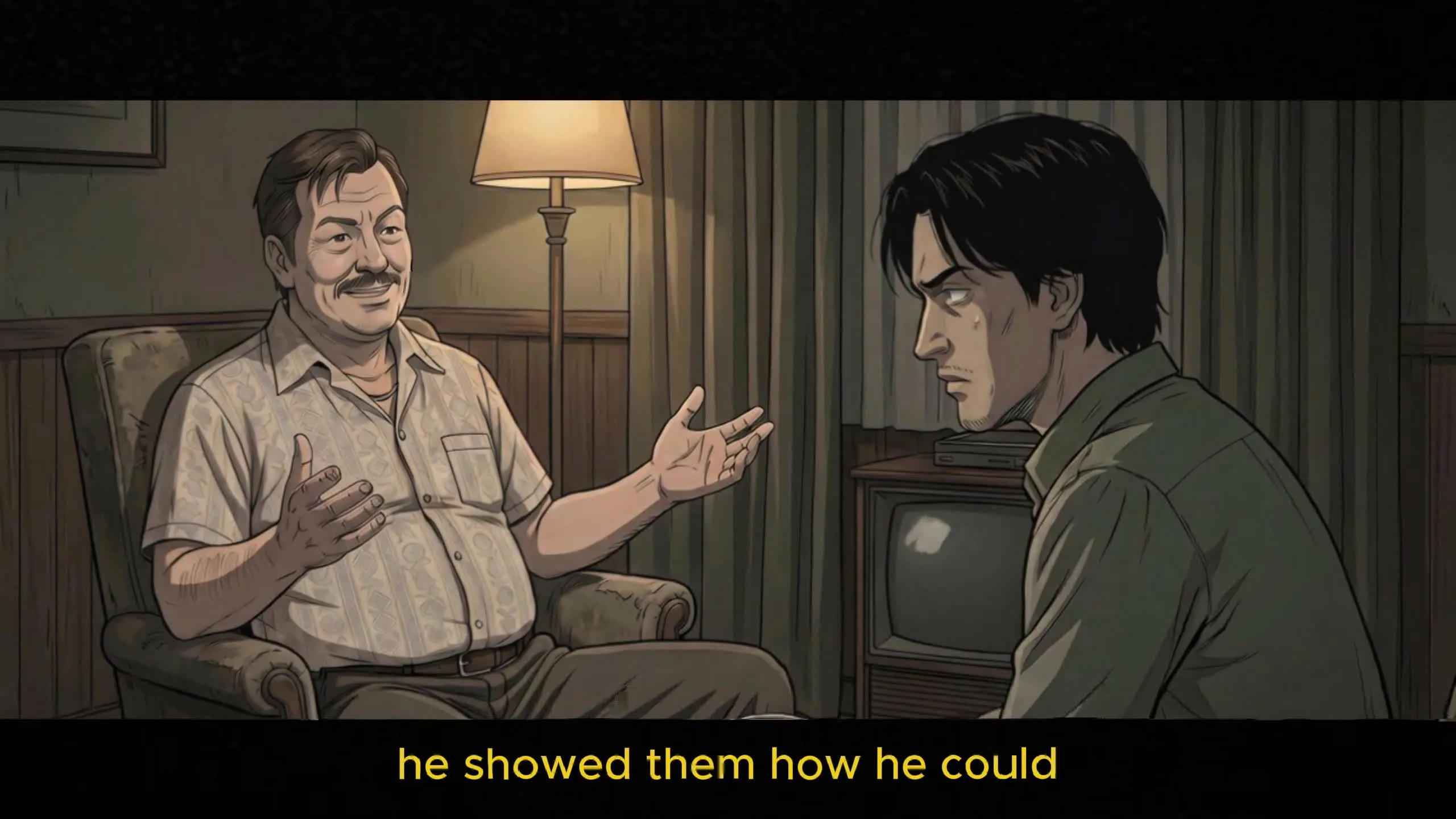
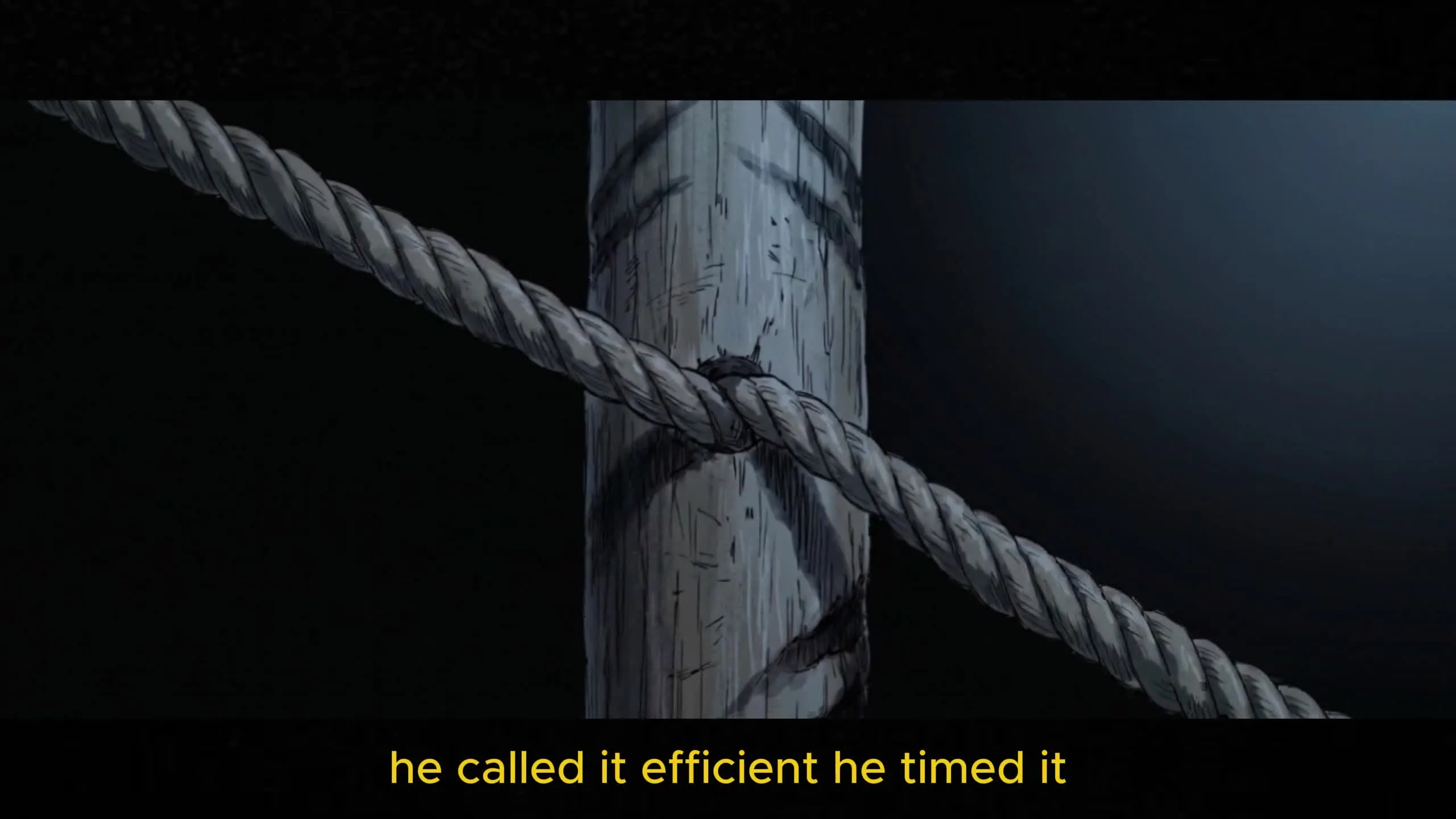
His routine inside 8213 West Summerdale never varies. First: drinks, poured strong, sometimes spiked. Second: conversation — politics, his connections, the photograph of himself shaking First Lady Rosalynn Carter's hand. Third: the trick. He produces real police handcuffs and demonstrates how to lock and unlock them. He lets his guest try them on. Then he locks the cuffs. Tight. In his own confession, he describes the moment: 'The trick is, you need the key.' Most victims understand at that exact moment that they are not getting out of the house. Then comes the rope — a short piece threaded through a wooden dowel cut from a hammer handle, looped around the victim's neck from behind. He calls it efficient. The medical term is garrote. Death comes in under two minutes.
1:20
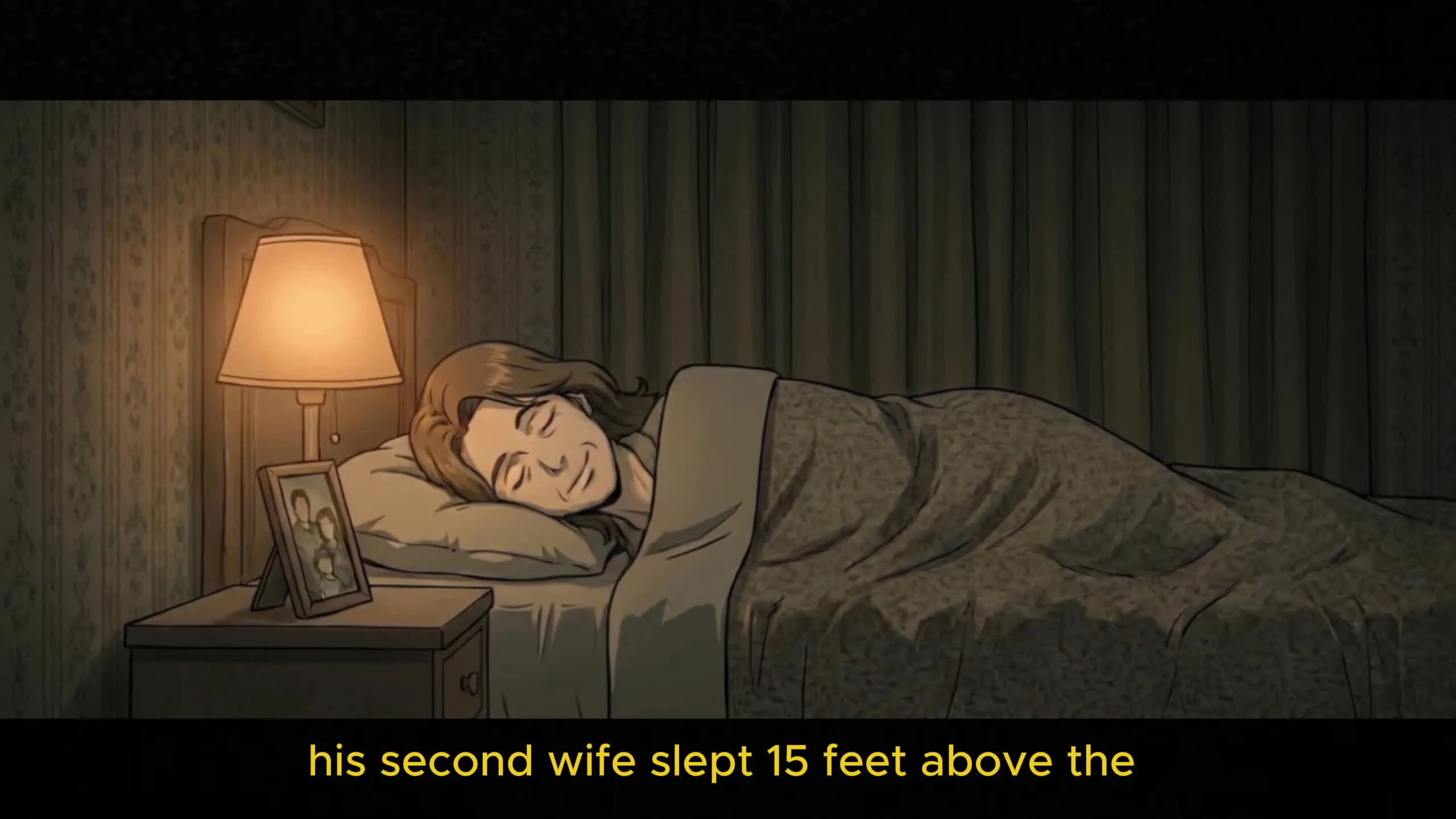
Once a victim is restrained in the handcuffs, Gacy loops his garrote — a length of rope threaded through a wooden dowel — around the victim's neck from behind and twists. The technique kills in 90 seconds to two minutes. He uses it on at least 32 of his 33 known victims. Sometimes he keeps the rope loose enough to prolong the torture for hours — burning victims with cigars, forcing degrading positions, using foreign objects. Then, when he is finished, he tightens the rope and counts. He buries most of them in the crawl space directly below the bedroom where he has killed them. Some are still warm when he starts digging. Between 1972 and 1976 he kills roughly one young man every four months. His second wife Carole Hoff lives in the house the entire time. She thinks the persistent sweet-rotting smell from the floorboards is a sewer leak. He tells her it is. She believes him.
1:14
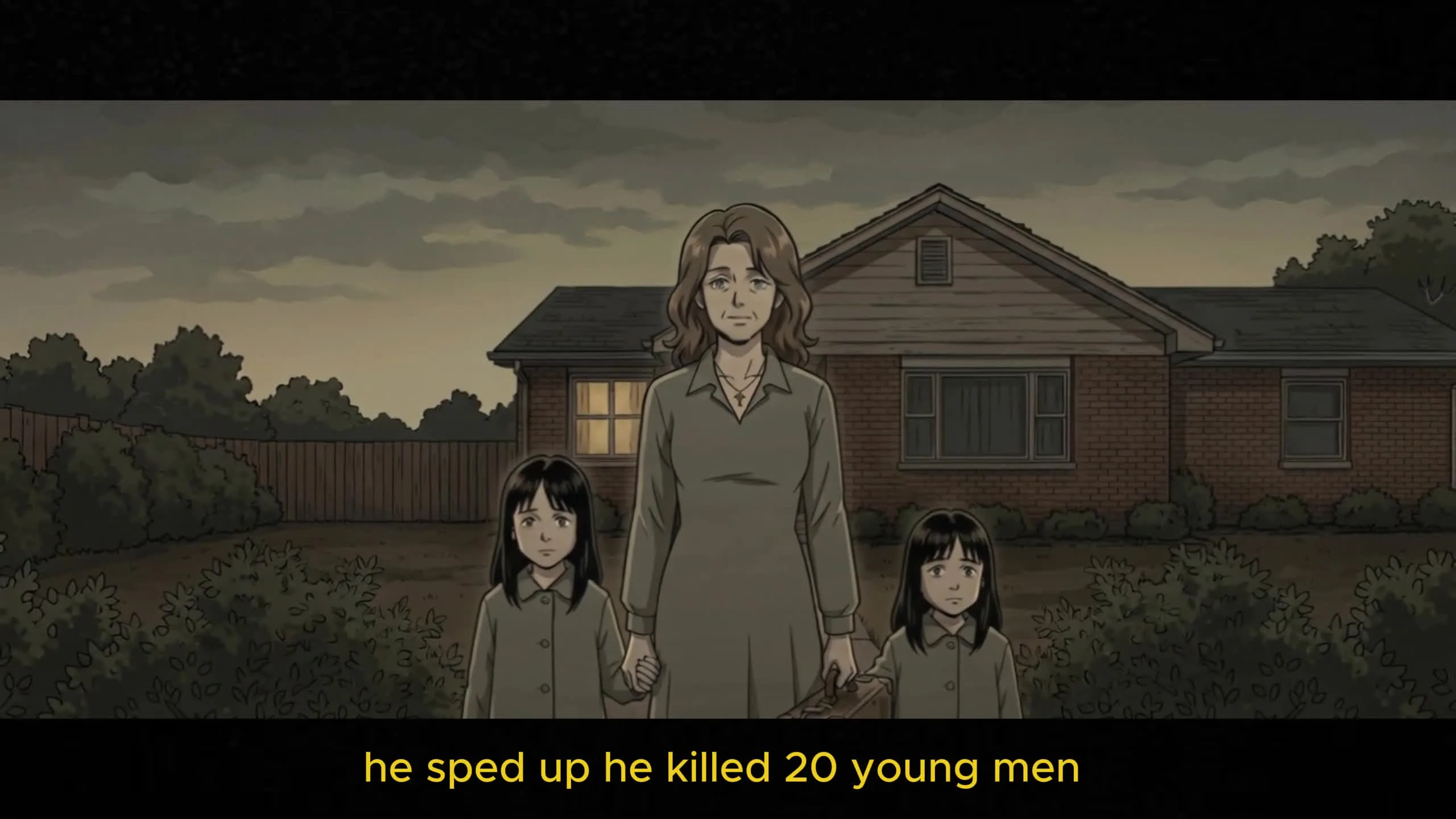
1972 to 1976. Carole Hoff is a kind, religious woman who moves into 8213 West Summerdale believing she has married a stable, civic-minded man. She notices the smell from the floorboards within months. Gacy tells her it is sewer runoff. He spreads lime and concrete in the crawl space to mask it. She notices her husband disappearing at night and returning at 3 a.m. covered in dirt. She notices he no longer wants intimacy. By 1975 she notices him bringing young men into the basement at odd hours and confronts him. He tells her he is gay, apologises, and cries. She files for divorce in 1976 and moves out of the house, never asking again about the smell. After Carole leaves, Gacy has no one watching him. In the 32 months that follow — April 1976 to December 1978 — he kills twenty more young men.
1:15
April 1976 through December 1978. Gacy lives alone at 8213 West Summerdale with no one upstairs to slow him down. He hires more young men at PDM Contractors. He volunteers at more hospitals in Pogo costume. He attends the Polish Constitution Day Parade and is photographed shaking hands with First Lady Rosalynn Carter. And every few weeks — he kills another one. Greg Godzik. John Mowery. Russell Nelson. Robert Gilroy. John Szyc. Frank Landingin. He buries them in overlapping trenches, stacking bodies on older bodies when the crawl space fills. When the crawl space has no more room, he starts burying in the garage and on the patio. When those fill, he drives north and drops four bodies off the I-55 bridge into the Des Plaines River. Two of them the river returns. The other two are never found. All the while, complaints from survivors, missing persons reports, and police reports about Gacy are filed — and ignored.
1:14
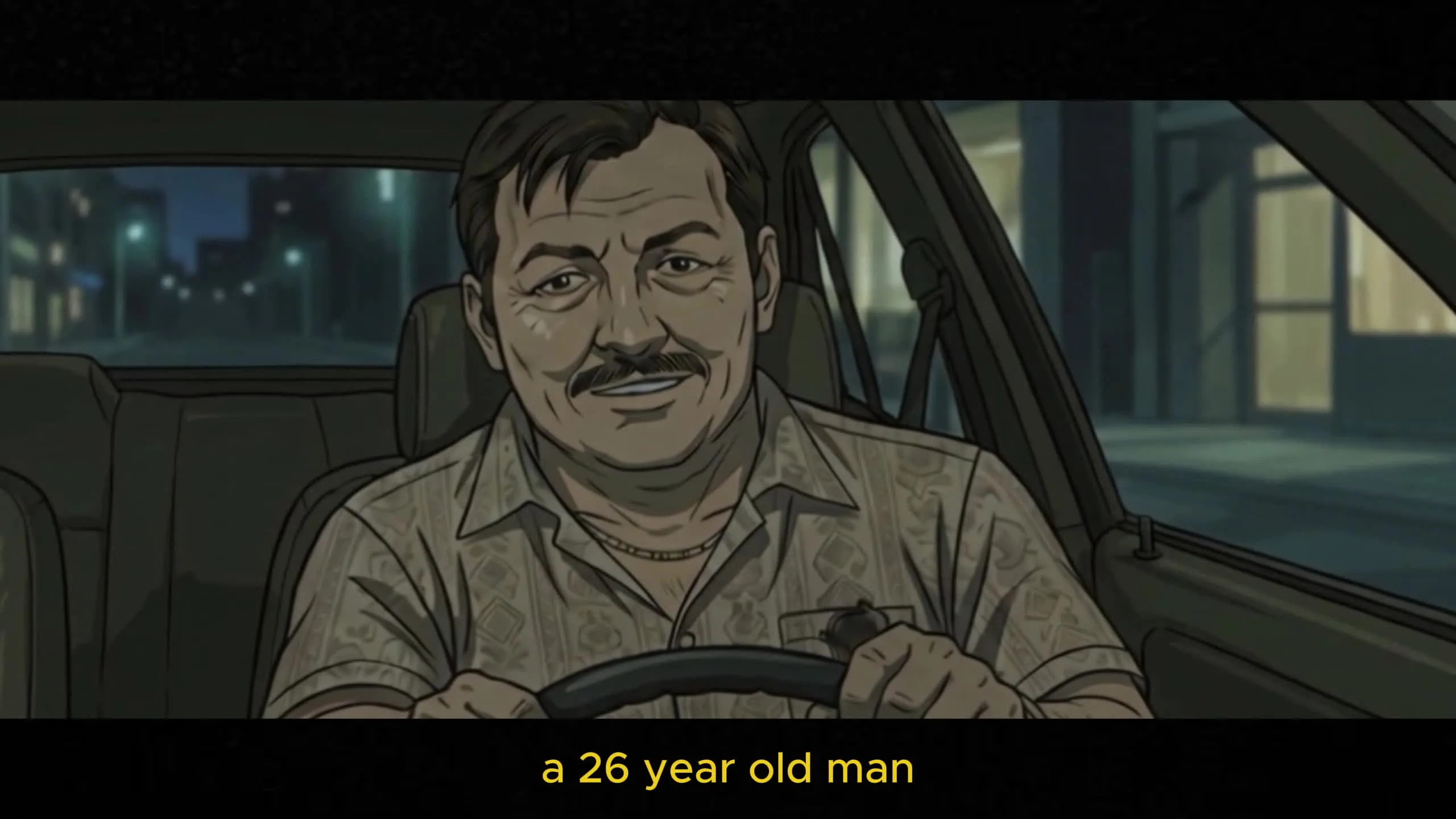
March 21, 1978. Jeff Rignall, 26, accepts a ride from Gacy in a Chicago bar. Inside the car, Gacy presses a chloroform-soaked rag over his face. Rignall wakes in Gacy's basement, handcuffed and naked. Gacy tortures him for hours — sexually assaulting him, burning him with cigars, holding his head underwater. At dawn, he chloroforms him again, drives him to Lincoln Park, and leaves him on a park bench. Rignall survives, goes to police, and gives a description of the attacker, the car, and the route. Chicago police do nothing. So Rignall and two friends stake out the expressway exit Gacy had used. After three weeks, they spot Gacy's car, follow him home, and hand the address of 8213 West Summerdale to police. Gacy is arrested July 15, 1978, and released on bail pending trial. He kills at least seven more young men before the trial date ever comes.

1:08
December 11, 1978. Des Plaines, Illinois. Robert Piest — 15, Eagle Scout, honour roll, Boy Scout troop leader, after-school stock boy at Nisson Pharmacy — tells his mother, waiting in the car on her birthday, that a contractor wants to talk to him about a job. He steps outside. John Wayne Gacy is waiting. Gacy drives him to 8213 West Summerdale, pours him a drink, and shows him the handcuff trick. Robert Piest is murdered shortly after 10 p.m. By midnight his mother is at the Des Plaines Police Department in tears. The duty officer, Lieutenant Joe Kozenczak, pulls pharmacy receipts and gets the name of every contractor in the store that night. One name stands out: John Wayne Gacy. Outstanding battery charge. Prior Iowa conviction for sodomy of a 15-year-old. Forty-eight hours later, Kozenczak drives personally to 8213 West Summerdale and rings the doorbell.
1:03
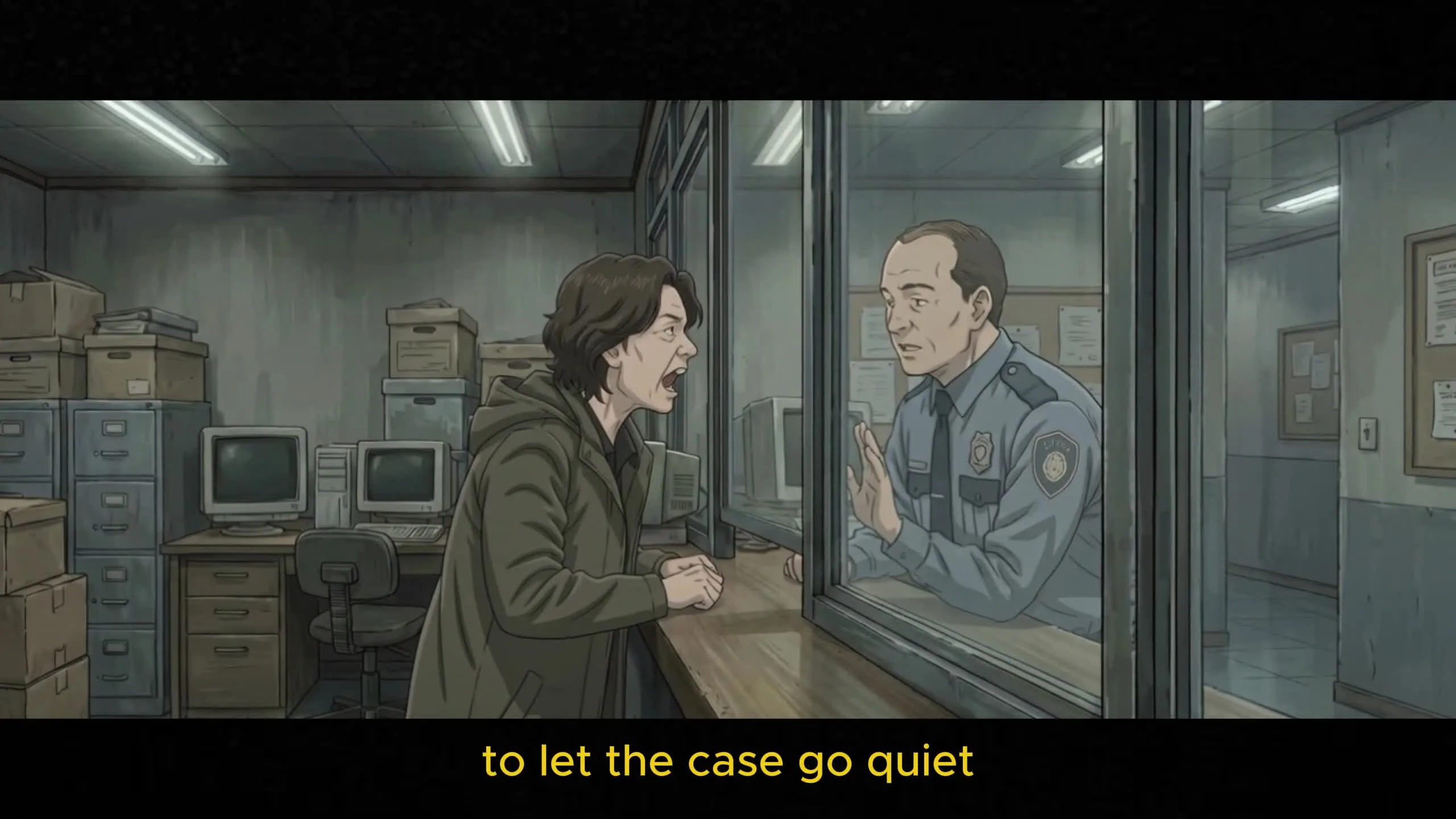
Elizabeth Piest files the missing person report at midnight. She calls police every day after. She calls news stations, organises search parties, and puts Robert's face on every front page. Many of Gacy's earlier victims had been runaways — drifters from broken homes whose disappearances had been classified as voluntary, never searched for hard. Robert had a mother like Elizabeth. Because of her, every one of the 33 murders Gacy had committed was about to be uncovered. The detective who ran the investigation said years later: 'Without his mother, Gacy might never have been caught. Not ever. We caught him because she would not let us stop.' On December 13, 1978, Kozenczak obtains the first search warrant for 8213 West Summerdale.
1:16
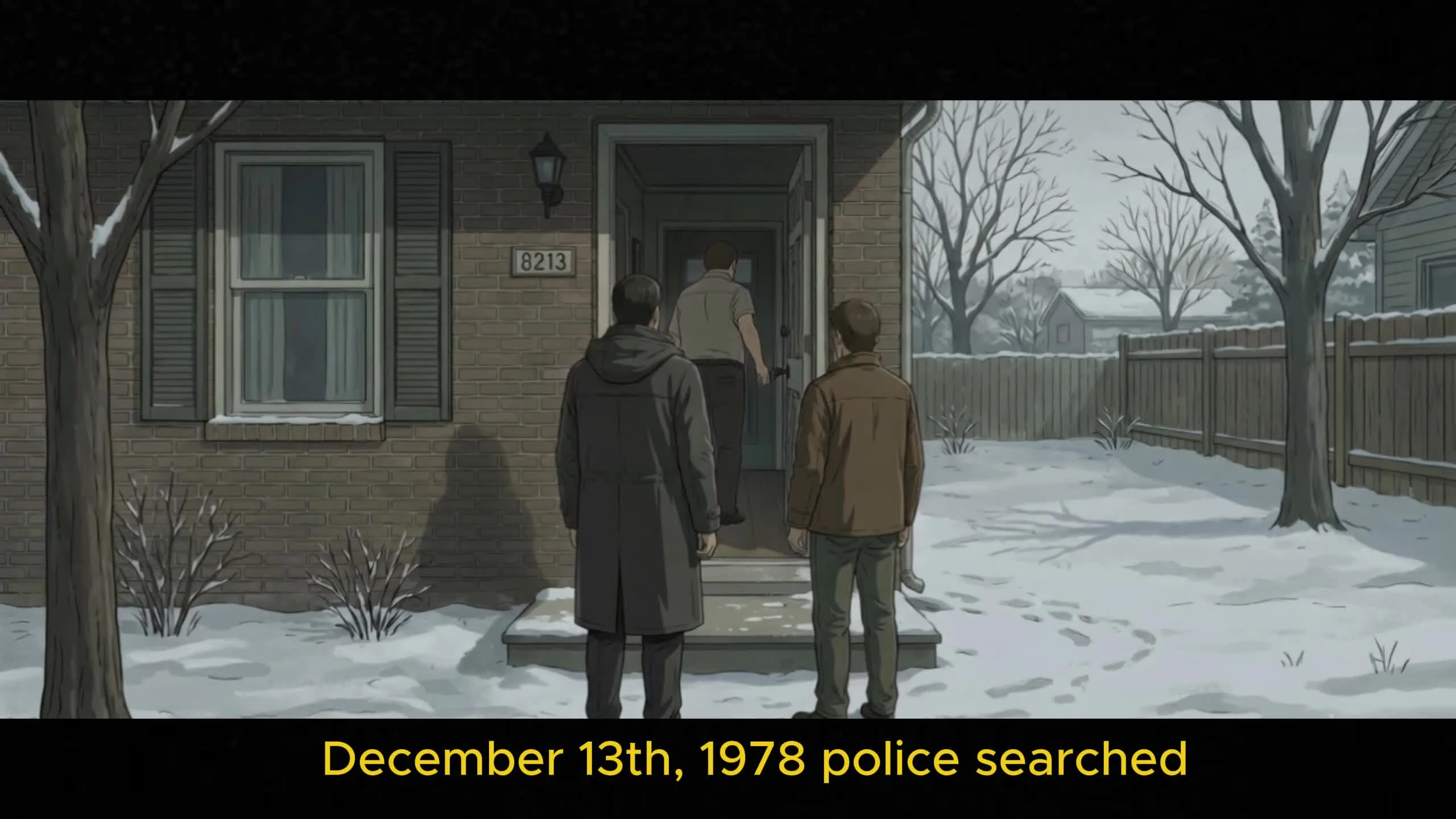
December 13, 1978. Des Plaines detectives execute a search warrant on 8213 West Summerdale. Gacy stays calm — inviting officers to look around, answering every question without hesitation. They find handcuffs in the attic, shackles, multiple driver's licences that don't belong to Gacy, a high-school class ring, police badges, and in the kitchen garbage, a photo development receipt from Nisson Pharmacy traced to a coworker who had slipped it into Robert Piest's jacket that evening. The receipt proves Robert was inside the house the night he disappeared — but without a body, there is no arrest. Kozenczak places Gacy under 24-hour surveillance. Two detectives follow him everywhere: to bars, job sites, his grandmother's funeral. Gacy invites them in, buys them dinner, gives them rides, and behaves as though they are his bodyguards. He is unravelling. The clown is cracking.
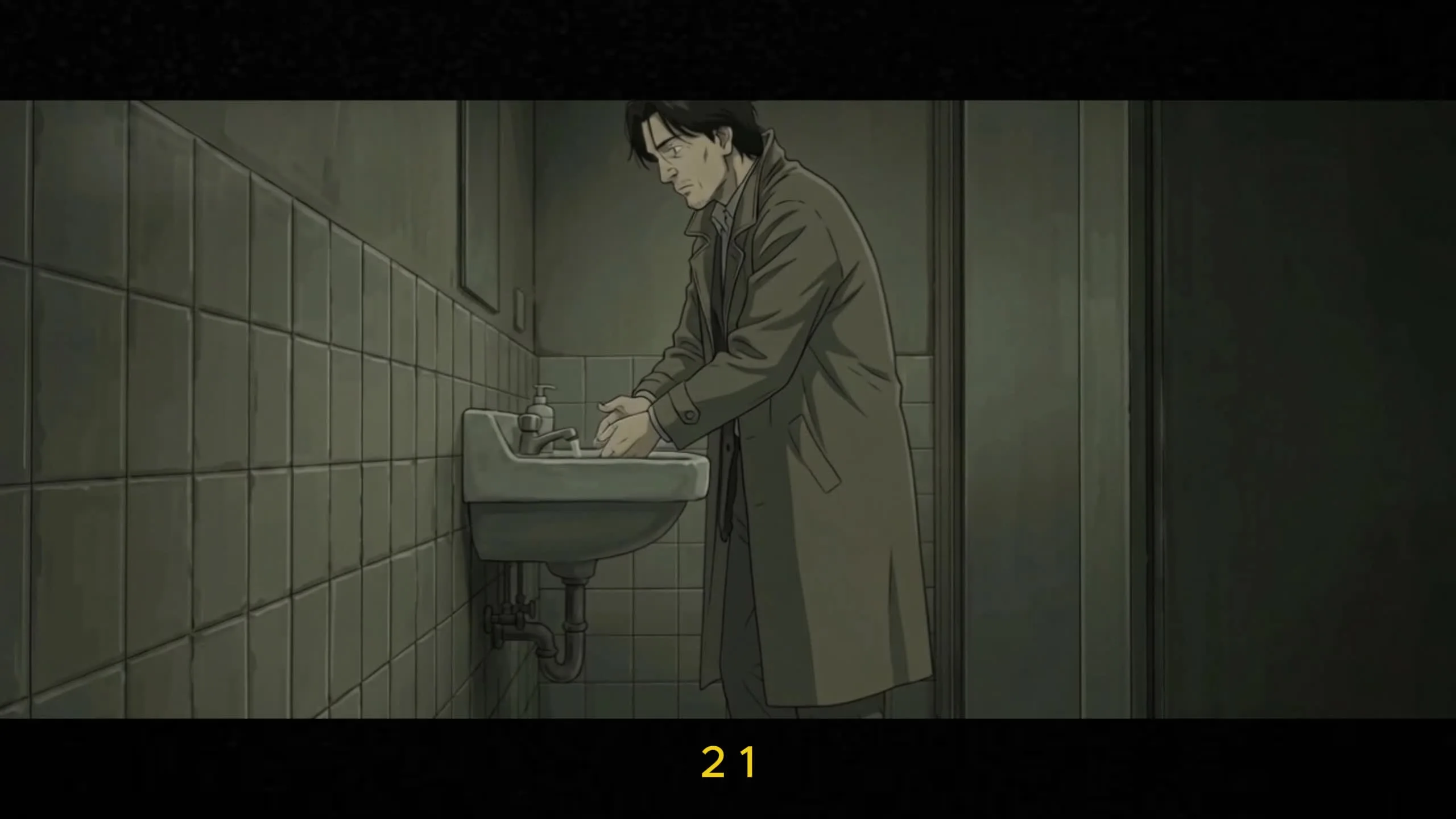
1:11
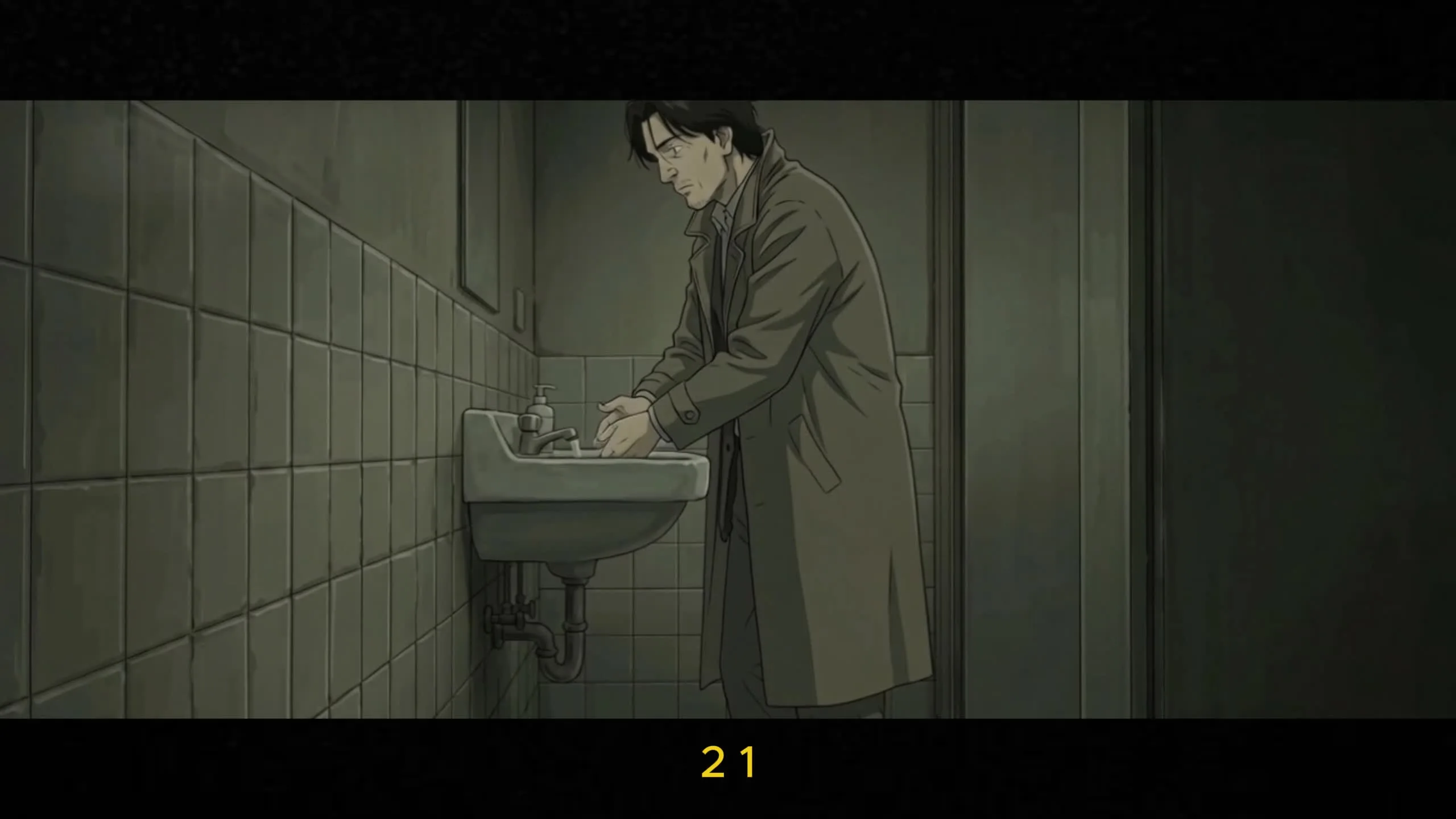
December 20, 1978. 8213 West Summerdale. Gacy invites two surveillance officers inside to warm up. Detective Bob Schultz uses the bathroom. While he is inside, the furnace kicks on, drawing air up from beneath the floorboards through the crawl space and pushing it through the house. Schultz smells it instantly — sweet, rotting, unmistakable. He later says: 'It smelled like a morgue. I knew right then. There were bodies in that crawl space.' He walks out and quietly tells his partner. They call Kozenczak. Kozenczak begins drafting the second search warrant immediately. That same night, at 3 a.m., John Wayne Gacy walks into his attorney's office and confesses everything to him through tears.
1:01
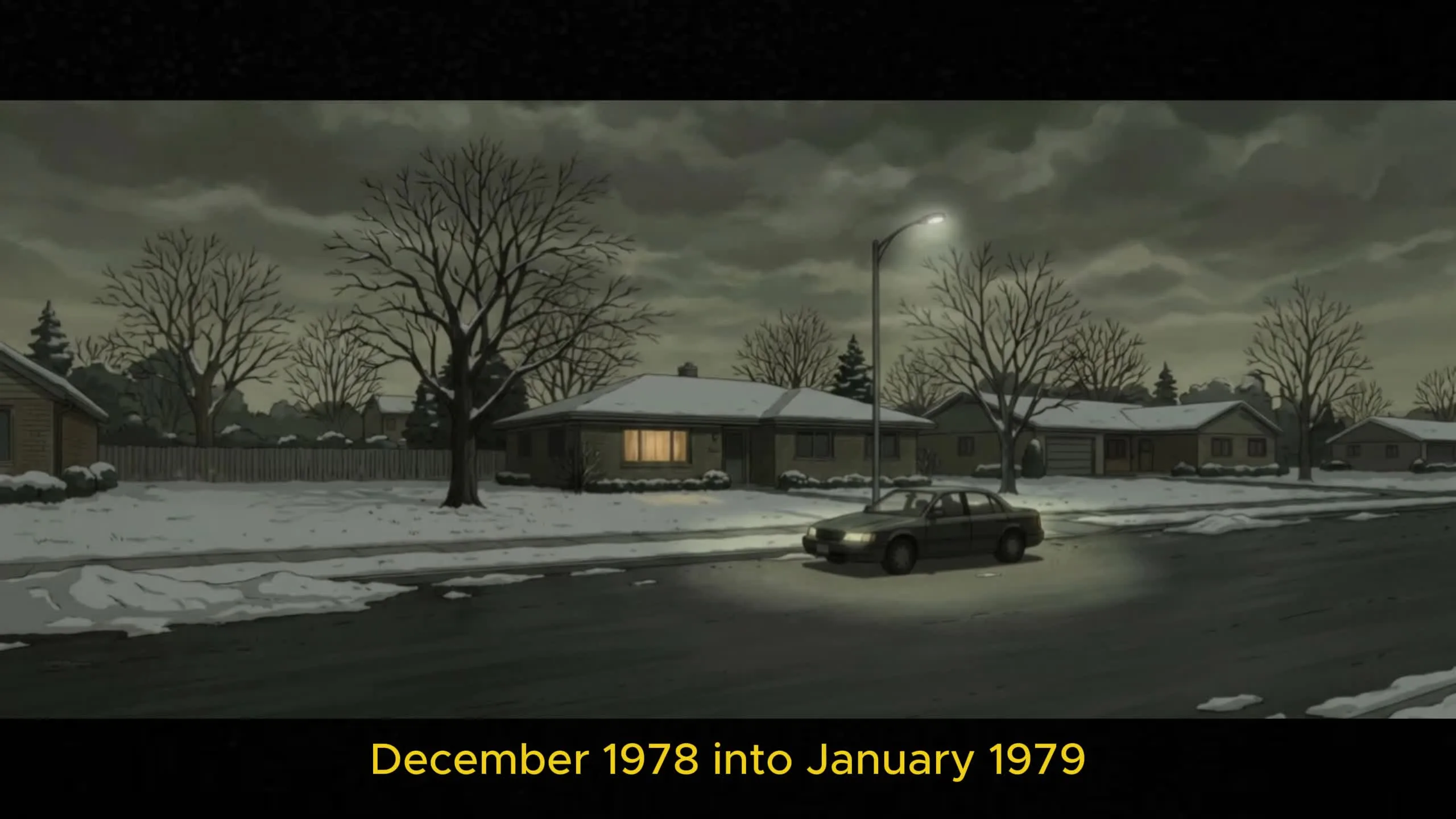
December 21, 1978. 4:30 p.m. The second search warrant is executed at 8213 West Summerdale. Officers escort Gacy out in handcuffs on a holding cannabis charge. Lieutenant Kozenczak walks into the master bedroom, opens the closet door, and pulls back the wooden trapdoor. He descends into the four-foot crawl space with a flashlight. The smell is overwhelming — lime, dampness, decomposition. Evidence technician Daniel Genty starts digging. Less than two feet under the dirt, he uncovers what he first mistakes for a tree root. It is a human arm. Within hours, Cook County calls in the medical examiner's office and the National Guard for excavation support. Over the next 13 days, they remove twenty-six bodies from the crawl space, three more from the garage and patio, and four more are later recovered from the Des Plaines River. Thirty-three young men. Most between 14 and 21 years old.
1:07
The bodies come out one at a time through December 1978 and January 1979. Some have been there six years, some six months. Dental records identify the first wave — John Butkovich, Greg Godzik, John Szyc, Tommy Boling. But many others were never reported missing: their families had been told they were runaways, and had stopped looking. Of the 33 victims, eight remain unidentified for decades. In 2011 Cook County Sheriff Tom Dart reopens the case using modern DNA technology. In 2017, one of the eight is finally identified as 19-year-old William Bundy of Chicago, missing since 1976. His sister has been waiting 40 years to bury him. Several of the eight are still unidentified. They are buried under headstones in a Chicago cemetery that read: 'We Are Remembered.' They are remembered — but by strangers.
1:12
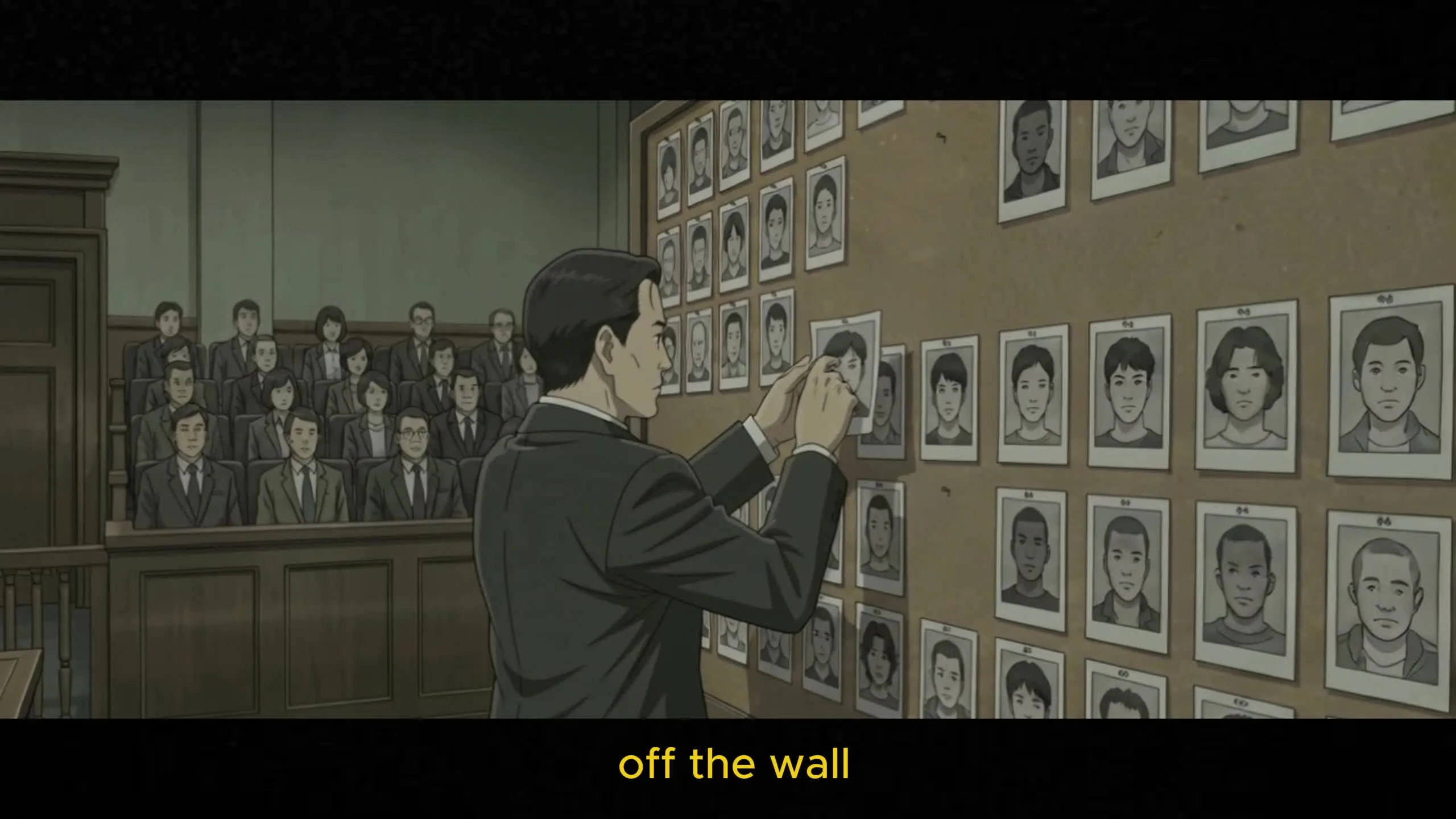
February 1980. Cook County Circuit Court. Gacy is on trial for 33 counts of murder. The defence pleads not guilty by reason of insanity. Prosecutor William Kunkle calls survivors — Donald Voorhees, Jeff Rignall, the pharmacy clerks who watched Gacy speak to Robert Piest. Then comes the closing argument. Kunkle has had the actual wooden trapdoor from 8213 West Summerdale transported to the courtroom and installed in front of the jury box. Behind him, mounted on a board, are photographs of all 33 victims. Kunkle takes the photographs down one at a time. He walks each face slowly across the courtroom. He drops it through the trapdoor into a wooden bin below. Thirty-three times. One face after another. The jury watches in complete silence. They deliberate for less than two hours. Guilty on all 33 counts.

1:13
March 1980 through May 1994. Stateville Correctional Center. Gacy appeals to the US Supreme Court. Every appeal is rejected. Inside, he paints obsessively — self-portraits in Pogo the Clown makeup, skulls, Disney characters, Christ figures — selling them through a prison art programme that generates thousands of dollars. He launches a $1.99-per-minute telephone hotline. He writes letters to victims' families claiming his employees buried the bodies while he was on business trips. Some families read the letters. Some burn them unopened. His execution date is set: May 10, 1994. Final meal: a bucket of original-recipe KFC, fried shrimp, French fries, strawberries, and a Diet Coke — the KFC a deliberate reference to the Waterloo franchise where everything began. He eats it knowing exactly which restaurant his father-in-law had once owned.
1:26
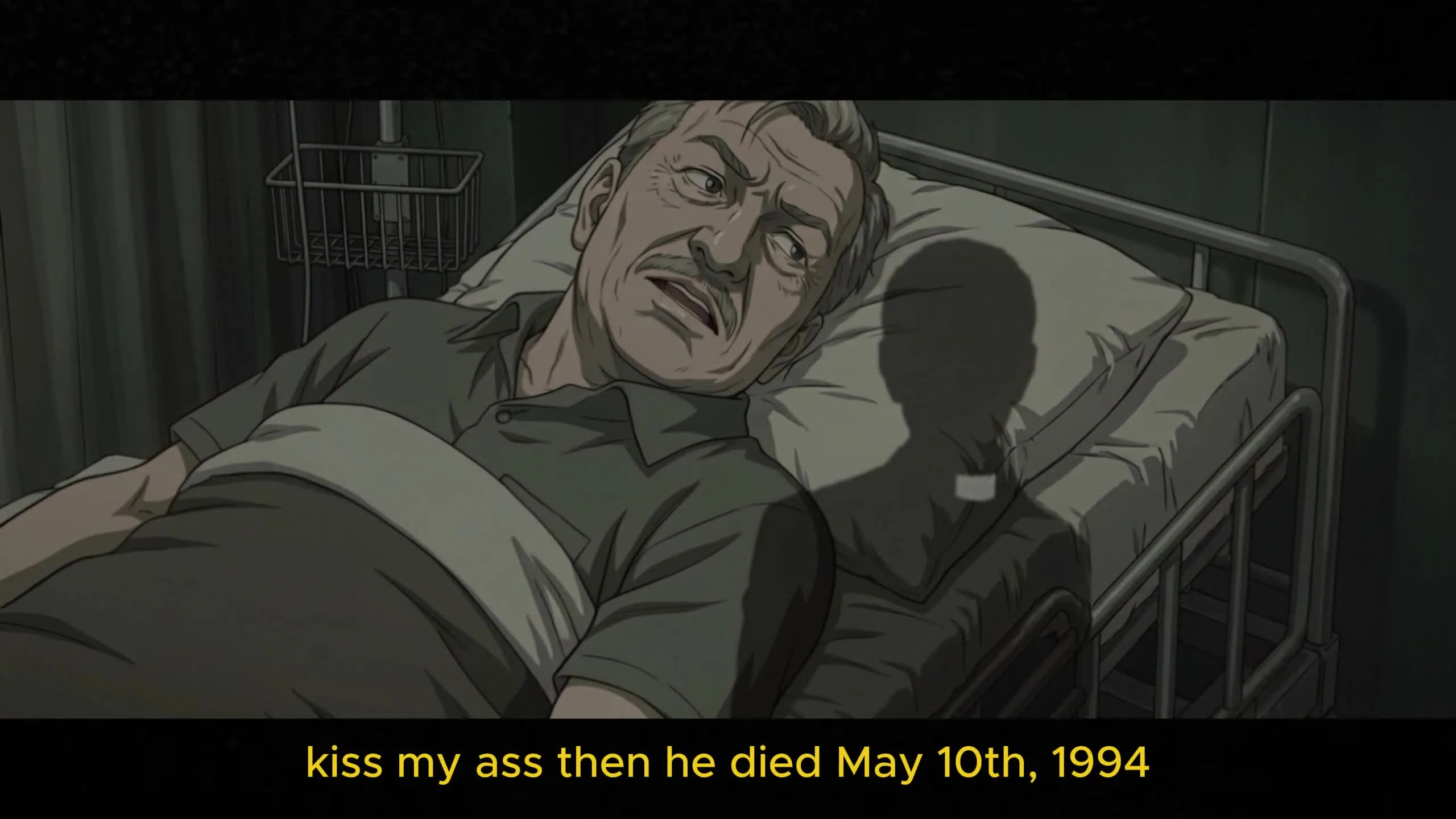
May 10, 1994. 12:58 a.m. Stateville Correctional Center, Joliet. John Wayne Gacy is strapped to the gurney. The chaplain reads the rite. The lethal injection begins. The IV malfunctions mid-procedure and is replaced. His final spoken words, directed at the chaplain: 'Kiss my ass.' He is pronounced dead at 12:58 a.m., aged 52. His brain is removed at autopsy and sent to a neuropathologist looking for an organic explanation for his behaviour. The neuropathologist finds nothing. Gacy was, in every clinical sense, neurologically normal. He is buried at Mayhill Cemetery in Niles, Illinois — unmarked grave, family's request. He never apologised to any family. He never identified a single one of the boys still buried under headstones that read 'Unknown.' He maintained until the moment the chemicals entered his veins that the bodies in his crawl space had been buried there by someone else. Thirty-three boys. One trapdoor. And a mother named Elizabeth Piest who refused to let the police forget her son.