


10 Episodes
The Gospel Story
A narrator-driven retelling of the Exodus, told at domestic scale — beginning under the lash of Egypt and the birth of one hidden child. Pharaoh, watching the Hebrews multiply faster than his garrisons, moves to break them from the inside: first ordering the midwives to kill newborn sons, then, when they quietly defy him, decreeing that every Hebrew boy be cast into the Nile. Against that, ordinary people hold the line — two midwives who choose life, an elder who counsels survival over a doomed fight, and Amram and Jochebed, who bring a son into a world that wants him dead. It ends where the deliverer's story begins: a perfect baby, born in lamplight, and a family that was never there.
10 Episodes

1 min. 15 sec.
On the Ramesses construction site, an overseer kicks wet mortar off Amram's wall just to make him refill it; an old man, Eli, tells him not to give them his anger — it's the only thing they haven't figured out how to take. In the throne room, a scribe reads the census: Hebrew men of working age have grown nearly thirty-eight percent in twelve years. Pharaoh stops him — not the number, the rate. He crosses to the window, looks out over the city the Hebrews are building, and measures the threat: they outnumber his eastern garrison. Egypt, he says, has not come this far to be undone from the inside.

1 min. 16 sec.
Pharaoh summons the Hebrew midwives, Shiphrah and Puah, to a private chamber and speaks of the threshold at birth — when a child has come but not yet drawn breath. When a Hebrew son is born, he tells them, let him die; the daughters may live. Shiphrah names it plainly: you are asking us to kill children. Walking home through Goshen, the two women pass a mother nursing her infant and barely manage to smile back. At a corner, Shiphrah decides — tomorrow a Hebrew woman will have a baby, and that baby will live; she has been pulling life into this world since before that man wore a crown.

1 min. 18 sec.
Days later the census still shows growth among the males, and Pharaoh demands an explanation. The midwives claim the Hebrew women labor too fast — the child is born and breathing before they arrive, no threshold left to manage. Pharaoh tells them flatly that he knows they're lying, and that what he can't understand is what they're afraid of — because it isn't him. It's their God. He doesn't wait for an answer. He issues a new decree: every Hebrew boy born from this day will be cast into the Nile; the daughters may live.

1 min. 19 sec.
The decree moves through Goshen — a mother pulling her child close, a father hurrying with a son pressed to his chest. At a gathering, a young man argues they should fight: there are enough of us. Eli answers that there are enough to start a war, not to finish one — a man who charges a wall alone only breaks himself; they survive, hide their sons, keep their faith, and wait for God to answer. Amram listens at the edge, then walks home and tells Jochebed. We don't hear the words, only watch her breath catch — and then she stands, very straight, and says they will not touch her children.

1 min. 1 sec.
Bithiah, Pharaoh's daughter, finds the basket while bathing and lifts the crying infant into her arms. Told he is a Hebrew boy the decree condemns, she refuses to look away — "He is a baby." Downstream, Miriam watches.

58 sec.
Miriam steps out of the reeds and offers to find a Hebrew wet-nurse, and Bithiah agrees. The girl runs for Jochebed, who is hired to nurse her own son — and told to bring him to the palace once he is weaned.

1 min. 16 sec.
Jochebed carries the baby home, and Amram reckons with raising a son they will one day have to surrender to the palace. Through months of ordinary love the family holds him close, while Miriam whispers to him of the God who sees.

45 sec.
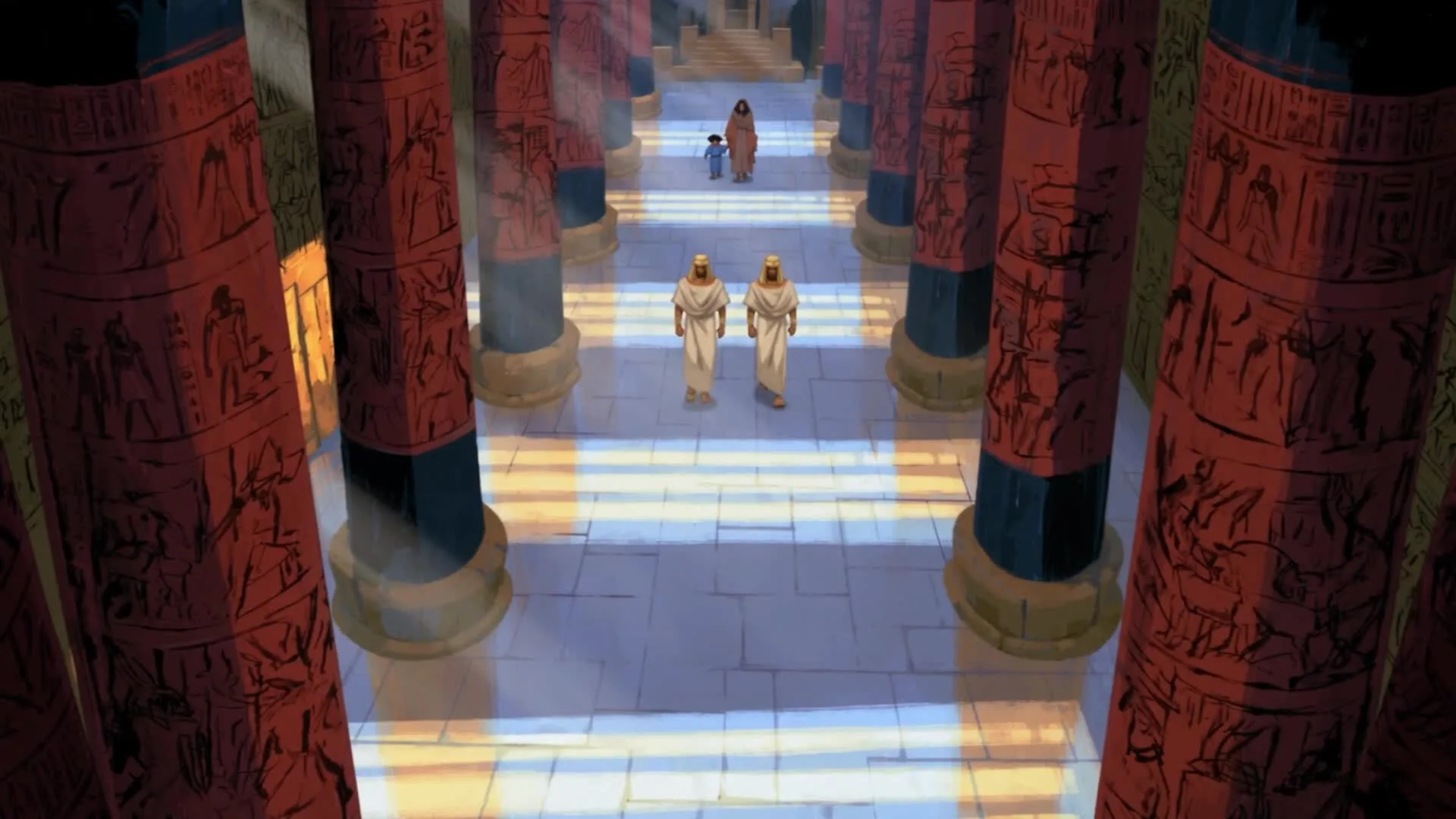
At the palace gates the family says goodbye to the toddler, each in their own way. Miriam takes his hand and promises to find him again, and Jochebed carries him through the gates as he waves back at everyone he knows.
59 sec.
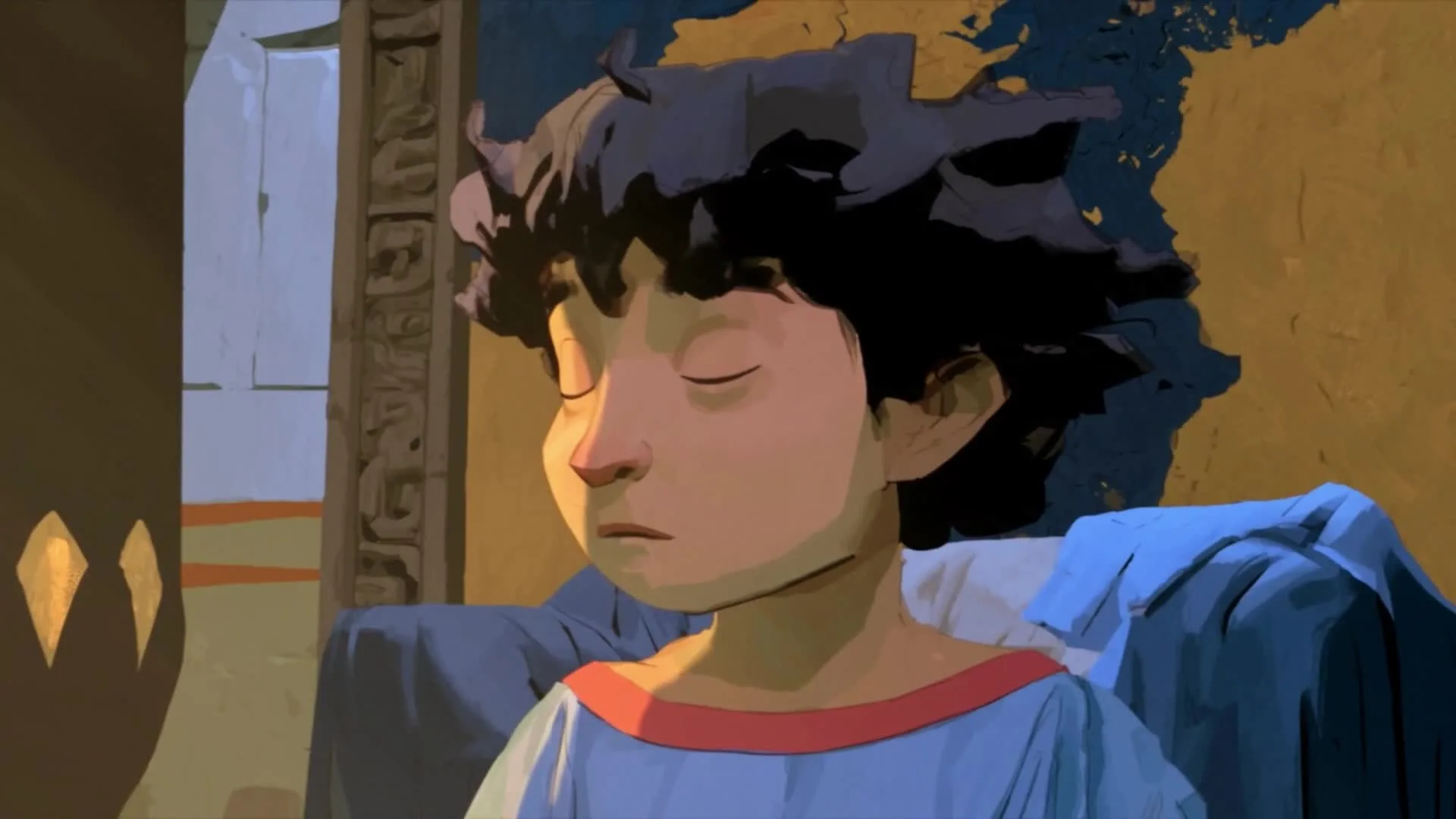
Inside the palace, Jochebed hands the grown child to Bithiah, who gently tells her it would be kinder not to stay in his life. Kneeling to him one last time, Jochebed tells him to be good, be brave, and remember who he is — then walks away.
44 sec.
Bithiah names the boy Moses — drawn out of the water — and leads him into his new home. Alone in the courtyard, he stills at the faint sound of Hebrew voices beyond the wall, as Miriam and Jochebed watch the palace from afar and the Nile runs on.