

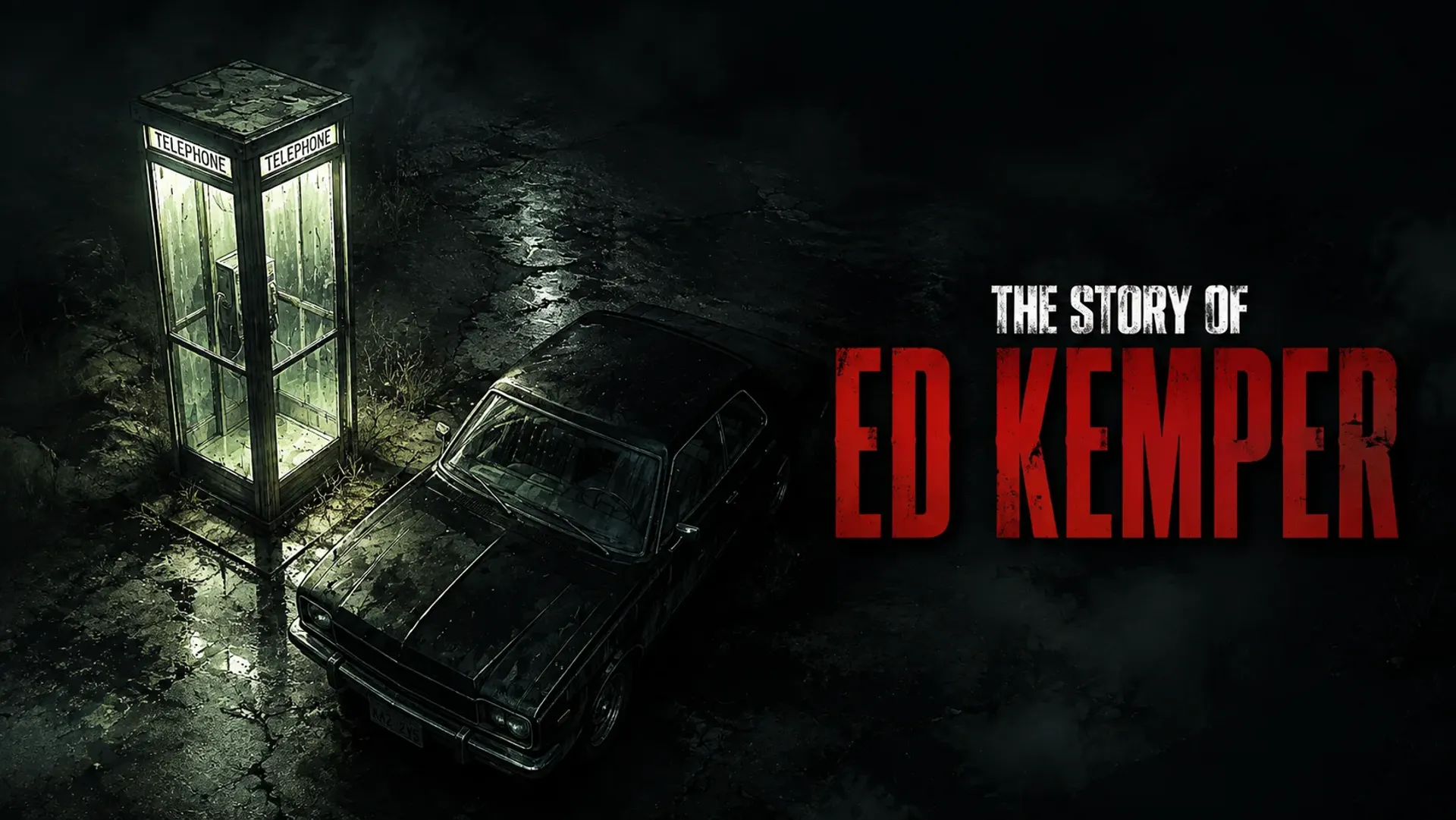
20 Episodes
.SIP
A narrator-driven true-crime biography of Edmund Emil Kemper III — the 6'9", 145-IQ 'Co-Ed Killer' who murdered ten people in 1960s and '70s California, beginning with his grandparents at fifteen and ending with his own mother. Told in chronological order, the series traces his life from a childhood locked in a basement, through five years inside a psychiatric prison that taught him how not to get caught, into a methodical spree against young female hitchhikers around Santa Cruz — all while he drank with the very police hunting him. It builds to the matricide that was the destination all along, his unprompted phone-booth confession, and a death-row afterlife in which he helped the FBI invent modern criminal profiling. Each episode is a self-contained micro-drama with a hook, a body, and a cliffhanger that pulls the viewer into the next.
20 Episodes
1 min. 7 sec.
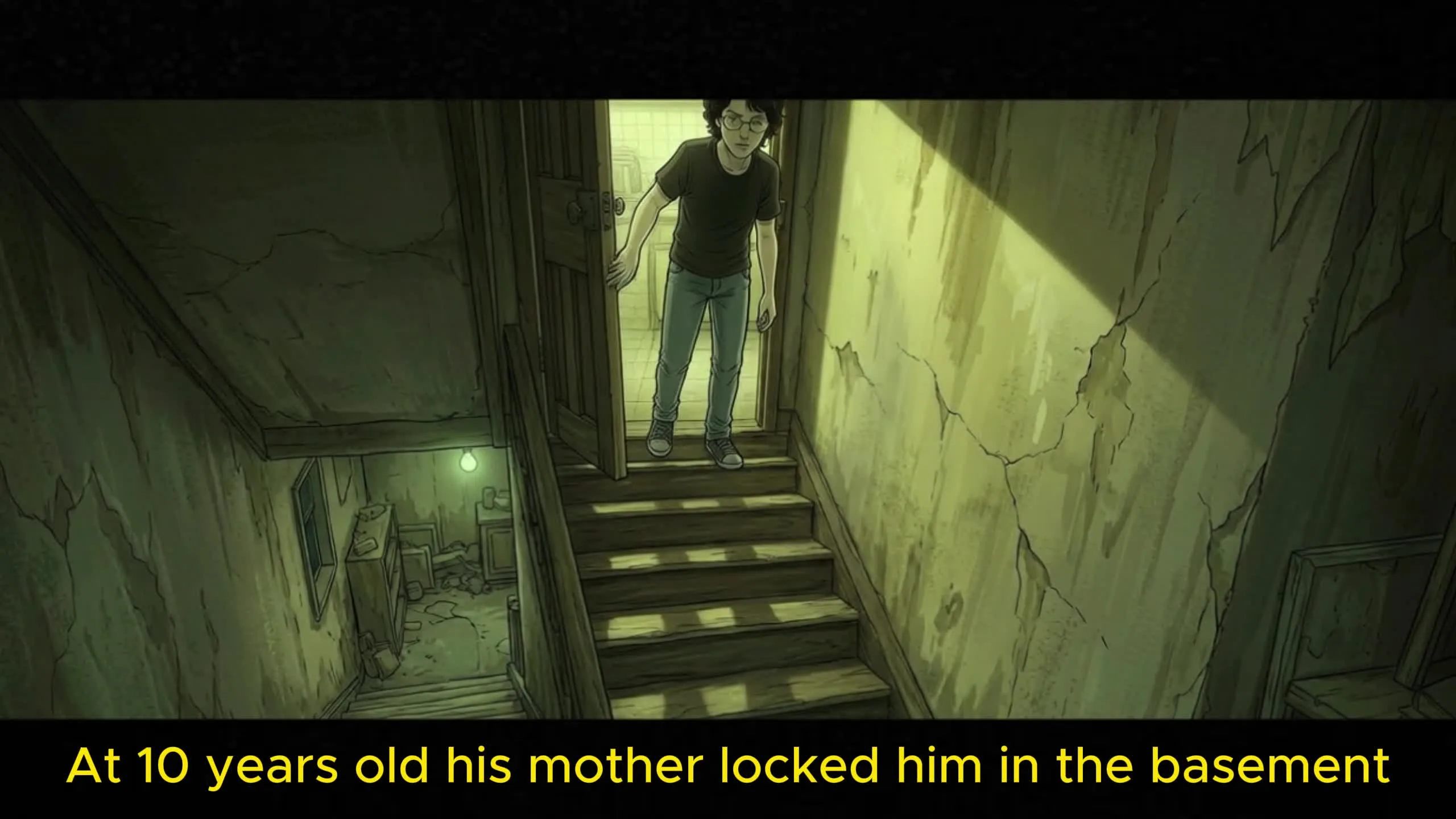
Burbank, 1948: born to a war-haunted father and a mother who decides he is something to be contained. After the divorce she moves him to Montana and makes him sleep in a locked, rat-infested basement while his sisters sleep upstairs. By ten he has buried the family cat alive, dug it up, and mounted its head on a spike — and his mother keeps telling him no woman will ever love him.

56 sec.
His childhood games are 'Gas Chamber' and 'Electric Chair' — he has his sisters tie him to a chair and flip the switch so he can convulse and 'die.' He decapitates their dolls, admits a 'sexual thrill' when the heads pop off, and at seven stalks his teacher with his father's bayonet. When teased about a girl, he says calmly that he'd have to kill her first — and the adults keep calling him just a quiet, strange boy.
56 sec.
At fourteen Kemper hitchhikes a thousand miles to Los Angeles to find his father — who has a new wife, a new stepson, and no room for him. He's shipped off again to his grandparents' remote ranch in North Fork, California. His grandmother Maude is strict, religious, and controlling, reminding him of the one woman he's ever wanted to hurt. He stews on that isolated ranch for almost a year.
1 min. 7 sec.
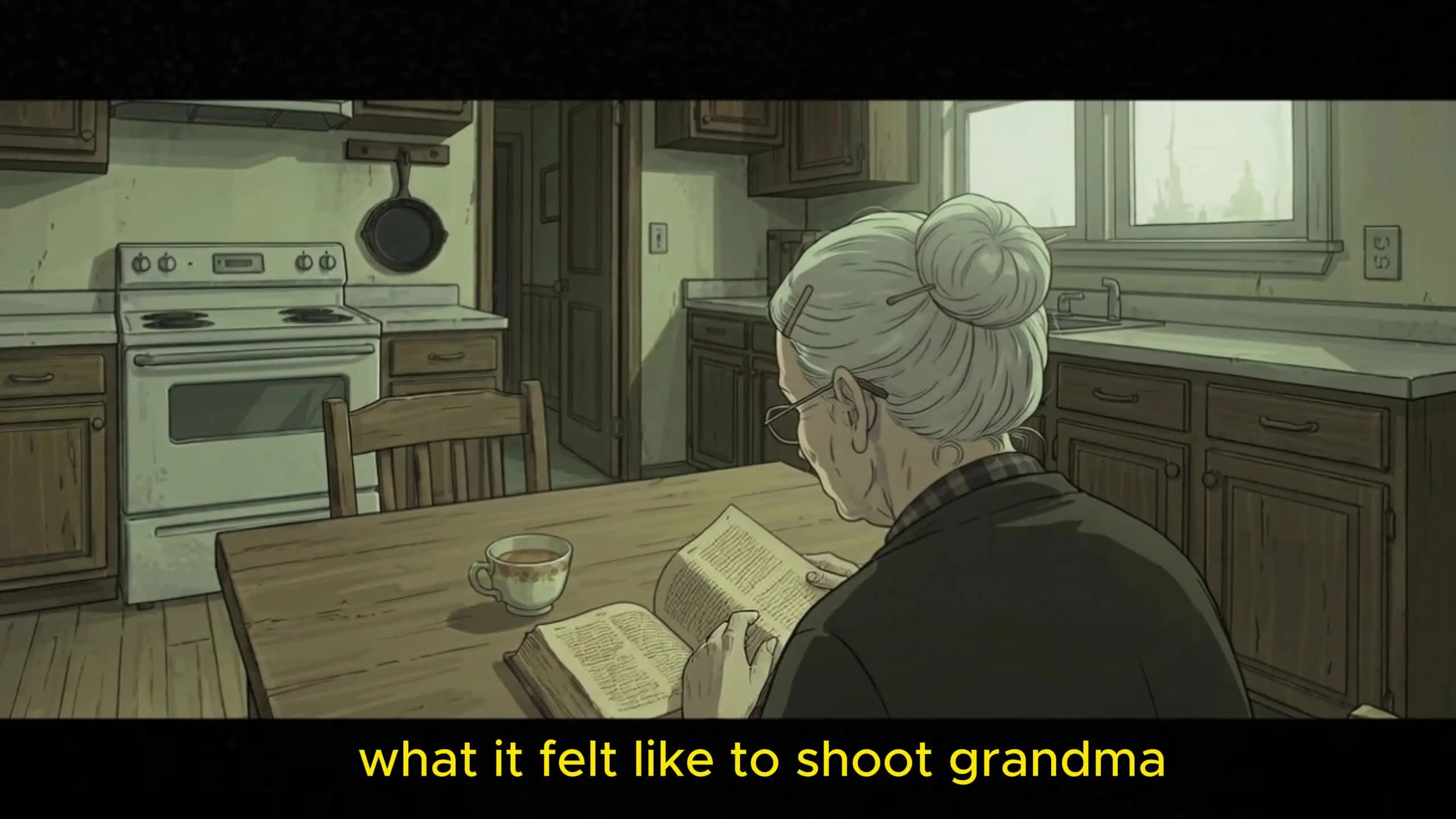
August 27, 1964: fifteen-year-old Kemper shoots his grandmother Maude in the back of the head as she reads, then stabs her to be sure. When his grandfather returns from the store, he shoots him in the driveway — later saying he wanted to spare the old man the shock. Then he calmly phones his mother and waits on the porch, completely composed, for the police to arrive.

1 min. 10 sec.
Atascadero State Hospital, a maximum-security facility for the criminally insane, becomes his classroom. The youngest inmate, he tests at a 145 IQ and is put to work in the prison psychology lab, learning exactly how psychiatrists write up offenders. The sex offenders and rapists around him talk about what they'd do differently next time — and he takes notes. On his 21st birthday, against every recommendation, they let him out.
54 sec.
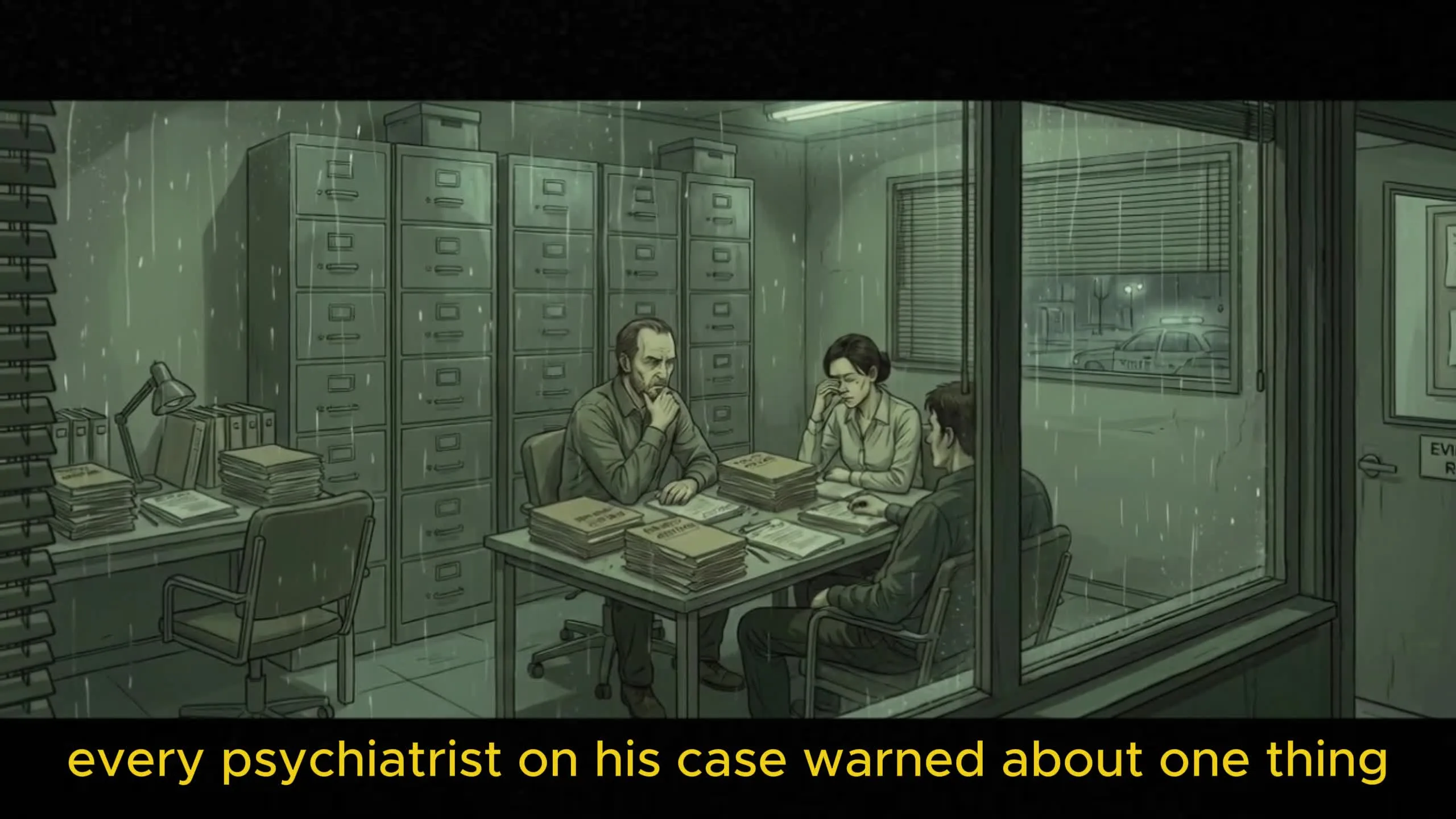
Released into the custody of the one person every psychiatrist warned against, Kemper moves back in with his mother Clarnell in Aptos. The daily belittlement resumes — she still speaks to her 6'9" son like the boy in the basement. Rejected by the Highway Patrol for being too tall, he takes a flagman job with CalTrans, crashes a motorcycle, and walks away with a $15,000 settlement.

1 min. 9 sec.
He spends the settlement on a two-tone 1969 Ford Galaxie that could pass for an unmarked police car, and bolts the passenger door so it can't be opened from inside. The trunk fills with handcuffs, plastic bags, a knife, a blanket, and eventually a .22. His mother's UC Santa Cruz parking sticker gives him campus access, and two years at CalTrans have mapped every back road in his head.
1 min. 4 sec.
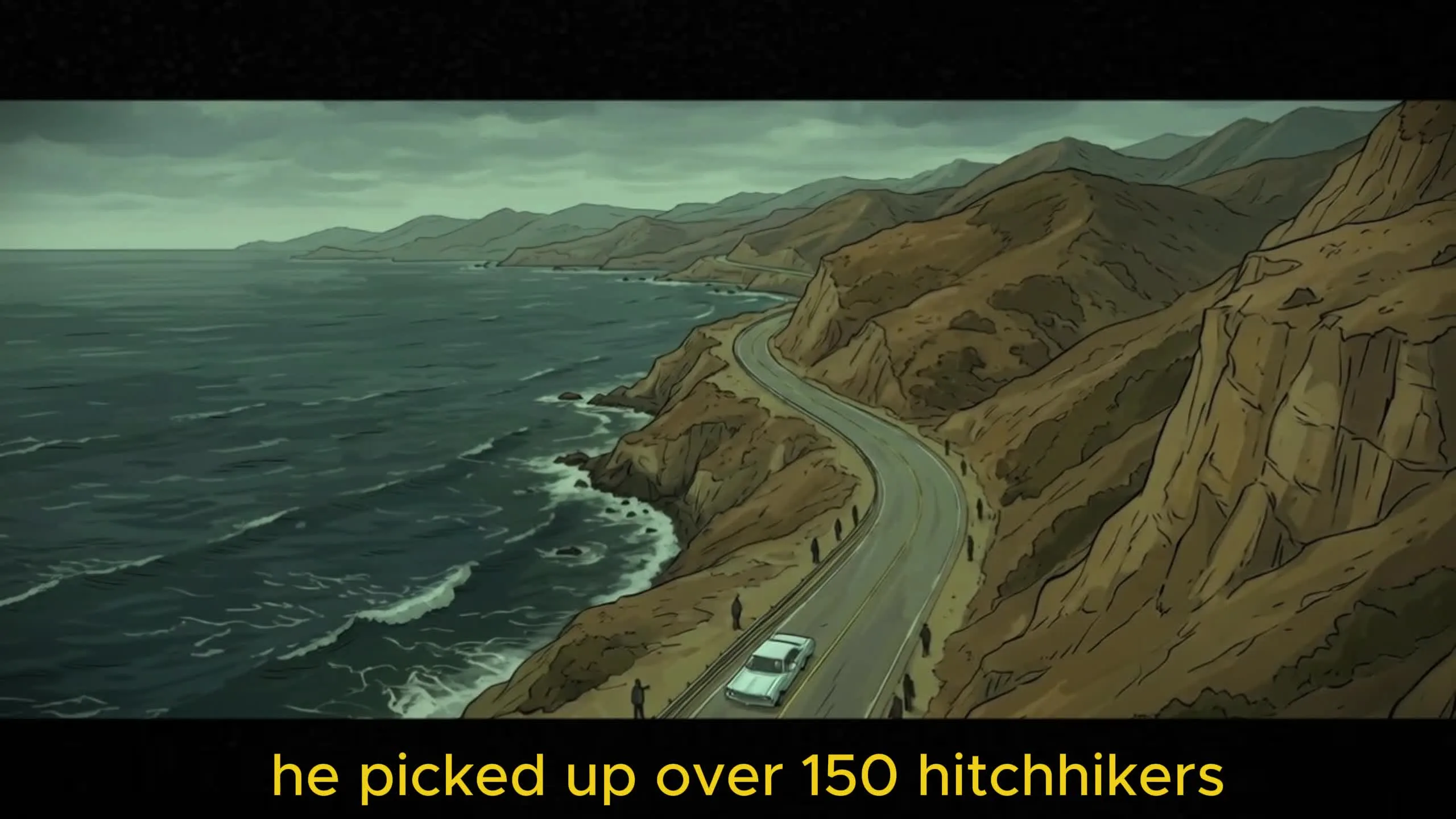
Before he kills anyone, Kemper picks up more than 150 female hitchhikers around Berkeley and Santa Cruz — and lets every one of them go. He's practicing: learning to win trust, control the conversation, and gauge how long he can hold someone without alarming them. He's waiting, he later says, for 'the little zapples.' Then in May 1972, after another fight with his mother, the wiring finally snaps.
1 min. 5 sec.
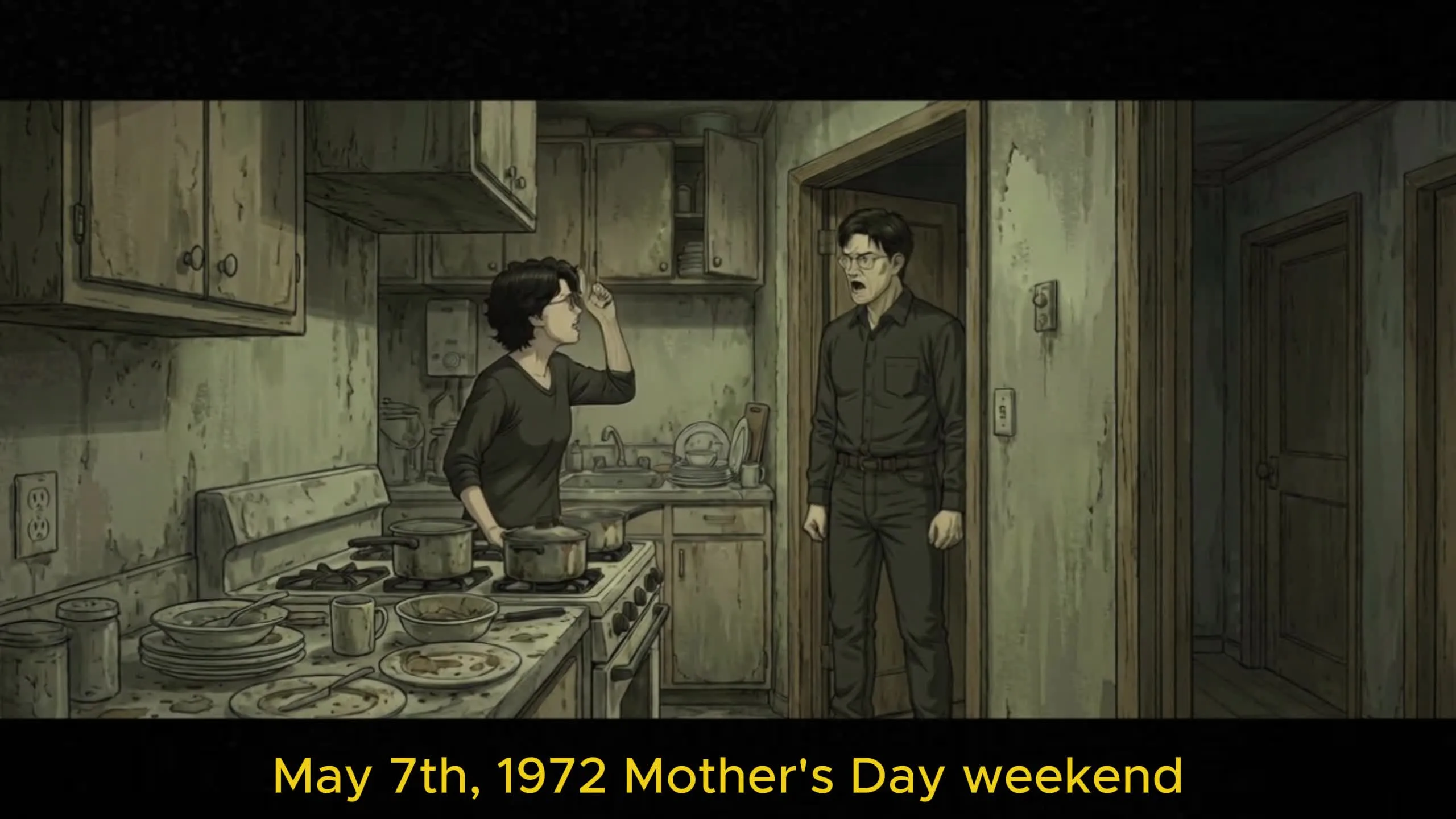
Mother's Day weekend, 1972: Kemper picks up Fresno State students Mary Ann Pesce and Anita Luchessa, both 18, hitchhiking toward Stanford. He drives them the wrong way for an hour on a route he knows from CalTrans, then handcuffs one and locks the other in the trunk before killing both. He takes the bodies home to decapitate and dismember them — and on the drive, a cop pulls him over for a broken tail light and never checks the trunk.

54 sec.
Kemper drinks constantly at the Jury Room, the cop bar across from the Santa Cruz courthouse, where the officers nickname him 'Big Ed' and tell him about their missing-girls cases. He listens to every theory and dead-end lead, knowing exactly what they don't. At least once he drives home from the bar with a body in his trunk. The police aren't incompetent — he's simply too close to imagine.
57 sec.
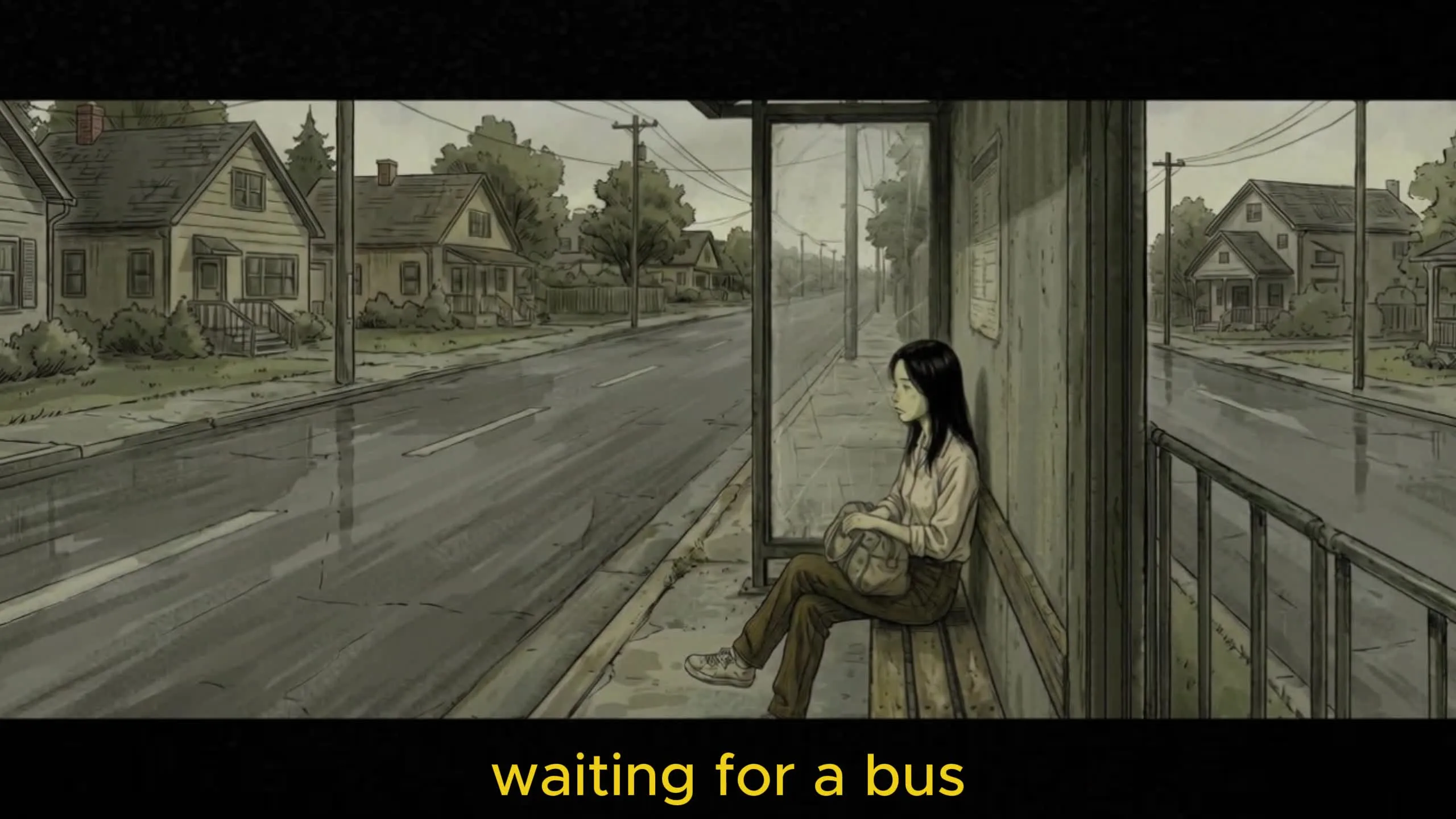
September 1972: fifteen-year-old dancer Aiko Koo, running late for a San Francisco ballet class, gives up on the bus and sticks out her thumb. Kemper drives her to a spot he's scouted, strangles and rapes her. Then he parks outside the Jury Room, has drinks with the cops, and steps back out to 'admire his catch like a fisherman' in the trunk. After Aiko Koo, he stops fighting the urge and starts planning the next before the last is buried.
1 min. 7 sec.
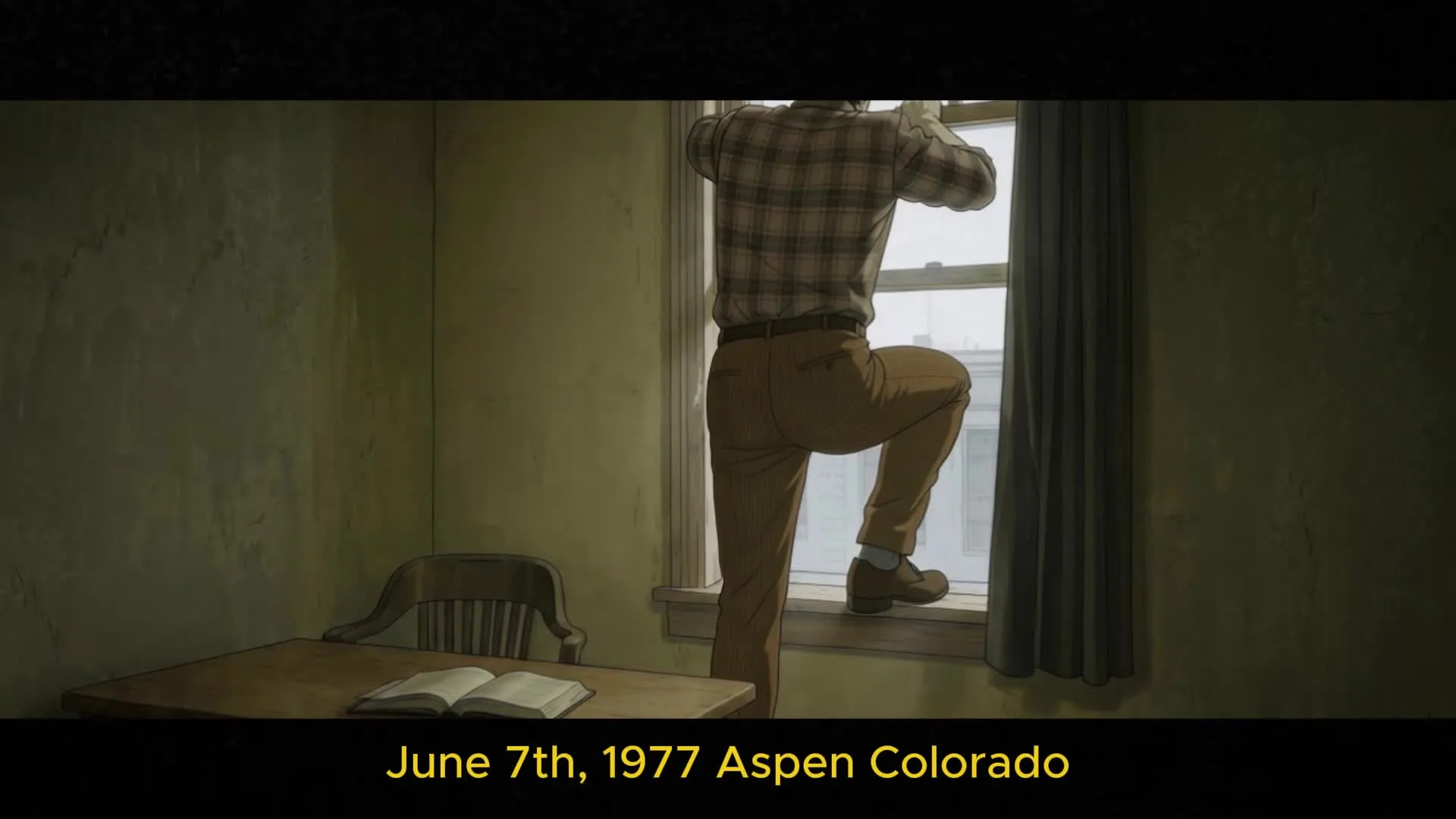
By now Kemper has a six-stage system: patrol the campus loops with the parking sticker, find a woman alone, get her relaxed past the point of jumping out, turn onto a road only he knows, then the gun and the bag. What sets him apart is stage six — he takes the bodies home, past his sleeping mother, to decapitate and dismember in his own apartment and remove the bullets so they can't be traced. And he buries one head in his mother's garden, facing her bedroom window.
1 min. 0 sec.
February 1973: after another argument with his mother, Kemper pulls up to UC Santa Cruz students Rosalind Thorpe, 23, and Alice Liu, 20. The campus sticker and the soft-spoken bookish giant put them at ease, and they get in. Within minutes he shoots both while they're still in the car, then drives home to decapitate them in the driveway and dismember them the next morning. But six women were never going to be enough — there was always one real target.

1 min. 2 sec.
February 1973: after another argument with his mother, Kemper pulls up to UC Santa Cruz students Rosalind Thorpe, 23, and Alice Liu, 20. The campus sticker and the soft-spoken bookish giant put them at ease, and they get in. Within minutes he shoots both while they're still in the car, then drives home to decapitate them in the driveway and dismember them the next morning. But six women were never going to be enough — there was always one real target.

58 sec.
Every psychiatrist — and Kemper himself — later confirmed the truth: the six co-eds were never the goal, only practice. They were surrogates for the mother who told him no woman would love him, and he killed after every fight and humiliation, each time feeling the pressure build toward the real one. By April 1973 he's standing over her bed at night, gun in hand, unable to pull the trigger. Until Easter weekend.

1 min. 7 sec.
April 20, 1973, around 5 a.m.: while his mother reads in bed, Kemper takes the claw hammer from the kitchen drawer and brings it down on her temple as she sleeps. He decapitates her and commits acts even hardened detectives couldn't write down in plain English. Then he tears out the larynx that screamed at him his whole life and forces it down the garbage disposal — which jams and spits it back into the sink.

1 min. 2 sec.
With his mother dead and headless in a closet, Kemper needs people to think she's left town. So he phones her best friend, Sara 'Sally' Hallett, and invites her to a dinner he frames as a surprise for his mom. Sally arrives smiling that night; he strangles and decapitates her and hides her body in a second closet. He moves his mother's car to fool the neighbors, then leaves a note for the police and gets on the road with three guns.
1 min. 7 sec.
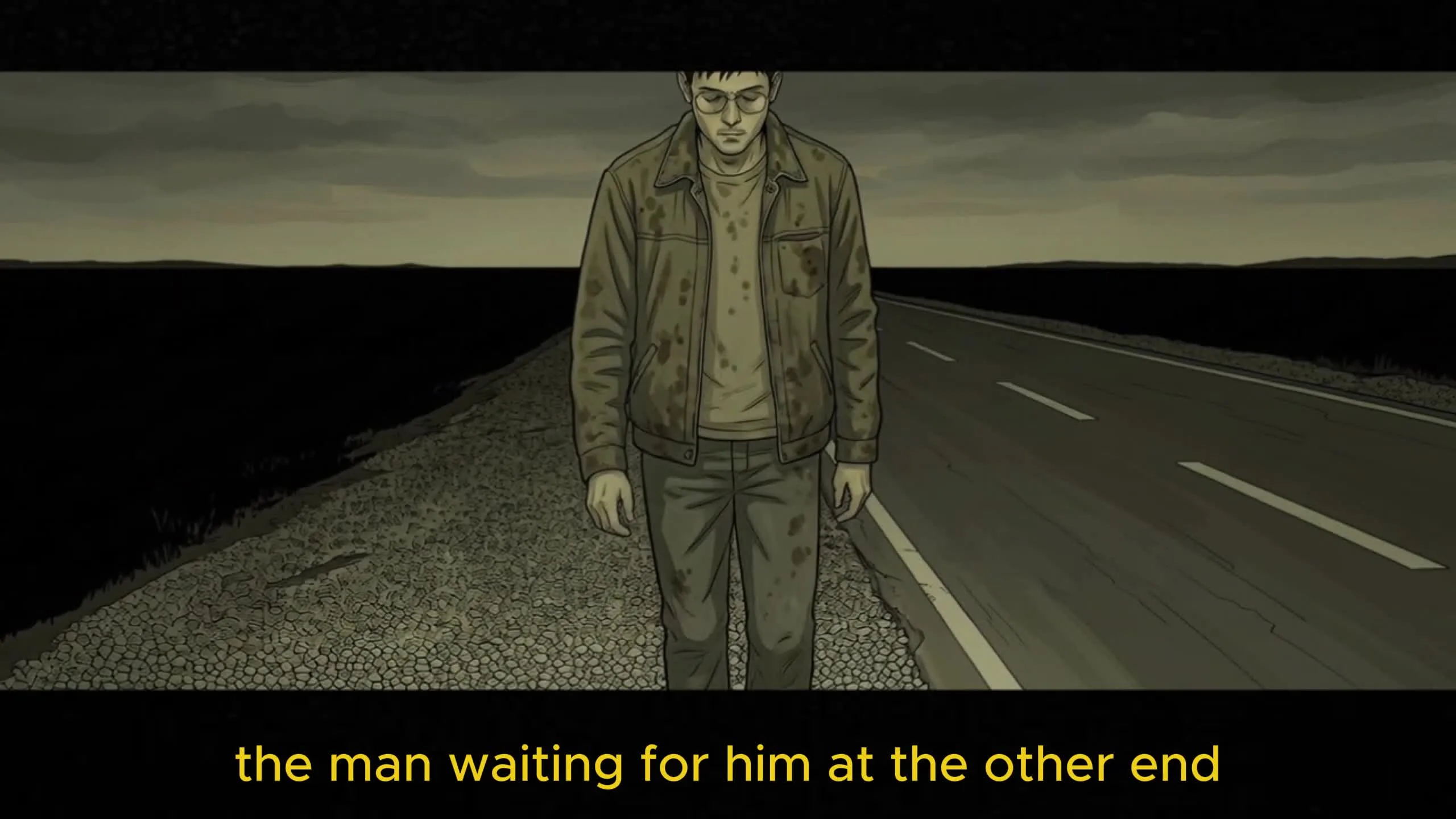
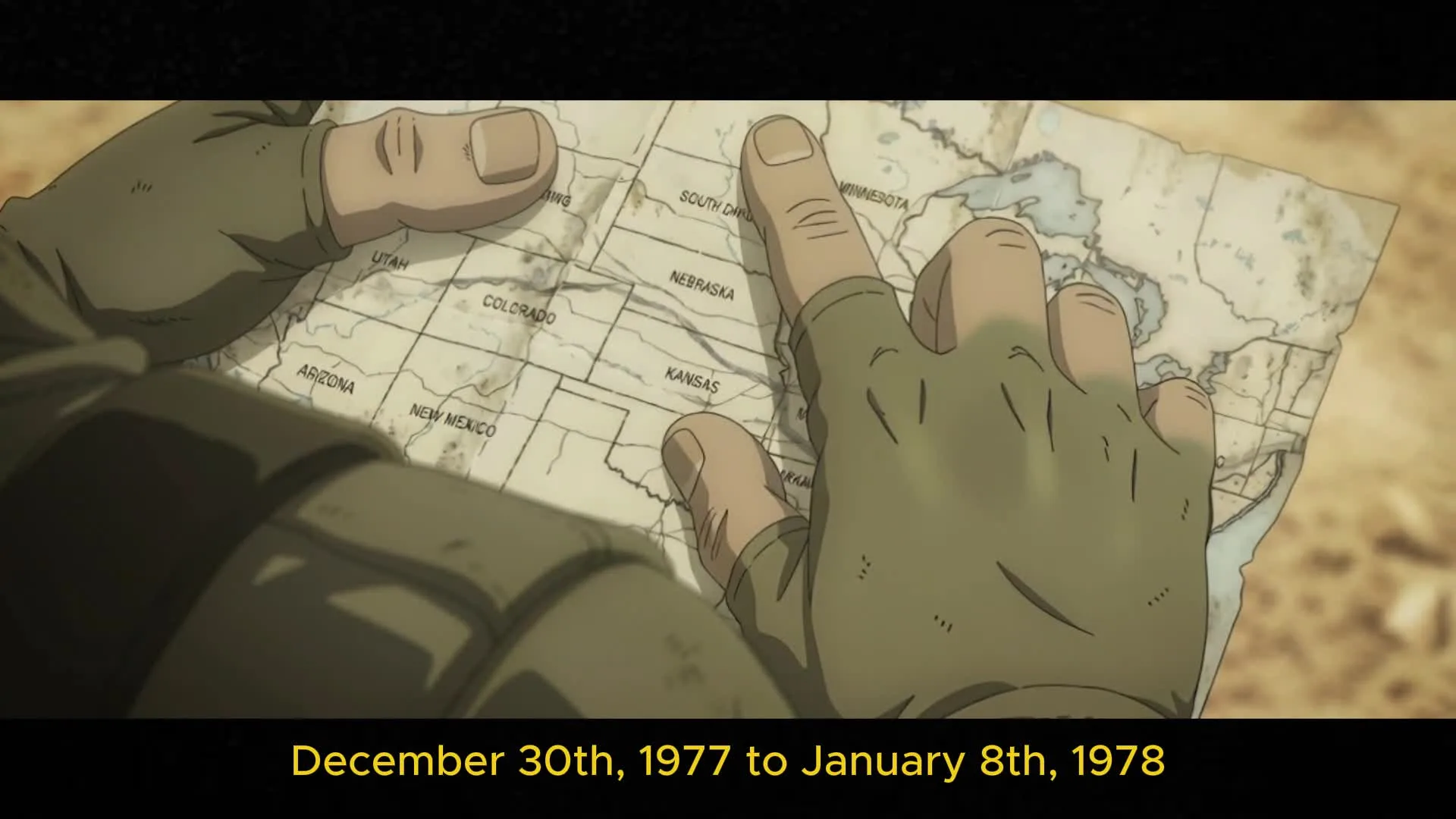
Kemper drives 1,300 miles in under two days — California, Nevada, Utah — stopping only for gas and caffeine, three loaded guns within reach. The whole way he waits for the radio to announce what he's done, certain his face will be on every bulletin in America. He hears nothing. By the time he reaches Pueblo, Colorado, he realizes no one is even looking for him — nobody has found her yet. He sits at a roadside phone booth, staring at the handset.

1 min. 2 sec.
From the Pueblo phone booth, Kemper calls the Santa Cruz police and asks for an officer he knows from the Jury Room, confessing to his mother, Sally, and six women before them. They laugh — Big Ed and his dark jokes — and tell him to sober up. He calls back calmer, gives details only the killer could know, and says he's an inch from doing it again. He waits hours for officers to arrive, doesn't resist, doesn't ask for a lawyer, and waives extradition.

1 min. 10 sec.
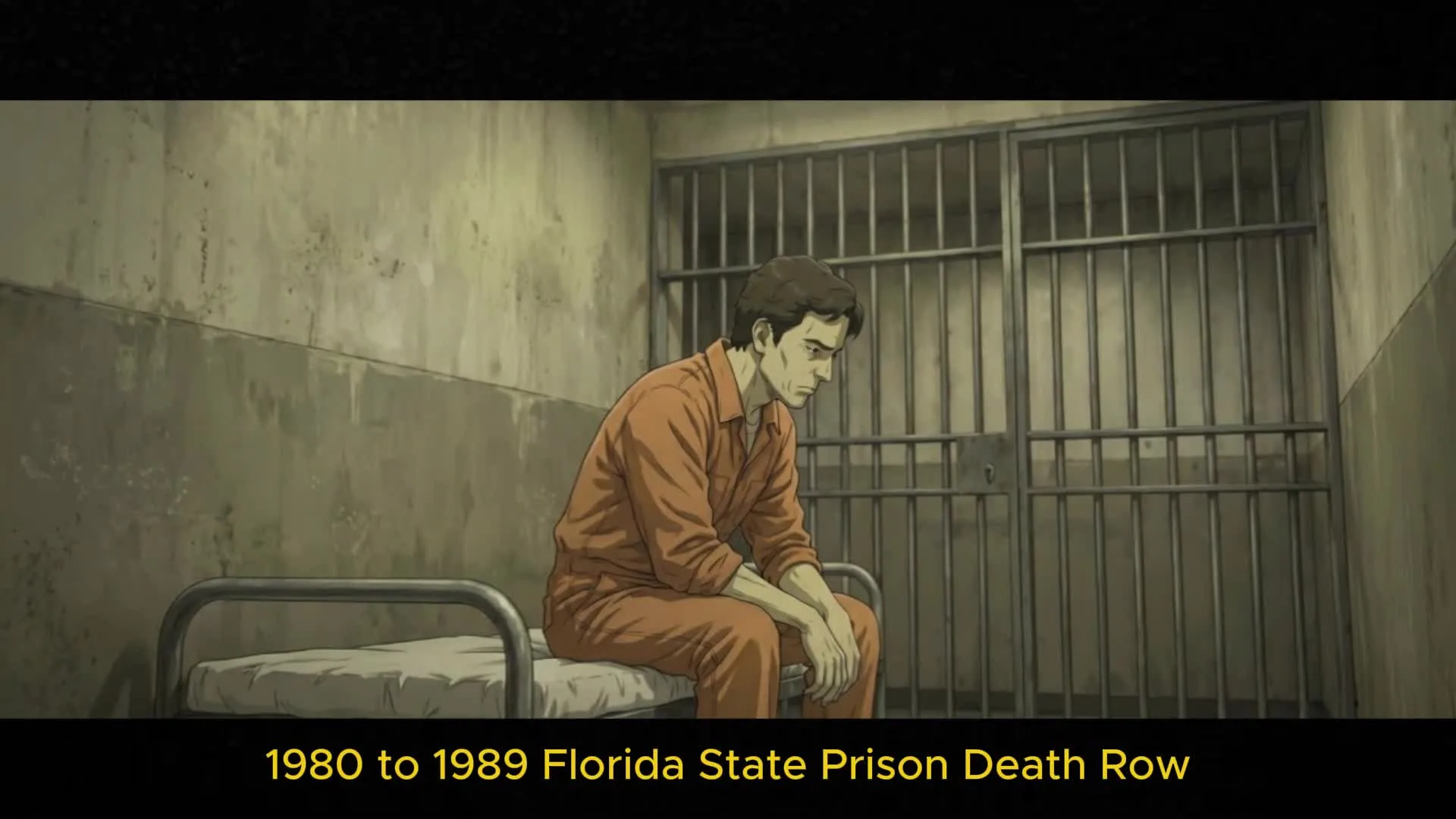
Three psychiatrists declare Kemper legally sane — he understood right from wrong every time. Convicted on eight counts of first-degree murder, he tells the judge the fitting punishment is 'death by torture,' but a capital-punishment moratorium gives him eight concurrent life terms instead. At Vacaville he gives the FBI's Behavioral Science Unit some of the most articulate self-analysis any killer has provided, helping invent modern profiling. Ten people died — because a boy was locked in a basement and nobody asked what was happening down there.