

20 Episodes
jollybusyperch
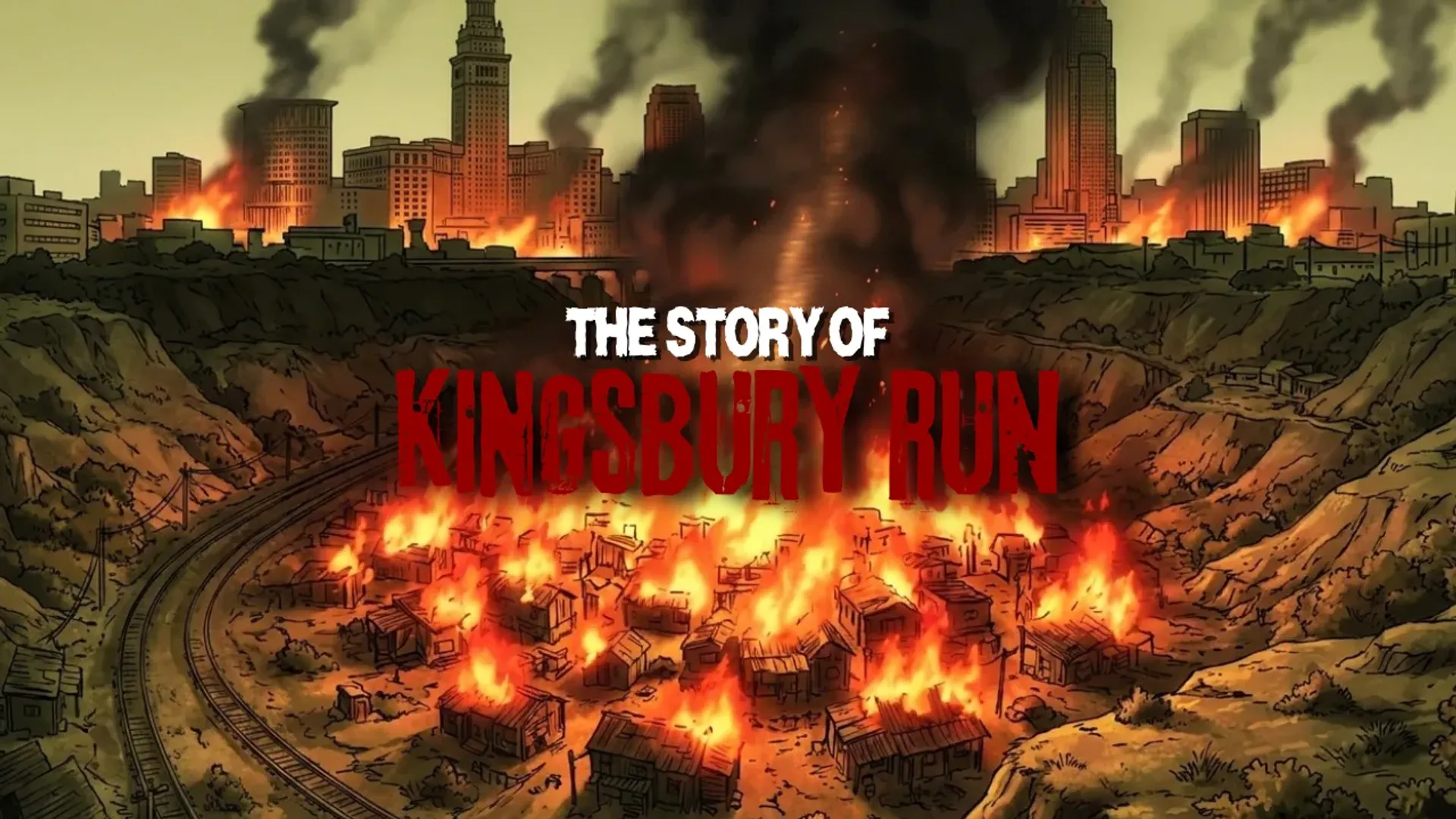
Between September 1935 and August 1938, at least twelve people were murdered and dismembered in Cleveland, Ohio. Most were beheaded. Most were never identified. The case fell to the city's newly appointed Safety Director — the same man who had, four years earlier, put Al Capone in federal prison. It was the case that destroyed his career. The killer was never charged. This is the story of the investigation, of the three victims who were named, of the doctor Eliot Ness became certain of, and of the interrogation Ness spent the rest of his life not being able to talk about.
20 Episodes
1 min. 4 sec.
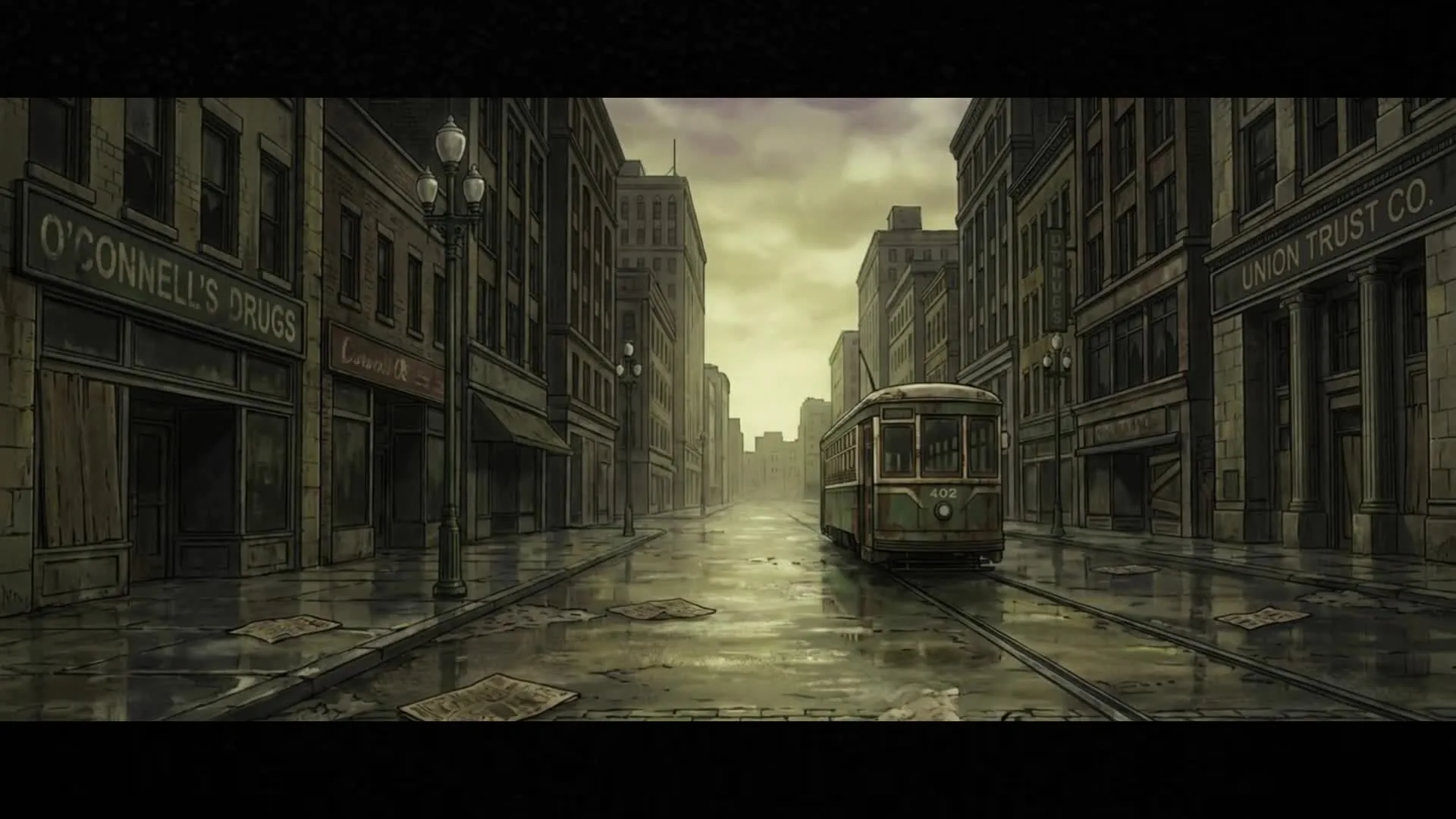
Cleveland, 1934. Population approximately 900,000. The fifth-largest city in the United States. The Great Depression had cut industrial employment in the city by more than 60 percent. Republic Steel and the Cleveland Rolling Mills were operating at a fraction of pre-1929 capacity. Cuyahoga County unemployment stood, in some months, above 30 percent. Along the ravine known as Kingsbury Run — cutting east-west through Cleveland's Third Ward — a Hooverville had grown up, housing approximately 300 transient men at its peak. Most were unemployed labourers who had been riding the freight trains that ran along the ravine floor. The Cleveland Police Department did not patrol Kingsbury Run. The men living there were, in the administrative language of the era, 'not counted.' It was, in every meaningful sense, invisible from the city that surrounded it. When the killings began, they would begin in that ravine — and the reason they would continue for three years and reach twelve bodies was that the ravine had been designed, by the Depression itself, to make the disappearance of a certain kind of American man administratively invisible.
1 min. 4 sec.
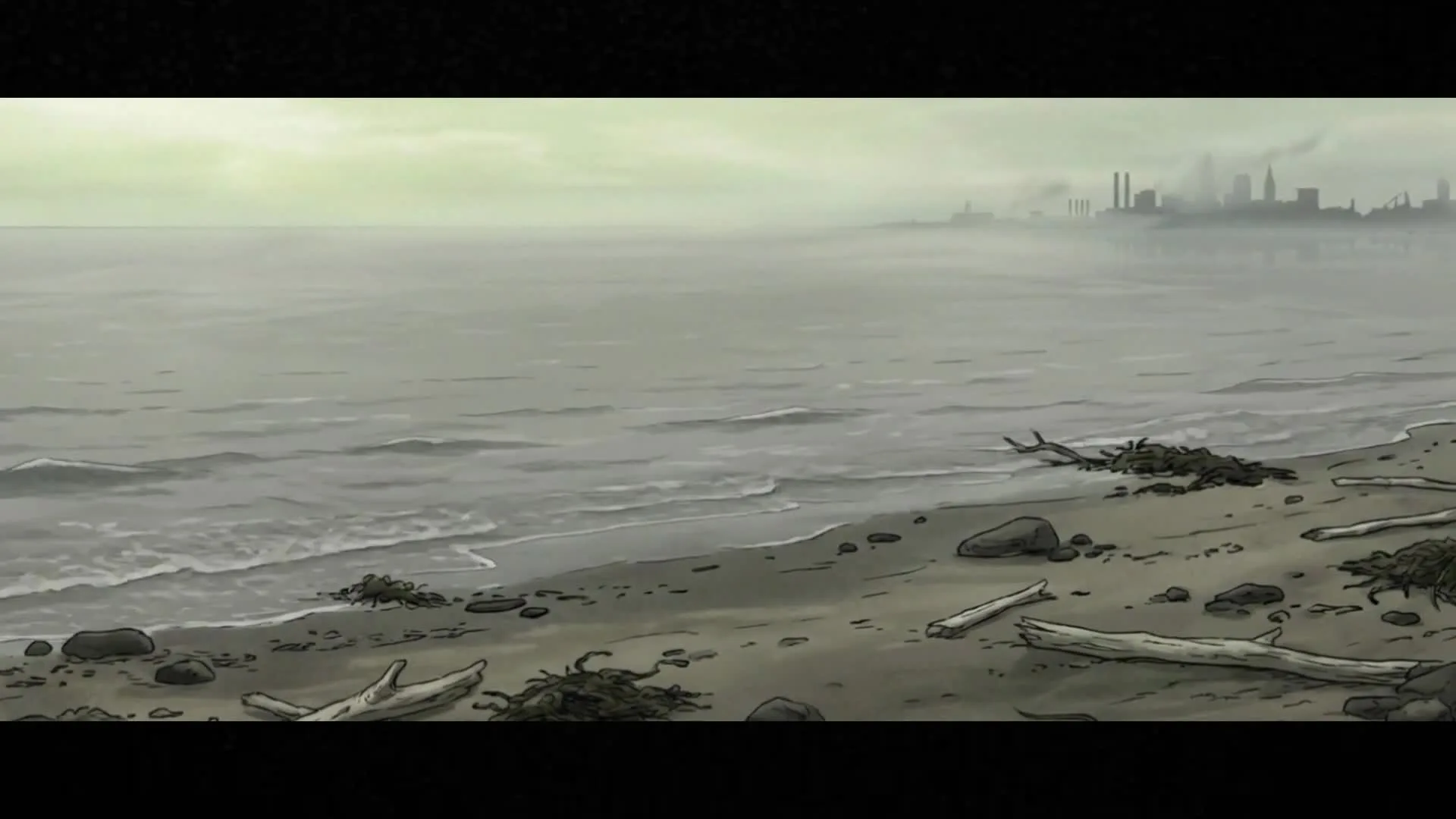
September 5, 1934. Euclid Beach Park, Bratenahl, Lake Erie shoreline. The lower half of a woman's body — from ribs to feet — washed up on the sand. There was no head. No hands. No identifying marks. Cleveland Police, per the standard protocol of the era, catalogued the remains as 'Unidentified Female, Age Approximately 35–40.' The case was assigned to the general homicide unit. Extensive missing-persons cross-checking against Cleveland-area records produced no match. Attempts to identify the remains through dental work and skeletal features failed. The case went cold within weeks. It was catalogued at the time as an isolated dumping — not part of any pattern. It would only be reclassified as the possible first Torso Murder in 1936, after four more bodies had been found. She has never been identified. If she was the Butcher's first victim, she predates his official file by more than a year. If she was not, then someone else killed her the same way, in the same city, and was also never named.
1 min. 13 sec.
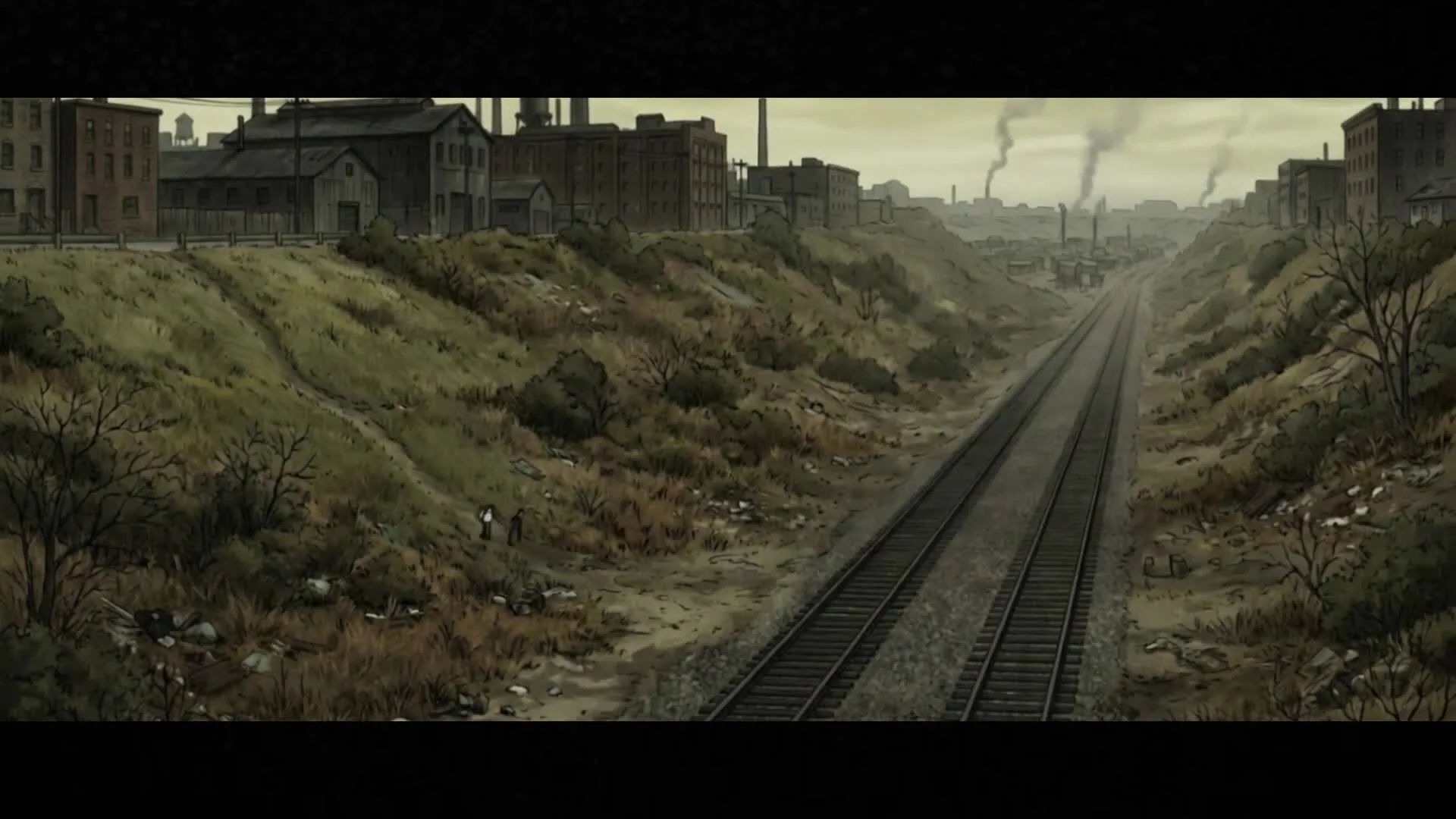
Monday, September 23, 1935. East 49th Street, Kingsbury Run. James Wagner, 16, and Peter Kostura, 12, were exploring the steep embankment locally called Jackass Hill. At the base of the embankment they found the naked, decapitated body of a young white man. Approximately 30 feet away lay a second decapitated body, in significantly more advanced decomposition. The boys ran to the nearest telephone. Cleveland Police Detective Bureau catalogued the first body as Victim 1 and the second as Victim 2. Detective Peter Merylo was assigned to the case. The heads of both victims were located within approximately 24 hours — buried nearby. The bodies had been drained of blood. There was almost no blood at the scene. Both men had been killed and dismembered elsewhere and then transported to Kingsbury Run for dumping. Two bodies. Left together. Left visibly. Left where children would find them. It was the killer's opening statement — and the man who made it was still in Cleveland, and not finished.
1 min. 4 sec.
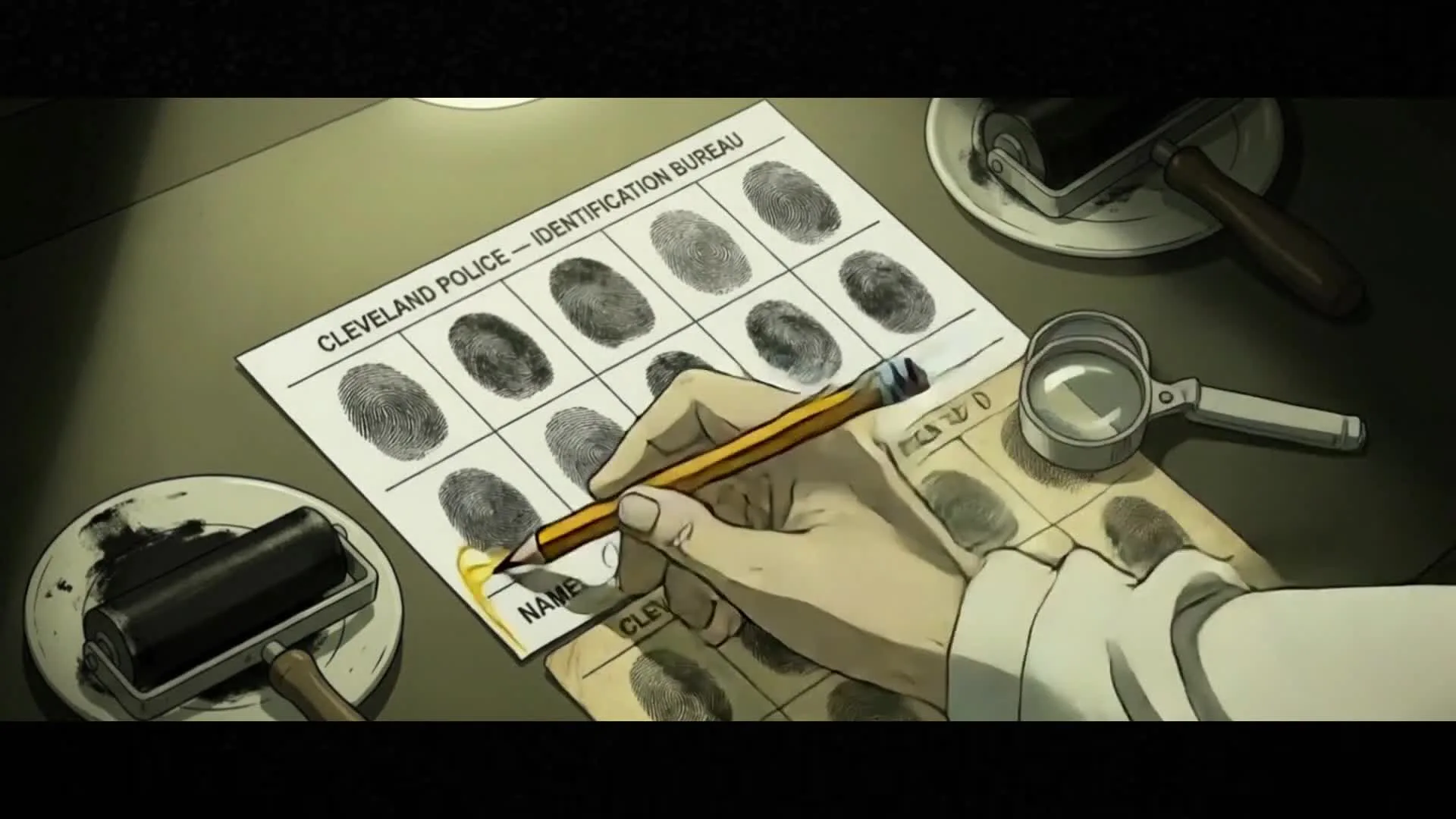
Edward Andrassy. Born in Cleveland, 1907. Age 28 at time of death. Son of Hungarian immigrant parents. Grew up in the Central-Scovill neighbourhood on Cleveland's East Side. Adult record: petty theft, disorderly conduct, one carrying-concealed-weapon arrest. Employment: intermittent — orderly at Cleveland City Hospital in the early 1930s, later various day-labour positions. Known associates included men from Kingsbury Run. He was reportedly seen in the ravine on multiple occasions in the weeks before his death. His fingerprints were on file with Cleveland Police from his prior arrests. Identification was made within 24 hours of the Jackass Hill discovery. His father identified the body at the county morgue. Detective Merylo interviewed dozens of his known associates across the following weeks. None had seen him in the final week of his life. None could offer any information that led anywhere. Andrassy would be the most-investigated victim of all twelve — the only one Cleveland Police had real biographical information about. And even with that, they could not close it. That was the case Cleveland was about to have, over and over.
1 min. 6 sec.
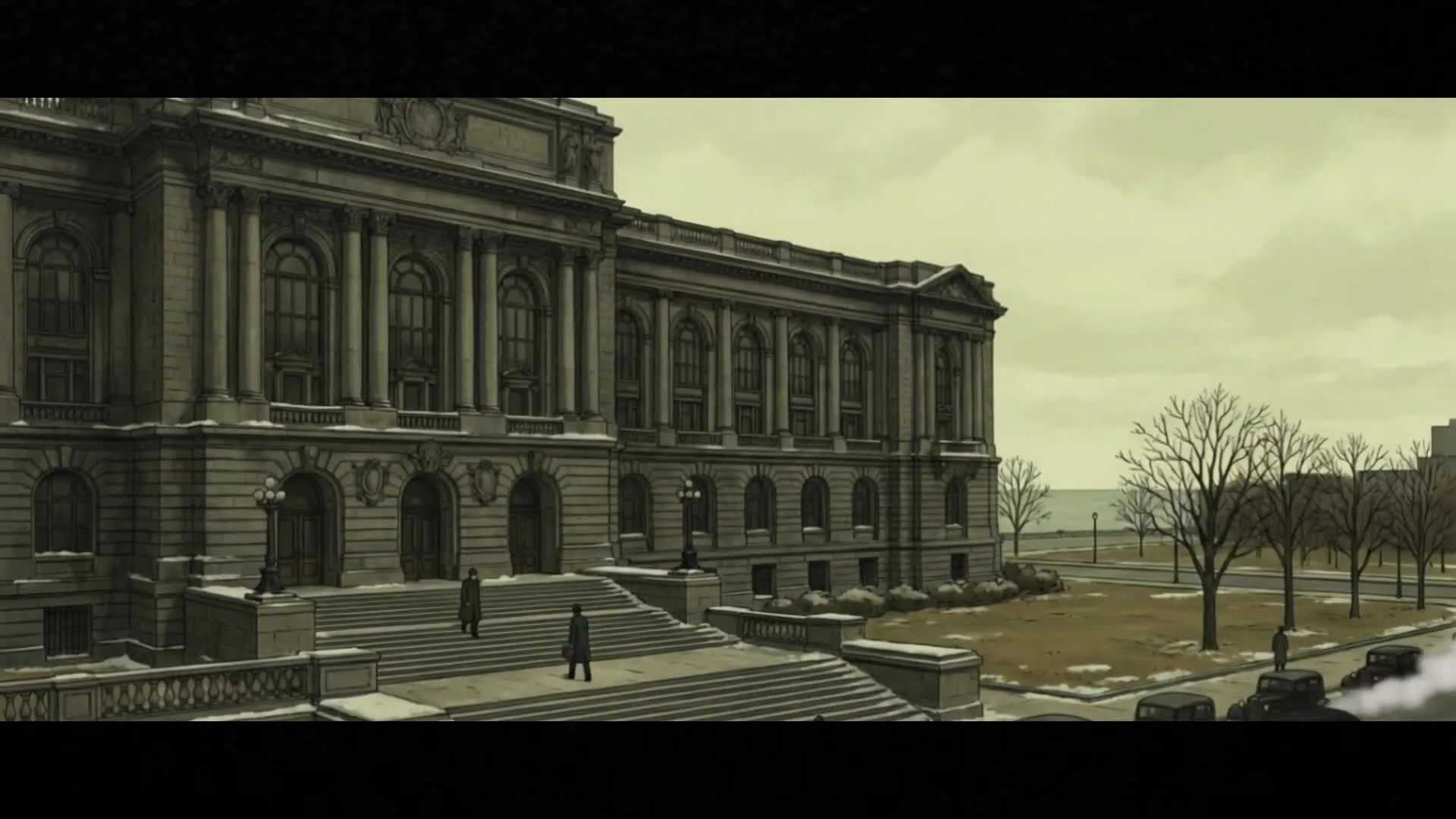
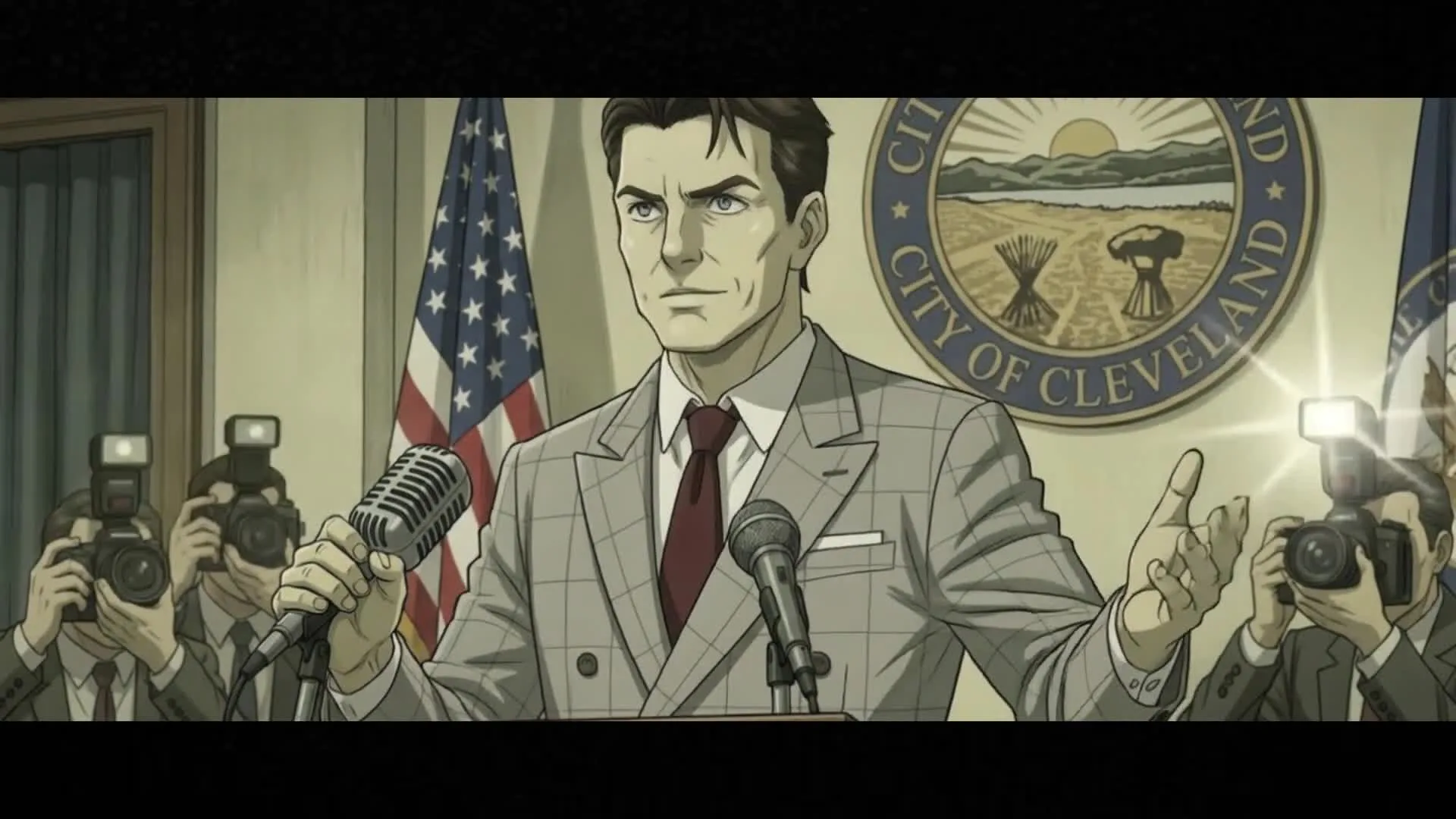
December 11, 1935. Mayor Harold H. Burton took office in Cleveland. Two days later, he announced his choice of Safety Director — Eliot Ness of Chicago. Ness had spent the previous six years as head of the U.S. Prohibition Bureau's 'Untouchables' unit. His unit had led the prosecution that put Al Capone in federal prison in 1931. By 1935, Ness was 32 years old and the most-photographed federal law enforcement officer in the United States. Burton offered him direct authority over the Cleveland Police Department and Fire Department. Ness accepted and arrived in Cleveland in the first week of December 1935. The Jackass Hill file — Victims 1 and 2, both still with only Andrassy identified — was on his desk within his first week. He was briefed by Detective Merylo and by the outgoing homicide command. He was told, specifically, that there was no reason to believe more bodies would follow. Years later, his biographer would ask which case had cost him the most. Not Capone. Not Chicago. Kingsbury Run — the case he inherited on arrival and left the city without solving.
1 min. 5 sec.
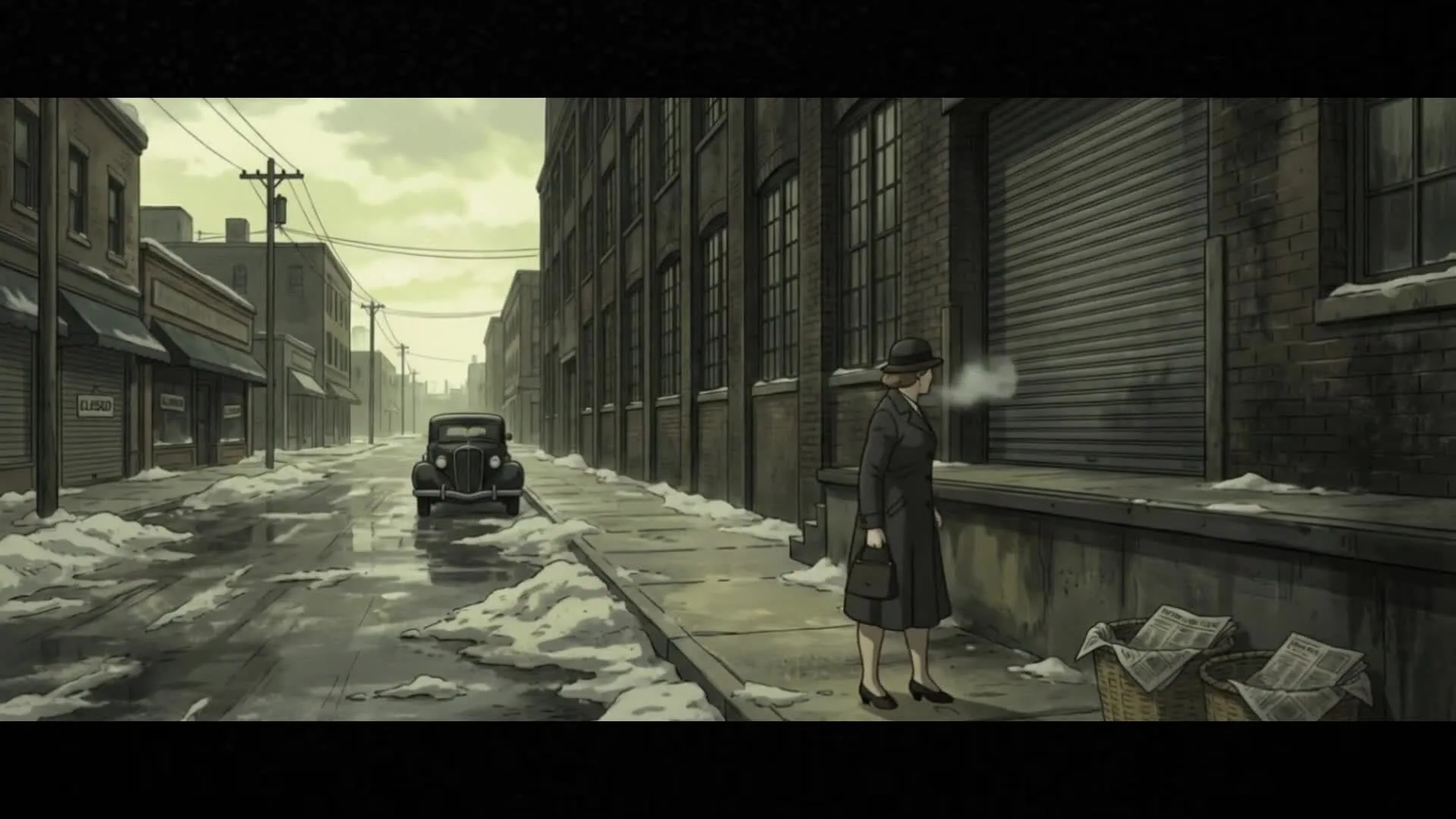
Sunday, January 26, 1936. East 20th Street and Central Avenue, near a Hart Manufacturing wholesale market. A resident walking to Sunday services saw two half-bushel baskets placed near the market's rear entrance. One basket contained arm and thigh portions of a woman's body, individually wrapped in newspaper. The second contained additional lower-limb sections. Cleveland Police responded. Detective Merylo arrived within the hour. The following morning, a Cuyahoga County coroner's team searched the area more widely and recovered additional remains behind a nearby building. Fingerprint identification was made within 48 hours. Florence Genevieve Polillo — 42 years old, a Cleveland-area waitress and part-time prostitute. Her fingerprints were on file with Cleveland Police from a 1934 solicitation arrest. She had last been seen alive at a rooming house on Carnegie Avenue approximately six days earlier. The head of Florence Polillo was never recovered. Three case numbers. One named victim. The pattern was undeniable — and Kingsbury Run was, from that January onward, a serial homicide investigation.
1 min. 5 sec.
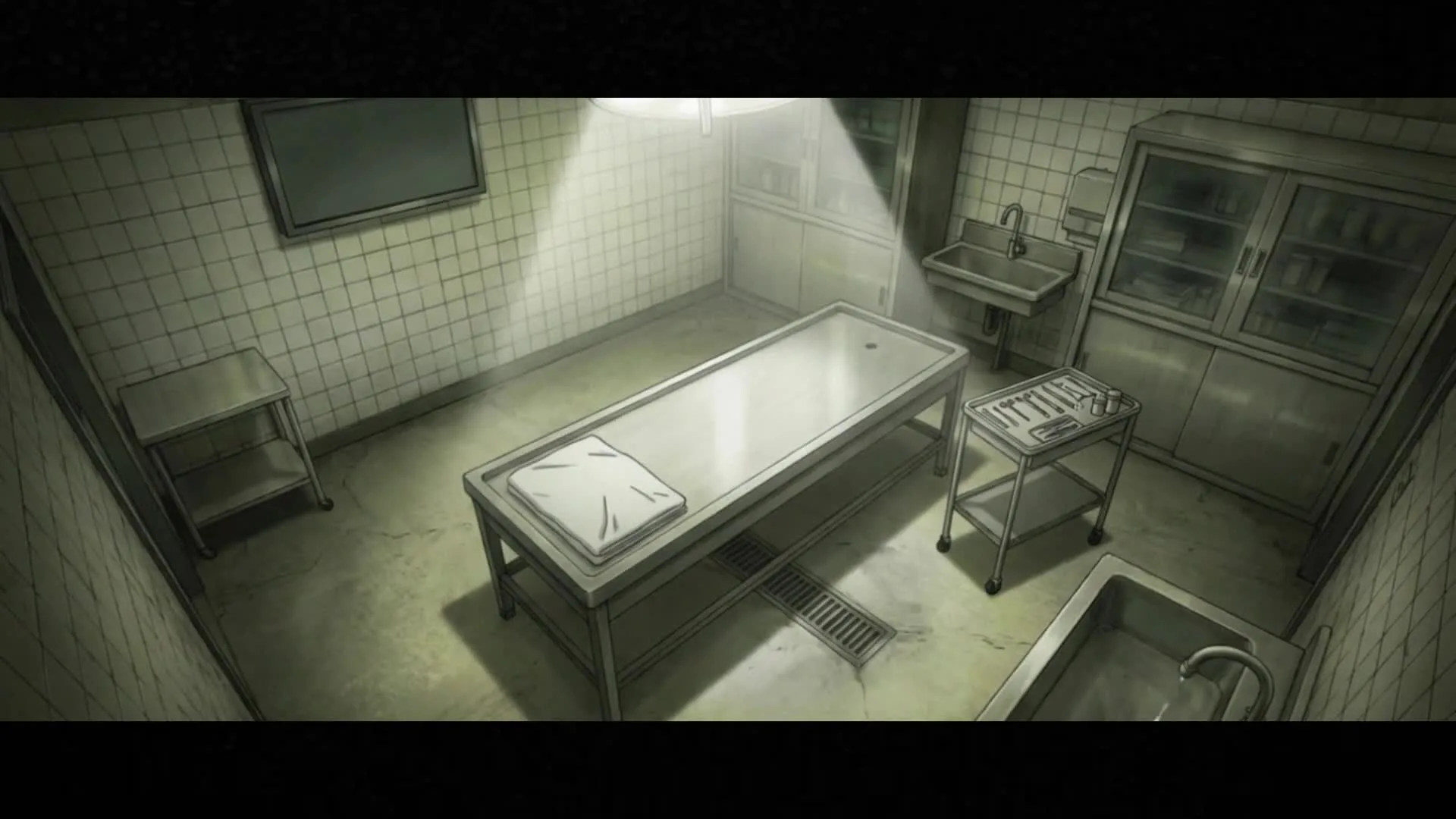
The Cuyahoga County morgue conducted autopsies on all twelve confirmed victims across 1935 to 1938. The initial autopsies, on Victims 1 through 3, were conducted by Coroner Arthur Pearse. From January 1937, autopsies were led by his successor Dr Samuel R. Gerber. Both coroners reached identical conclusions on the dismemberment pattern. The cuts had been made through joints — not through bone. The specific technique required knowledge of human joint articulation. The cuts had been made using a large, heavy blade — likely a butcher's cleaver or similar. The dismemberment had been performed on a stable horizontal surface — not on the ground. The bodies had been drained of blood, likely by inversion, before dismemberment. The head had, in most cases, been removed first — while the victim was still alive. Gerber's conclusion narrowed the suspect pool from the whole transient population to a much smaller group. Butchers. Medical students. Combat medics. Surgeons. The list was, for the first time, one Cleveland Police could actually work.
1 min. 15 sec.
June 5, 1936. Kingsbury Run, near East 55th Street. Two schoolboys walking to school found the naked, decapitated body of a young white man. The Republican National Convention was scheduled to open in Cleveland five days later. The body carried six distinctive tattoos — including a butterfly, a heart, and the letters 'W.C.G.' on the left arm. The Cleveland Police worked exhaustively to identify Victim 4 using the tattoos. A death mask of his face was produced and displayed at the Great Lakes Exposition, which opened in Cleveland later that month. Photographs of the tattoos were circulated to every major American police department. Over 1,000 members of the public viewed the death mask. Not one produced a positive identification. The Republican Convention proceeded without any public discussion of the case. Ness had instructed Cleveland Police to keep the Tattooed Man out of the convention press. The city needed the money. For seven days, the papers stayed quiet. On June 12, the Convention closed. On June 13, the Plain Dealer put the Butcher back on its front page.
1 min. 17 sec.
Peter Merylo. Cleveland Police Detective, assigned to the Torso case from September 1935. Career homicide investigator. Ukrainian-American. Fluent in three Slavic languages, which gave him access to the Central European immigrant communities of Cleveland. By 1938, Merylo had personally conducted over 1,500 interviews across the investigation. He and his partner Detective Martin Zalewski canvassed hospitals, medical schools, slaughterhouses, and butcher shops across northeast Ohio. Merylo believed, from early in the investigation, that the killer might be moving by rail. He connected dismemberment killings in western Pennsylvania — near the Pittsburgh rail yards — to the Cleveland cases. The theory was never operationally proven. It was never operationally ruled out either. Merylo was, by every subsequent account, the officer who did the actual investigative work of the case. Ness handled the press. Merylo handled the file. He retired from the Cleveland Police in 1943 and continued to work the case privately, at his own expense, until his death in 1958. His 5,000-page file sits today in the Cleveland Public Library. It has never produced an answer.
1 min. 8 sec.
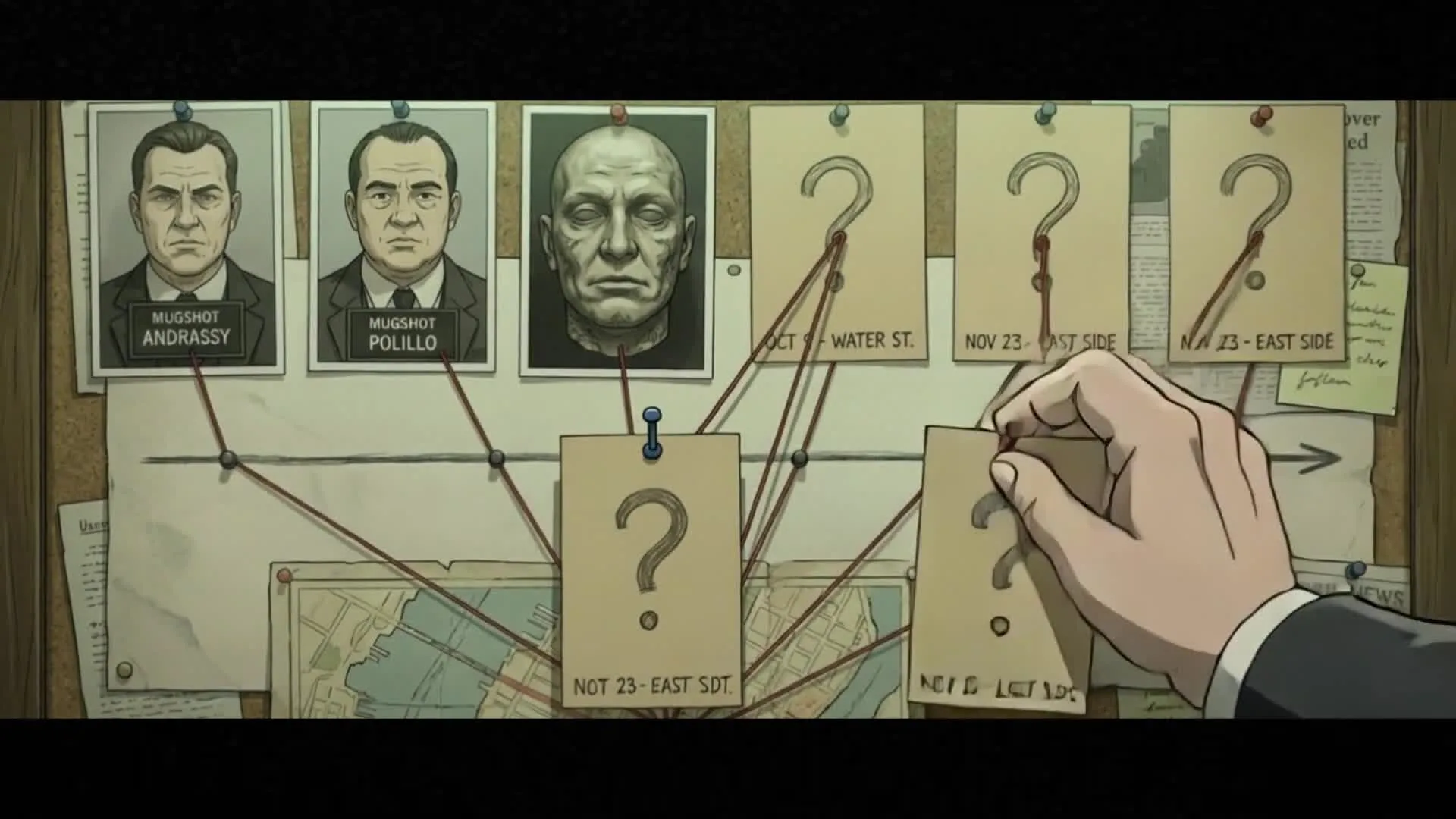
1936 to 1937. Cleveland. The case count doubled. Victim 5 — an unidentified white male — recovered from the Cuyahoga River, July 22, 1936. Victim 6 — an unidentified male — Kingsbury Run, September 10, 1936. Victim 7 — an unidentified white female — parts recovered from the Cuyahoga River, February 23, 1937. Victim 8 — tentatively identified as Rose Wallace, a Cleveland-area Black woman aged approximately 40 — skeletal remains, June 5, 1937. Victim 9 — an unidentified white male — Cuyahoga River, July 6, 1937. The killer's method was uniform. The dumping locations were public. The heads were, in most cases, buried or dumped separately from the bodies. In multiple cases the head was never recovered at all. Coroner Gerber's estimation of time-of-death, per the state of the remains, established that the killer had been holding the bodies for days or weeks before dumping. There was, somewhere in Cleveland, a room where the killer was doing this work. In three years, 1,500 interviews, 5,000 pages of file, in a city of 900,000 people, Cleveland Police never located it.
1 min. 13 sec.
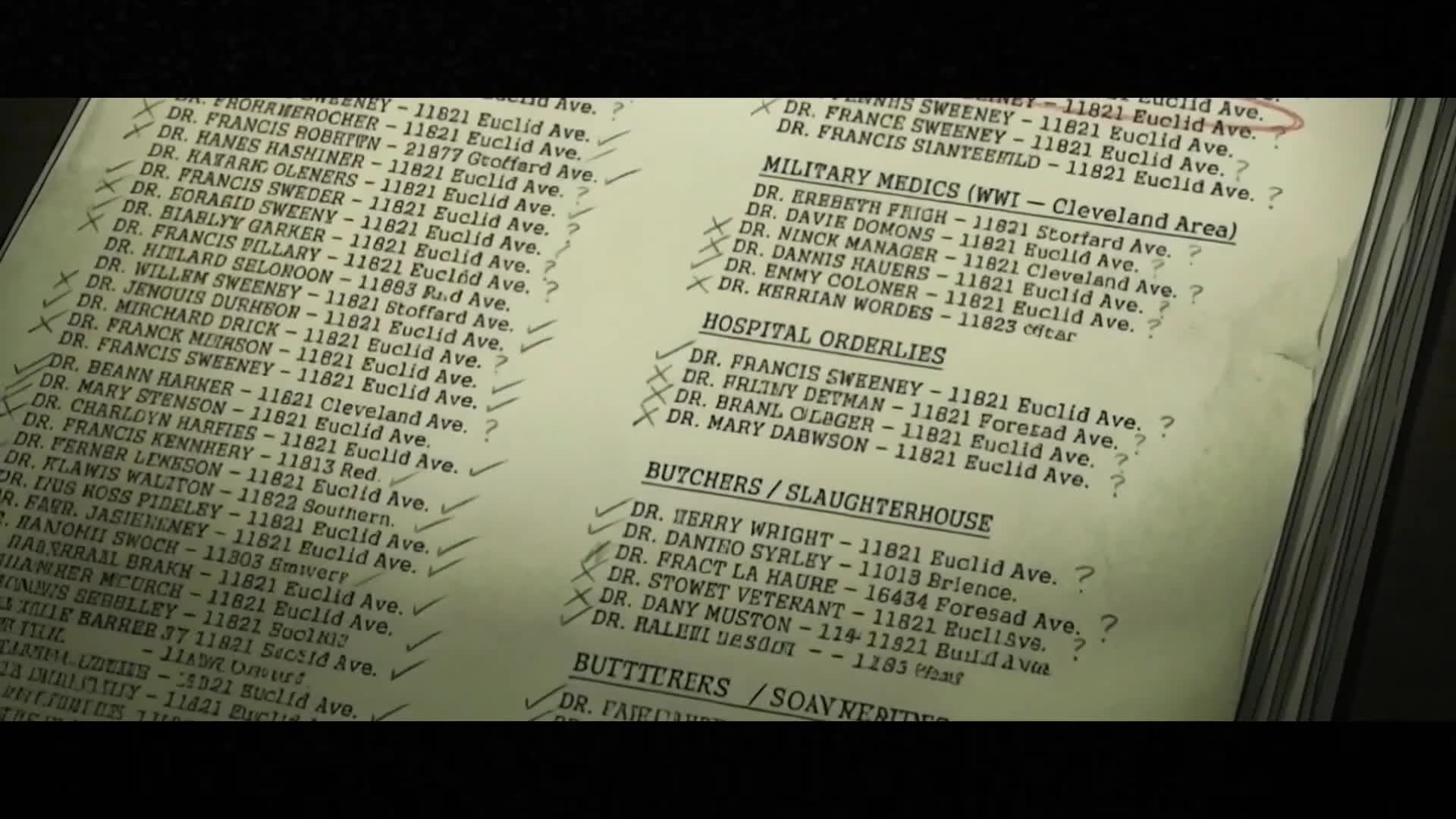
November 1937. Cleveland Police Detective Bureau. Detective Merylo, working from Coroner Gerber's anatomical findings, compiled a list of Cleveland-area medical professionals. The list included practising physicians, medical students, ex-medics, veterinarians, hospital orderlies, and slaughterhouse workers. It ran to approximately 500 names by early 1938. One of the names — flagged and then set aside for later attention — was Dr Francis Edward Sweeney. Sweeney had trained as a physician. He had served as a battlefield medic in France during World War I. His medical licence had lapsed in 1934 following his commitment for alcoholism. He was a large man, physically capable of moving bodies. He lived, in 1937, on Cleveland's East Side — a short walk from Kingsbury Run itself. He was known to Cleveland Police from previous minor complaints related to public intoxication. Then Detective David Cowles reported that Sweeney's movements near Victims 9 and 10 placed him at the dumps at the right times. Sweeney moved to the top of the list. Ness decided to interrogate him personally. Off the books. Location: the Hotel Cleveland.
1 min. 5 sec.
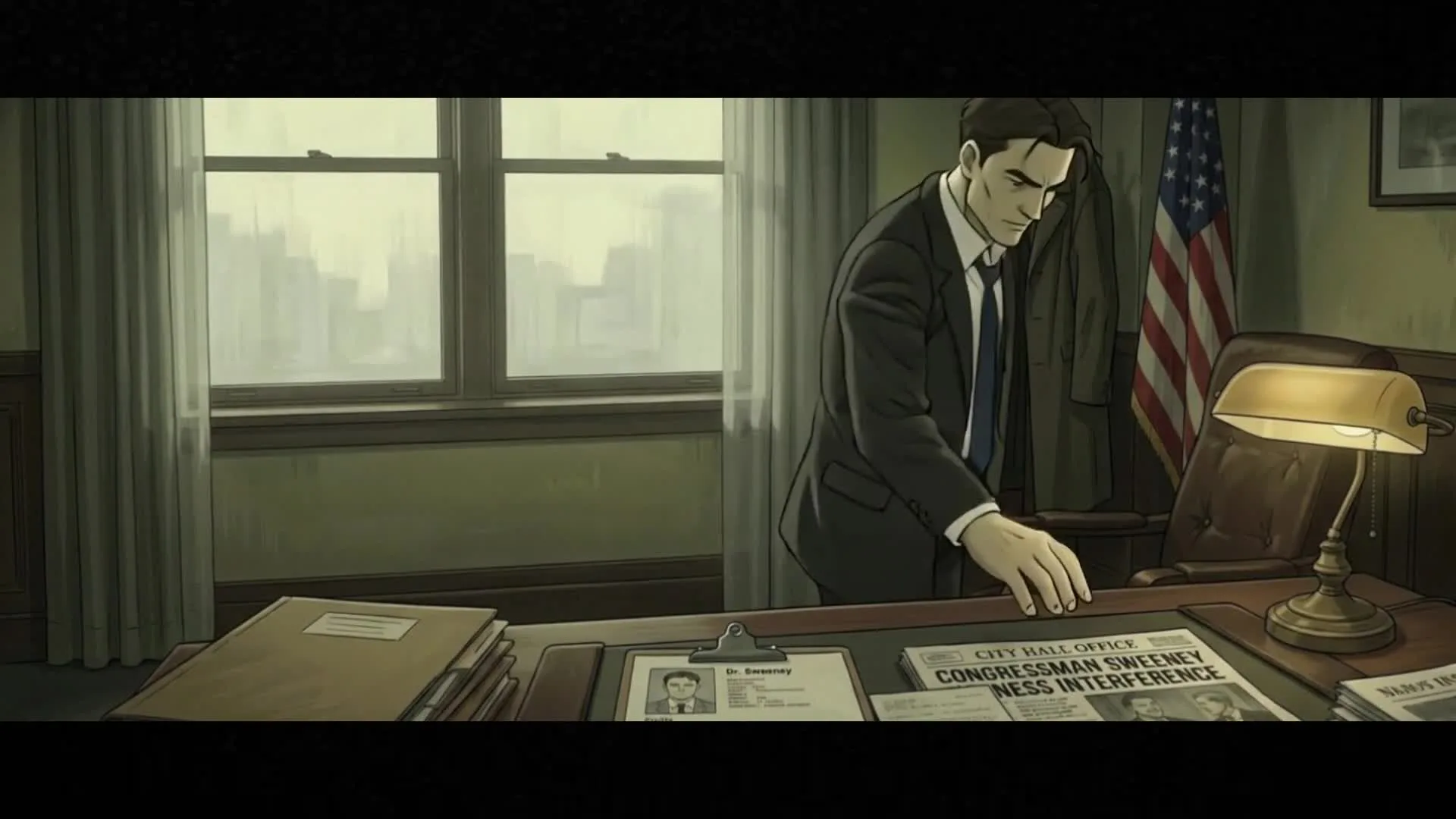
Congressman Martin L. Sweeney. Democrat. Ohio 20th Congressional District. Cleveland. Elected to the U.S. House of Representatives in 1932. Re-elected in 1934, 1936, and 1938. One of Cleveland's most powerful Democratic politicians. A vocal opponent of Mayor Harold Burton — the Republican who had appointed Ness — and a persistent public critic of Ness personally. Sweeney was Francis Sweeney's first cousin. The family relationship was well documented. In 1938, Congressman Sweeney was preparing an unsuccessful bid for the Democratic gubernatorial nomination. Any move by Ness against the Congressman's cousin would be — instantly, and correctly — read as a political action. The prospect of prosecuting Francis Sweeney with the available evidence, and with the Congressman's opposition, was, per Ness's later accounts to Oscar Fraley, effectively zero. Ness had, on his desk, a man he strongly suspected was responsible for at least ten murders. He also had a political situation in which arresting that man would end his own career and produce an acquittal. He chose, in the spring of 1938, a third option.
1 min. 14 sec.
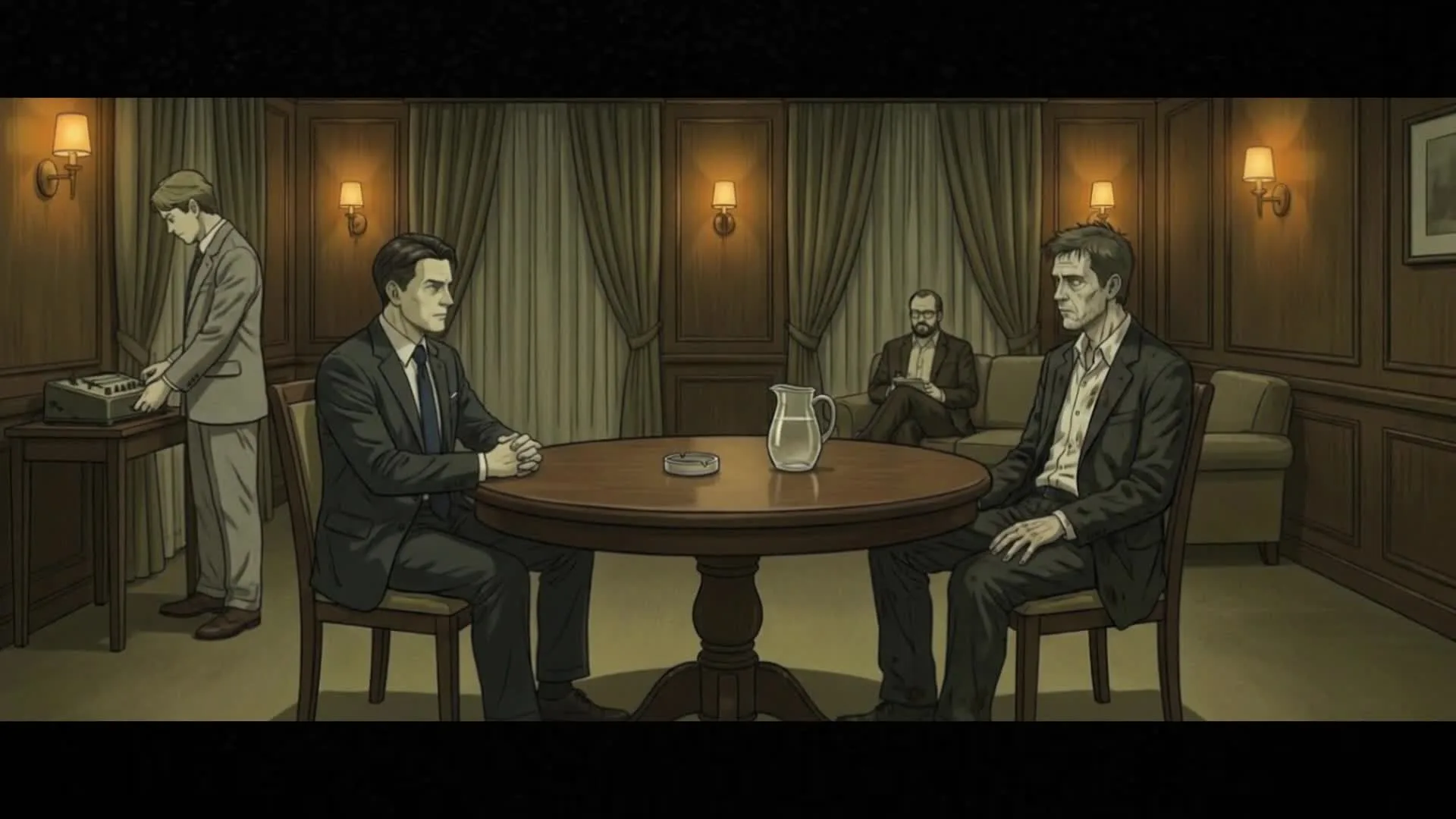
Mid-April 1938. The Hotel Cleveland, Public Square, downtown Cleveland. Ness personally rented a private suite for the interrogation. Sweeney was brought to the suite. Accounts vary on whether he was formally detained or persuaded to attend voluntarily. The interrogation ran, per multiple subsequent accounts, for approximately two weeks. It was conducted primarily by Eliot Ness and Detective David Cowles. The polygraph examination was administered by Leonarde Keeler — the man who had refined the modern polygraph in the early 1930s. Sweeney, per subsequent accounts, arrived at the interrogation reportedly intoxicated. He was held in the suite until he sobered up. The polygraph was administered multiple times across the two weeks. Keeler informed Ness, in writing, that the test results indicated deception. Sweeney did not confess. Two weeks. No confession. No physical evidence. A polygraph result that wouldn't be admissible in any 1938 court. Ness released Sweeney onto Public Square. He sat in the empty suite and understood the case was over. He was wrong. The Butcher had four months left.
59 sec.
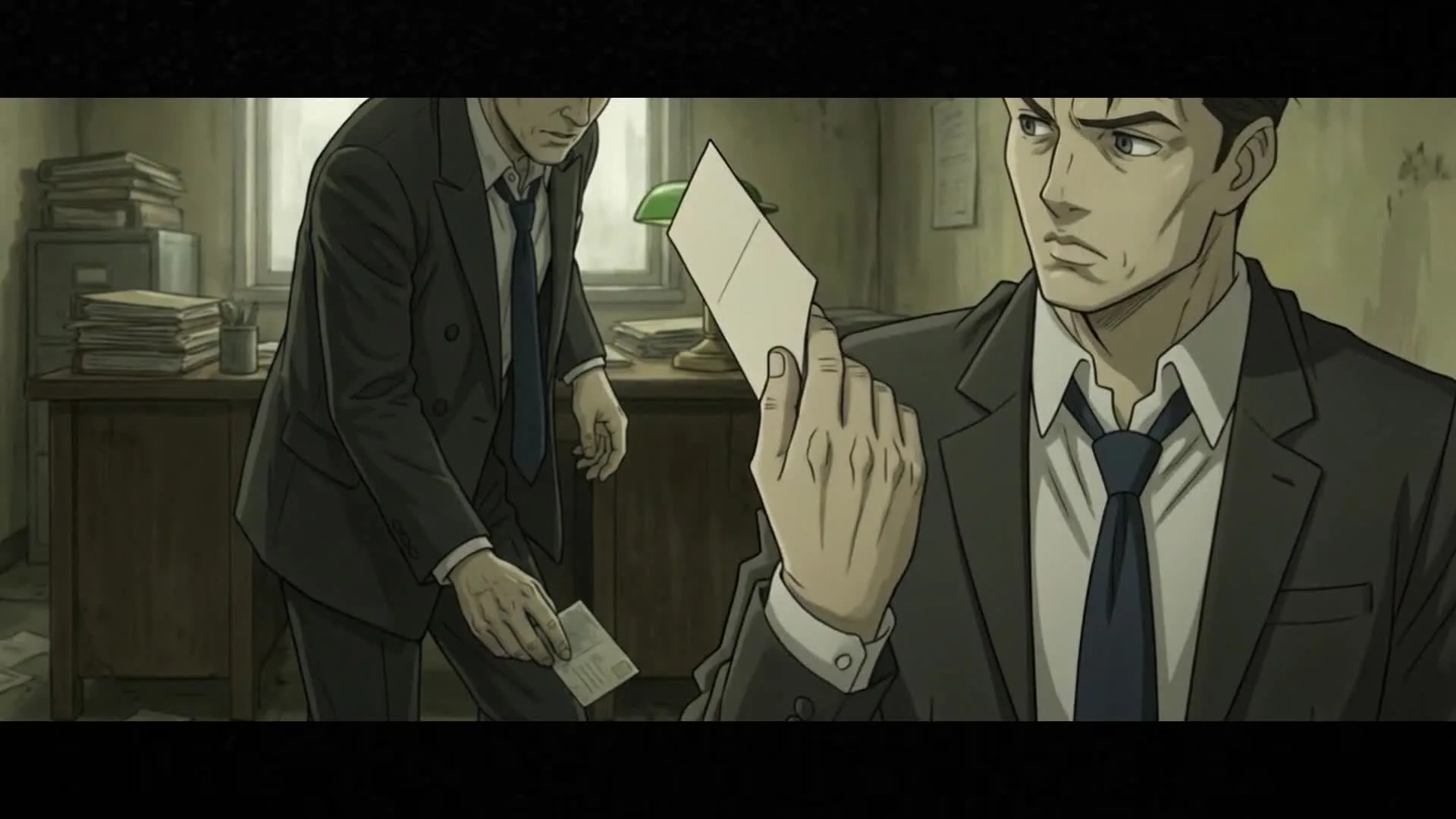
From 1938 through the mid-1950s. Cleveland City Hall, and later Ness's various private addresses. Postcards began arriving at Eliot Ness's office and, subsequently, at his home. The postcards were, per Ness's private accounts, from Dr Francis Sweeney. The handwriting was consistent across the cards. The messages were cryptic — literary and mocking, often referencing details of the Torso case only Ness would have understood. Ness kept the postcards in a private file. He did not disclose their existence during his 1947 unsuccessful mayoral campaign. He did not disclose them in his 1957 memoir The Untouchables, published posthumously. He referenced them only to his biographer Oscar Fraley and to a handful of Cleveland police friends. The postcards themselves have never been publicly published in full. Sweeney's postcards were the case's private epilogue. Ness carried them, physically, through two decades. In his own view, they were his proof. They were also completely unusable. The most famous cop in America was being taunted by a killer he couldn't touch.
1 min. 10 sec.
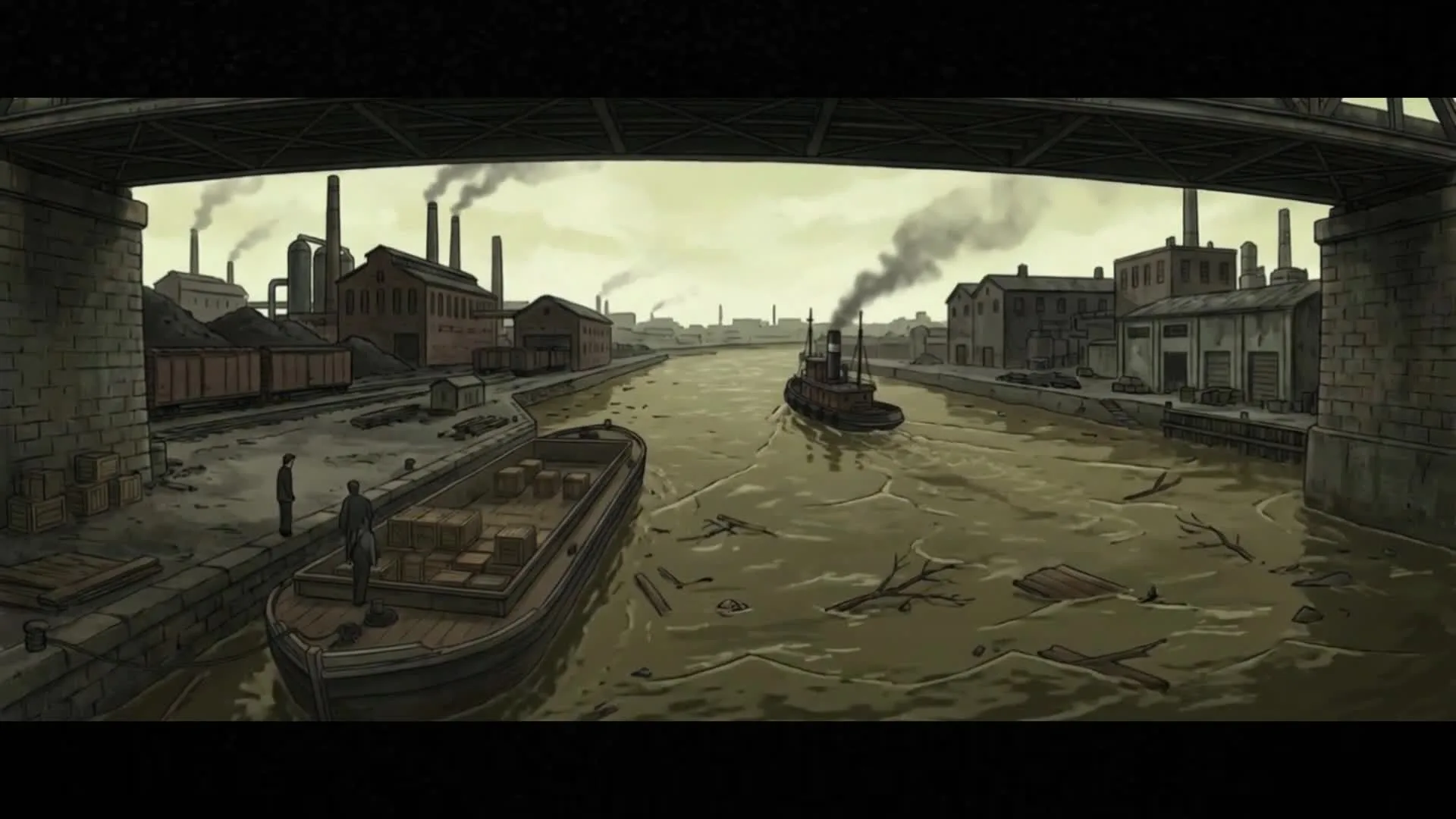
April 8, 1938. The Cuyahoga River, near Superior Avenue. Barge workers reported a partial body in the water to Cleveland Police. The remains — the lower torso and legs of a white woman — were recovered by police divers over the following day. The remainder of the body was recovered piecewise across April 8 to May 2, 1938 from multiple locations along the river. The head was never recovered. Fingerprints could not be lifted — the hands had been separately dumped and were never located. Cuyahoga County Coroner Samuel Gerber conducted the autopsy. His finding: same signature, same technique, same killer. The Cleveland Plain Dealer reported the discovery on its front page. Ness's public statement stressed the continuing investigation. His private communications, per his later accounts to Fraley, expressed something closer to despair. He had held Sweeney for two weeks. He had a polygraph result. He had released him. Six weeks later, another body. If Sweeney was the killer, he had walked out of the Hotel Cleveland, sobered up, and gone back to work. Ness had one move left. It was neither legal nor conventional.
1 min. 20 sec.
Tuesday, August 16, 1938. East 9th Street lakeside dump. Downtown Cleveland. A discarded lot on the lakeshore, used by the city as informal waste disposal. In direct line-of-sight from Eliot Ness's office windows at Cleveland City Hall, four blocks west. Passersby reported to police the presence of two burlap-wrapped bundles at the lot. The bundles contained the dismembered remains of a white male and a white female. Both had been decapitated. Both had been dismembered with the same signature technique. Neither has ever been identified. They are catalogued as Victim 11 and Victim 12 of the Cleveland Torso Murders. Cuyahoga County Coroner Gerber confirmed the killer's signature was consistent with the previous ten. Cleveland Police estimated that the bodies had been placed at the site within the previous 12 to 24 hours. The site's specific visibility from Ness's office was, per every subsequent analysis of the case, understood as deliberate. The Butcher had made his final statement — placing his last two victims in Ness's field of vision. Ness looked out his window and saw the crime scene. He had two days left before he did the most controversial thing of his career.
1 min. 13 sec.
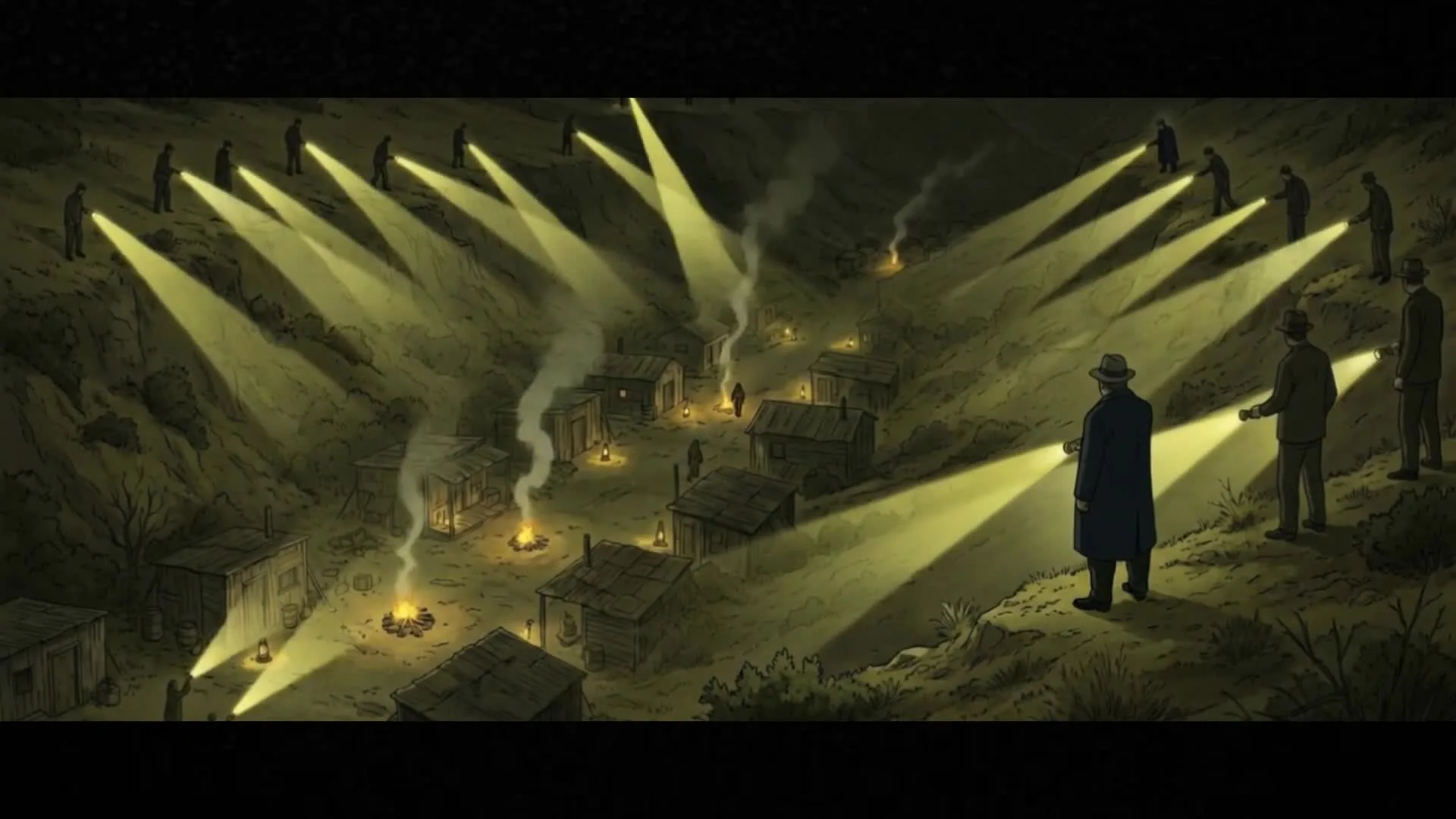
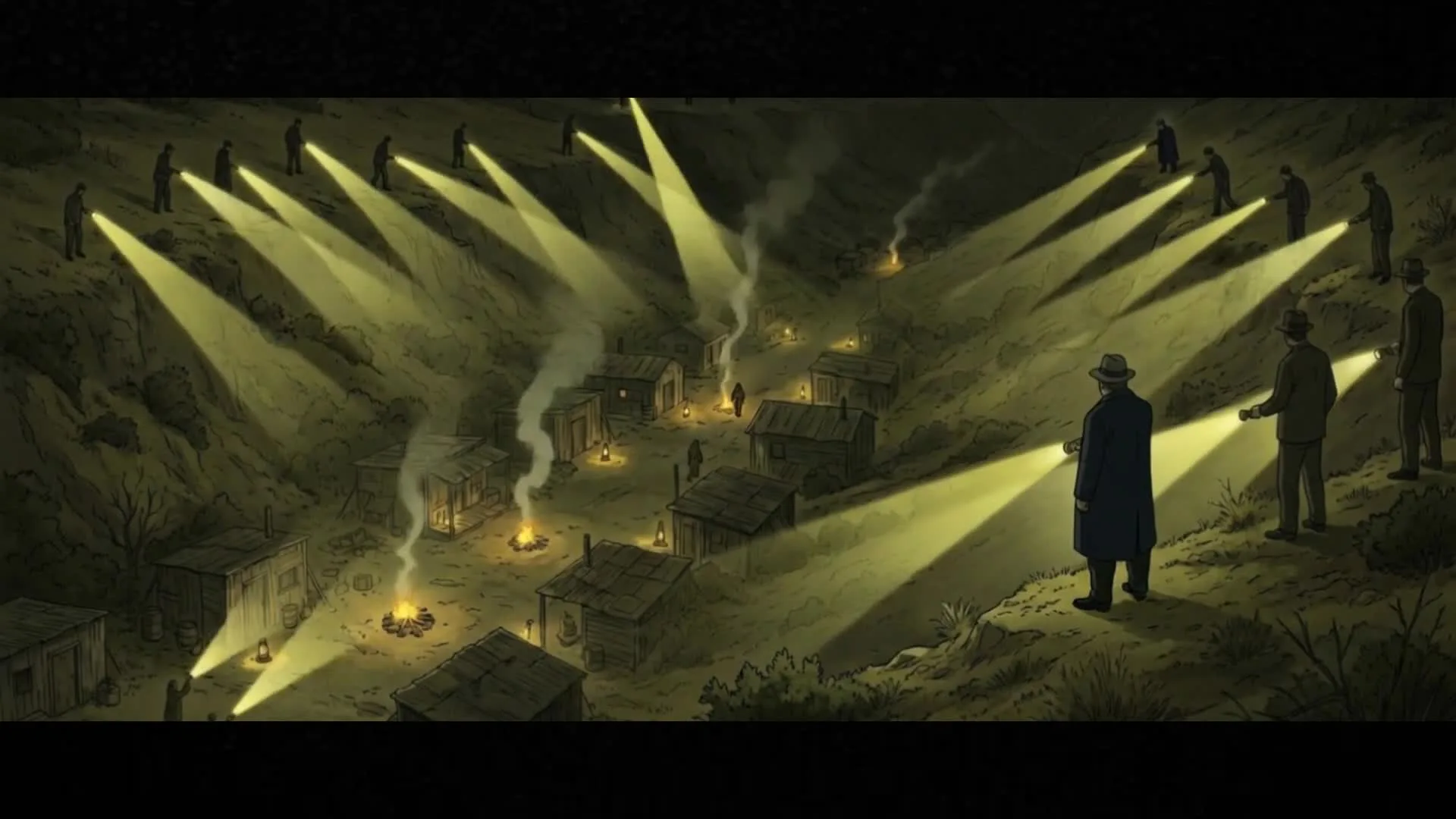
August 18, 1938. Approximately 12:40 a.m. Kingsbury Run, Cleveland. Ness personally led a squadron of 35 Cleveland Police detectives into the shantytown. The raid was accompanied by Cleveland Fire Department units. Sixty-three men were arrested on charges of vagrancy. Every arrested individual was photographed and fingerprinted at the Central Police Station. Following the arrests — before dawn — the Cleveland Fire Department set fire to the shantytown's approximately 100 scrap-wood dwellings. The dwellings burned to the ground within hours. The 63 arrested men, having no legal residence to return to, were held on the vagrancy charges. The city then transported them out of Cleveland via the freight lines that ran through the Run. Ness's stated public justification was the identification of potential victims. His private justification, per his subsequent accounts to Fraley, was that the killer's hunting ground had to be eliminated by any means available. The Cleveland Press called it draconian. Ness never publicly defended it. He also ended the Kingsbury Run killings. After August 16, 1938, no new Butcher victim was ever recovered in Cleveland.
1 min. 19 sec.
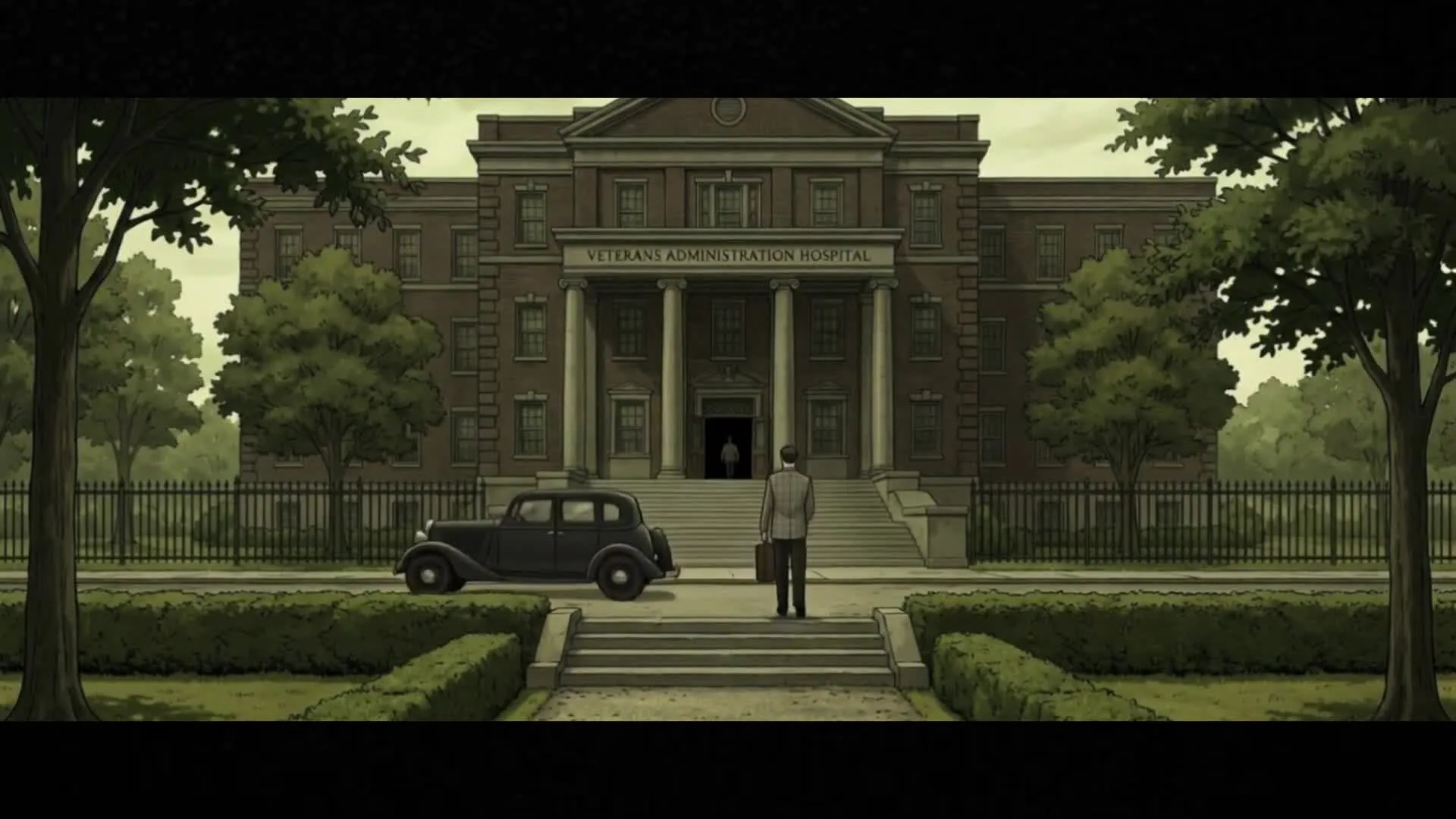
August 25, 1938. Sandusky Soldiers and Sailors Home. Sandusky, Ohio. Dr Francis E. Sweeney arrived at the veterans' hospital and requested voluntary admission for treatment of alcoholism. He was formally committed. He remained institutionalised for the majority of the remainder of his life. He was discharged briefly on several occasions between 1939 and the mid-1940s but re-committed himself each time. From August 25, 1938 forward, no new victim of the Cleveland Torso Murderer was ever recovered. The temporal correlation between Sweeney's voluntary commitment and the cessation of killings was noted at the time by Ness and by Cleveland detectives. It could not, at the time, be publicly acted upon. Sweeney's commitment was not a criminal detention. He was free to leave. The Cleveland Police maintained informal surveillance on his admissions and discharges throughout the following decade. The murders did not resume. Sweeney died at the veterans' hospital on July 9, 1964, at the age of 70. He was never charged. He was never publicly named as a suspect in his lifetime. He is, by every serious modern analysis, the killer. He is also a man who died a free American citizen.
1 min. 13 sec.
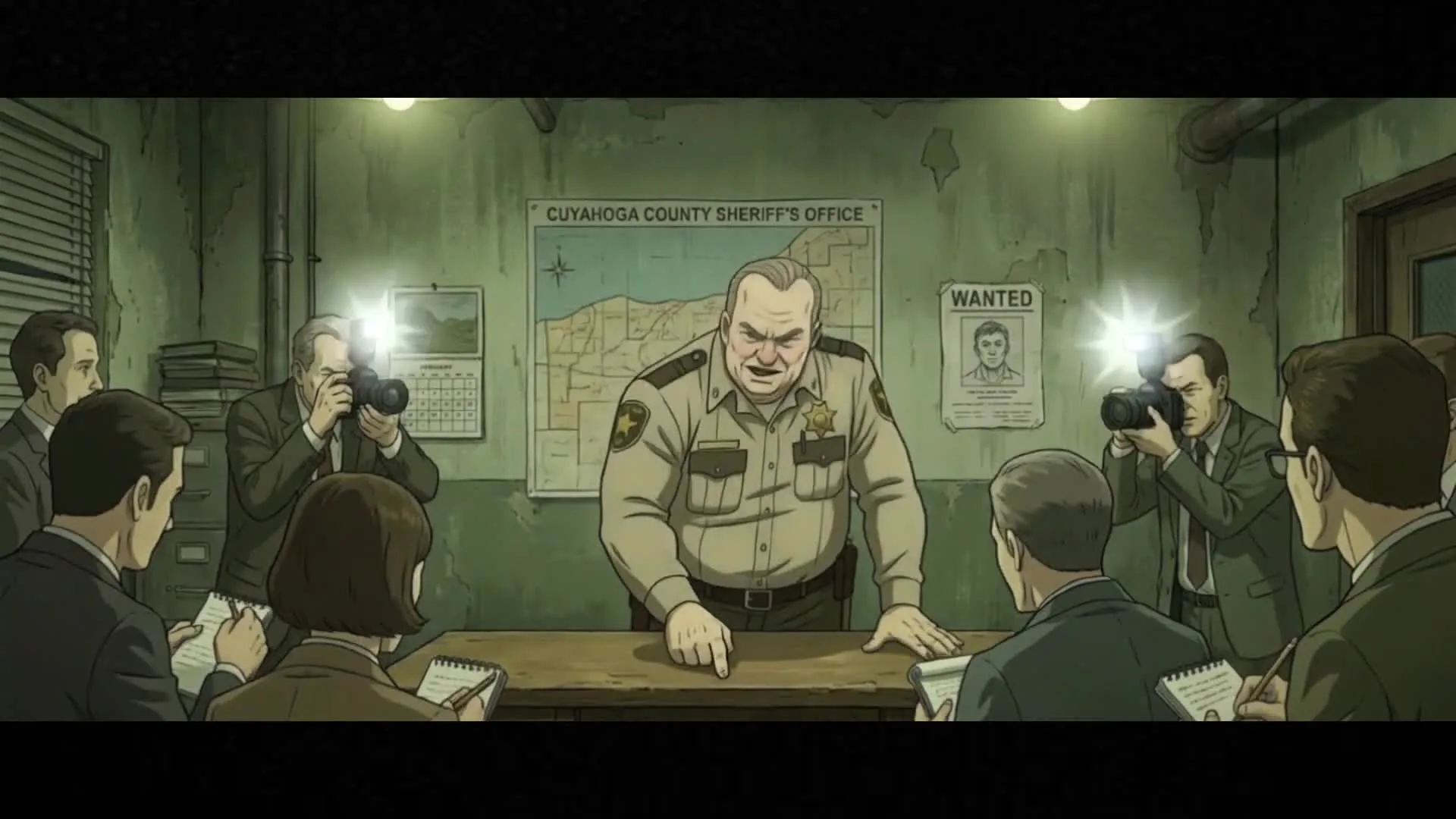
July 5, 1939. Cuyahoga County. Sheriff Martin L. O'Donnell — a Cleveland political figure with an active rivalry with Eliot Ness — announced the arrest of Frank Dolezal, 52, for the January 1936 murder of Florence Polillo. Dolezal was a Cleveland-area bricklayer who had known Polillo socially. The arrest bypassed the Cleveland Police entirely. It was a Sheriff's Department action. Dolezal was held at the Cuyahoga County Jail. Over the following days, per O'Donnell's public statements, he confessed multiple times to Polillo's murder. The confessions were internally contradictory. Dolezal recanted them within weeks. He stated, per his attorney's subsequent legal filing, that he had been beaten into confessing. On August 24, 1939, Frank Dolezal was found hanged in his cell at the Cuyahoga County Jail. The official cause of death was suicide. His post-mortem examination found six fractured ribs he had not had at intake. The Dolezal case was a wrongful arrest that ended in a suspicious jail death. Ness declined to comment. O'Donnell was removed from office in 1941. Dolezal has never been officially exonerated. He remains, on paper, the only man convicted of anything in the Cleveland Torso case.
1 min. 19 sec.
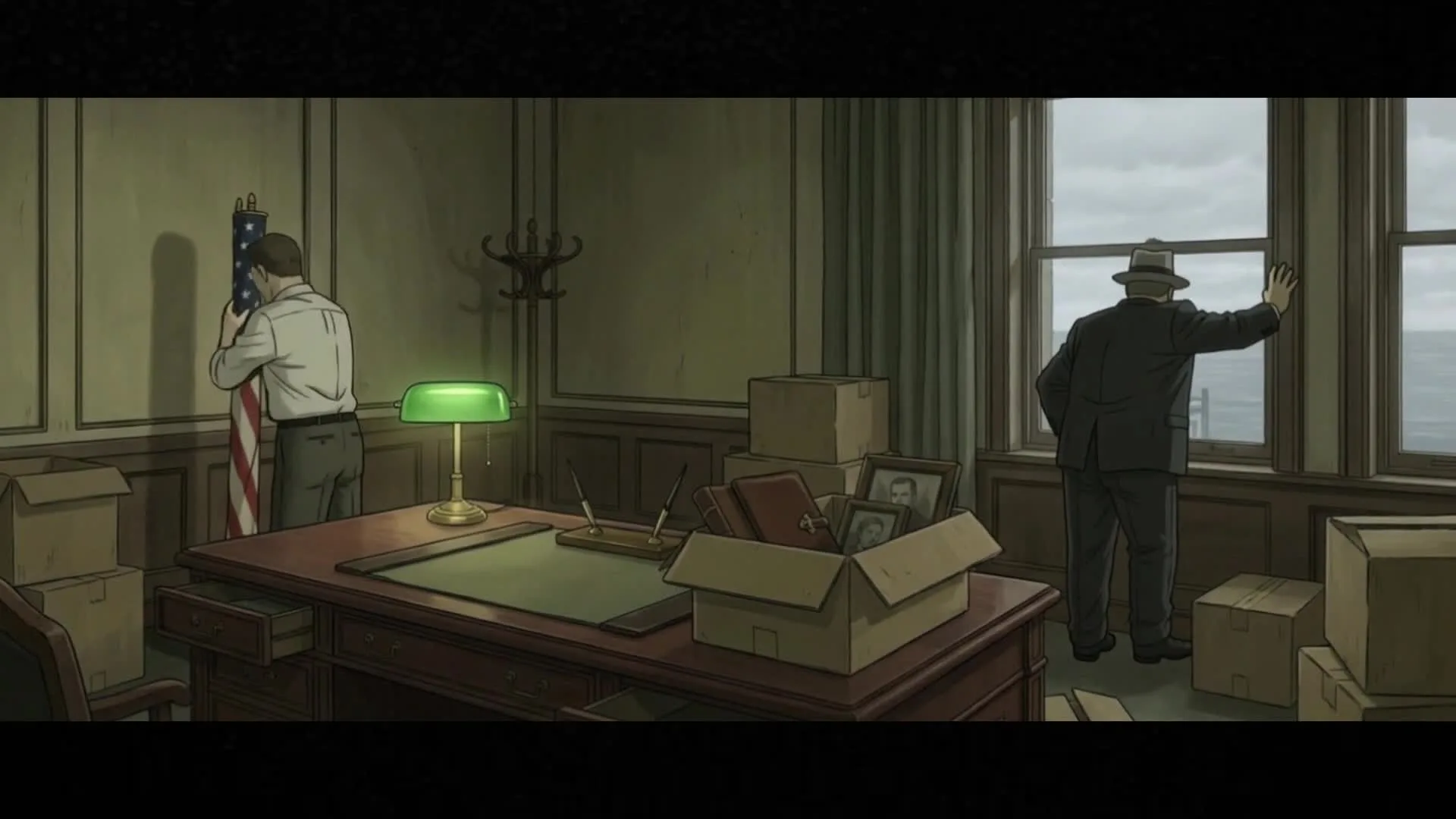
1942. Ness resigned as Cleveland Safety Director. His marriage to first wife Edna had ended. His public image had been damaged by a 1942 drink-driving incident. In 1947, Ness ran unsuccessfully for Mayor of Cleveland. He lost by more than 60,000 votes. In 1953, Ness moved to Coudersport, a small town in northern Pennsylvania, and joined a paper-check-printing company. In 1956, he began collaboration on his memoirs with journalist Oscar Fraley. On May 16, 1957, Eliot Ness died of a heart attack at his Coudersport home. He was 54. The Untouchables was published posthumously later that year. The book made almost no reference to the Kingsbury Run case. Detective Peter Merylo died the following year, 1958, still working the file privately. Dr Francis Sweeney died at the Sandusky veterans' hospital in 1964, having never been charged. The Kingsbury Run file at the Cleveland Police Department remains open. Twelve confirmed victims. Three named. Nine never identified. No one ever tried. Ness put Al Capone in prison and then spent ten years unable to prosecute a man for twelve murders in his own city. He died believing he knew who did it. He died knowing he had never proved it. The room where the twelve were killed has never been found.