
The Story of O.J. Simpson
20 episodes
outofnowhere
- True Crime
Following a highly controversial "not guilty" criminal verdict that deeply divided the nation, a civil court later found Simpson legally liable for the deaths, ordering a $33.5 million judgment
Following a highly controversial "not guilty" criminal verdict that deeply divided the nation, a civil court later found Simpson legally liable for the deaths, ordering a $33.5 million judgment
All episodes
20 episodes
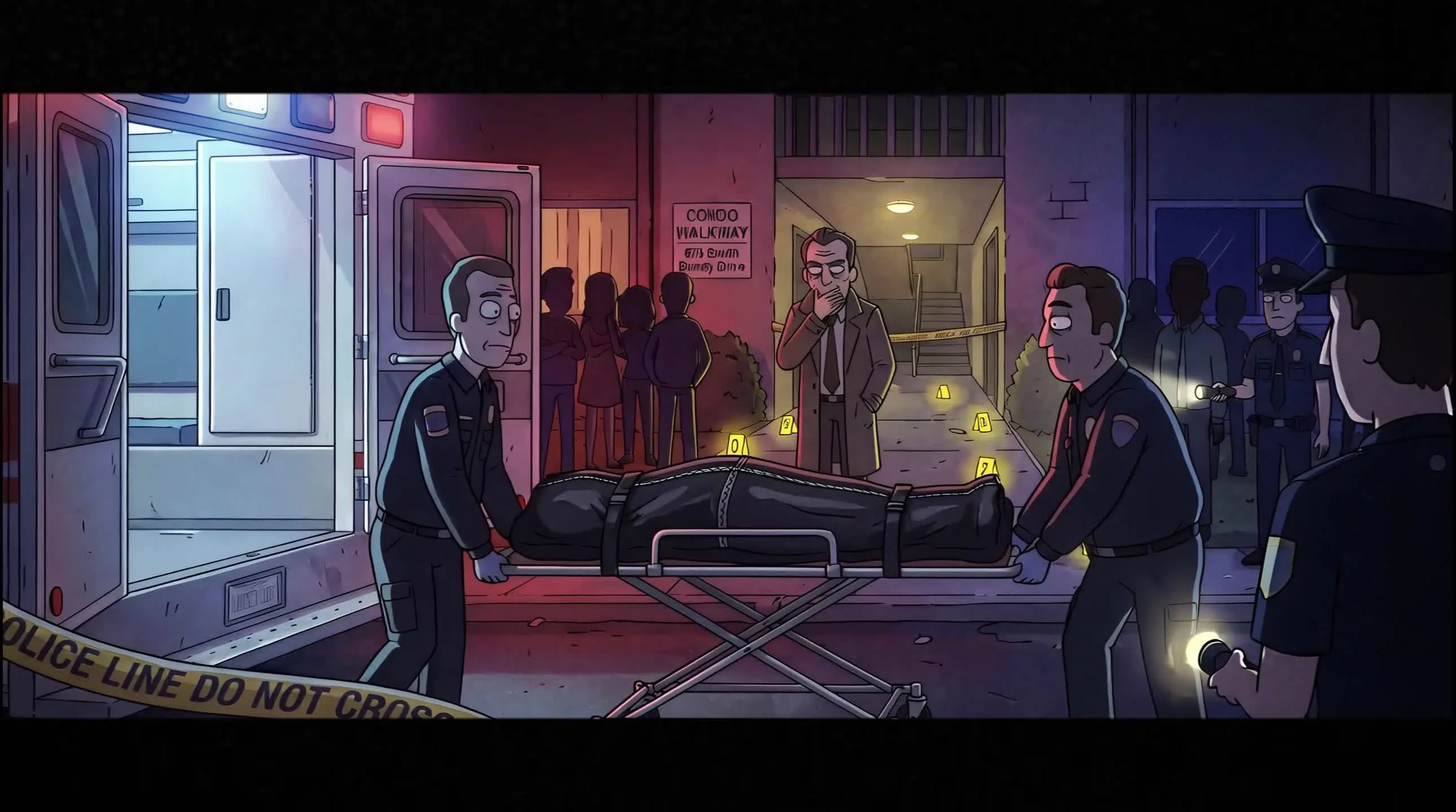
Two Bodies on Bundy Drive
1:18
Two Bodies on Bundy DriveJune 12, 1994. Just past midnight, a Brentwood woman walking her dog discovered two bodies on the walkway outside 875 South Bundy Drive. The first was Nicole Brown Simpson, 35, the ex-wife of NFL Hall of Famer O.J. Simpson. The second was Ronald Goldman, 25, a Mezzaluna restaurant waiter who had come by to return a pair of eyeglasses Nicole's mother had left at his workplace. Both had been stabbed to death. LAPD Detective Mark Fuhrman was among the first officers on scene. He walked the perimeter. He noticed a single bloody leather glove near a rear fence. He memorised the killer's shoeprints. He knew whose house was two miles away.
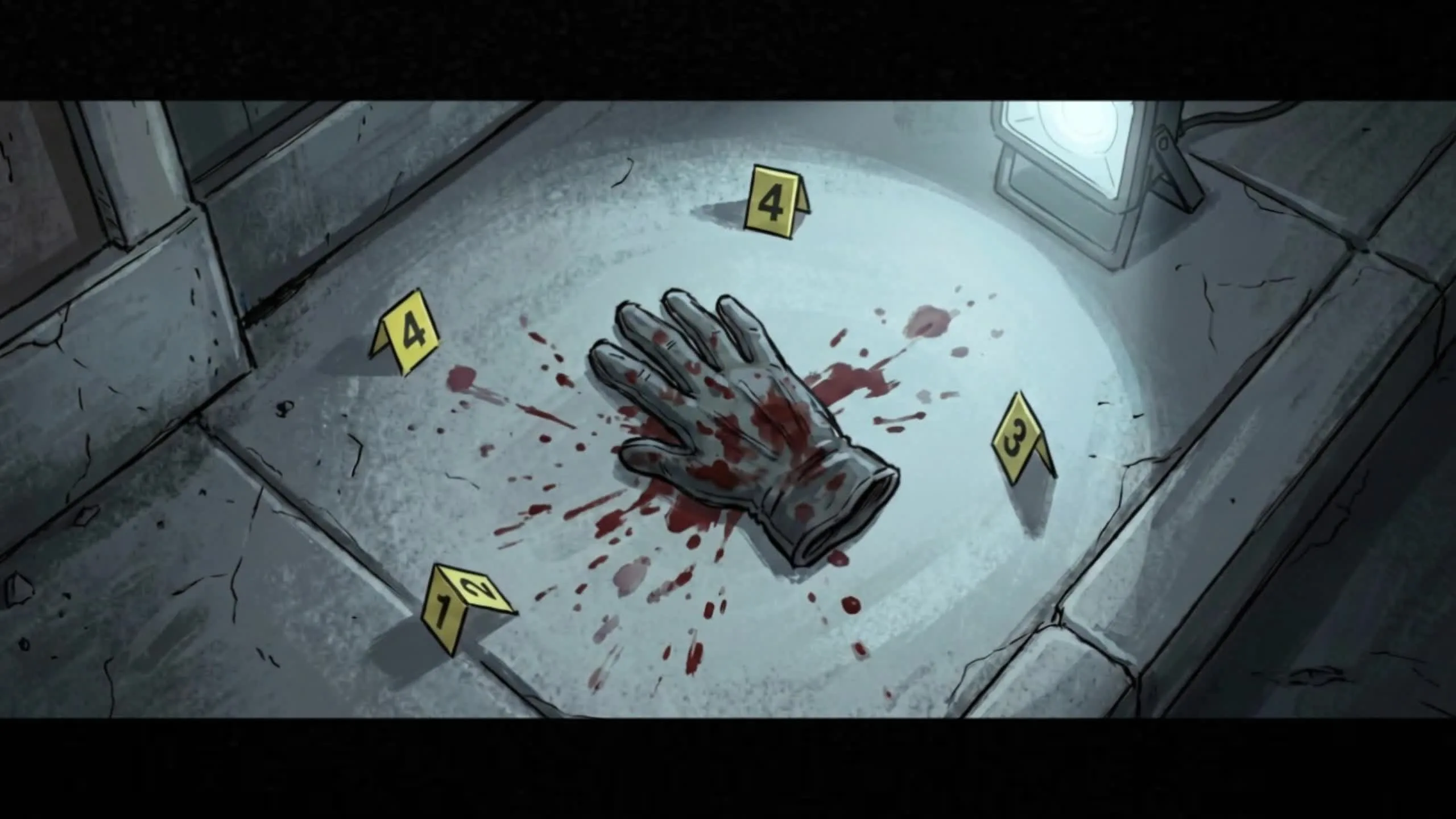
The Glove at Rockingham
1:01
The Glove at RockinghamLater that same morning, four LAPD detectives — Ronald Phillips, Tom Lange, Philip Vannatter, and Mark Fuhrman — drove to O.J. Simpson's Rockingham estate to notify him of his ex-wife's death. They found his white Ford Bronco parked outside the property, with what appeared to be blood on the door handle. They climbed the perimeter wall. Fuhrman found a second bloody leather glove behind the guest house. It matched the glove at the Bundy Drive murder scene. The detectives had not yet obtained a search warrant. The glove had already been photographed in place. The Brentwood crime scene was no longer only on Bundy Drive. It was now also at Rockingham.
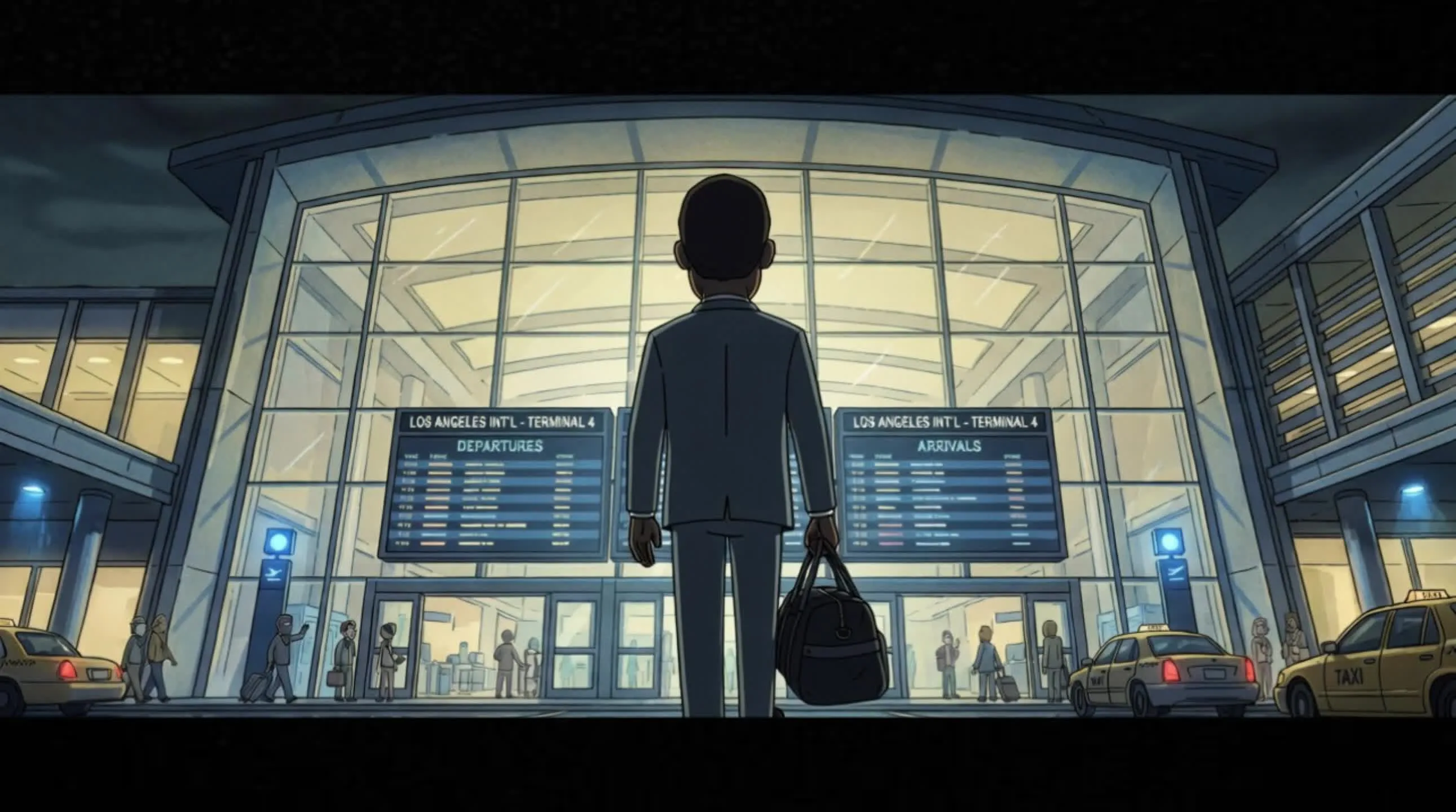
The Red-Eye
1:08
The Red-EyeWhile Nicole Brown Simpson and Ronald Goldman's bodies were still being processed by the LAPD, O.J. Simpson was on American Airlines Flight 668, a red-eye from Los Angeles to Chicago. He had boarded shortly before 11:45 p.m. on June 12 — hours after the killings. He was in first class. He was carrying a small black bag he would not permit any flight attendant to touch. He arrived in Chicago at 5:30 a.m. and checked into the O'Hare Plaza Hotel. He would be notified of Nicole's death by phone at approximately 6:00 a.m. He flew back to LA on the first available flight.
The Interview
0:59
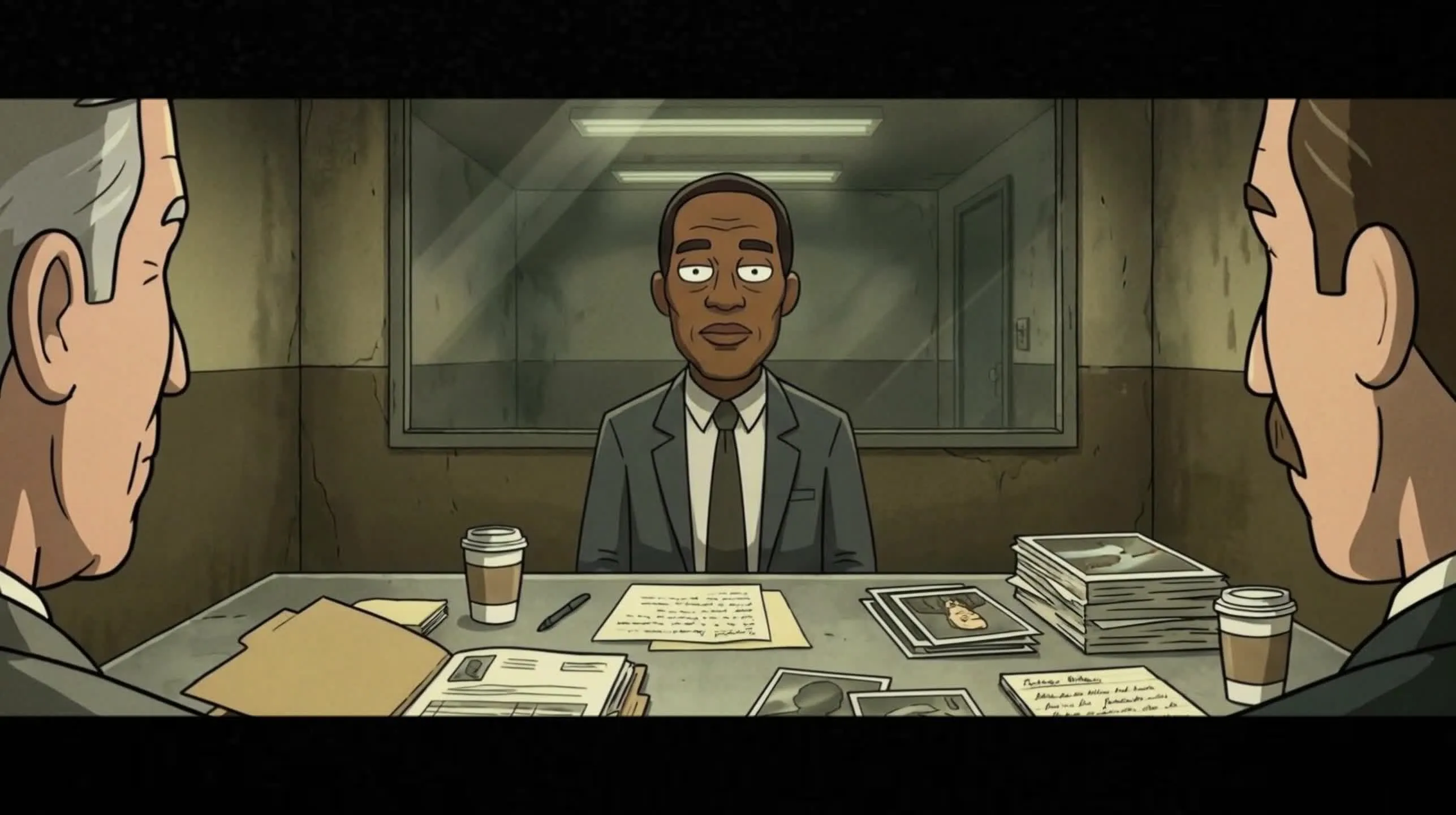
The InterviewJune 13, 1994. LAPD Central Division. O.J. Simpson agreed to be interviewed by Detectives Vannatter and Lange. The questioning lasted 32 minutes. He provided three different accounts of how he had cut his left middle finger. He could not explain the blood in his Bronco. He could not account for his whereabouts between 9:45 p.m. and 10:55 p.m. on the night of the killings. He was not arrested. He walked out of the front doors of Parker Center. Television cameras caught him on the steps. The next time he left a public building, he would leave in handcuffs.
The Charges
0:55
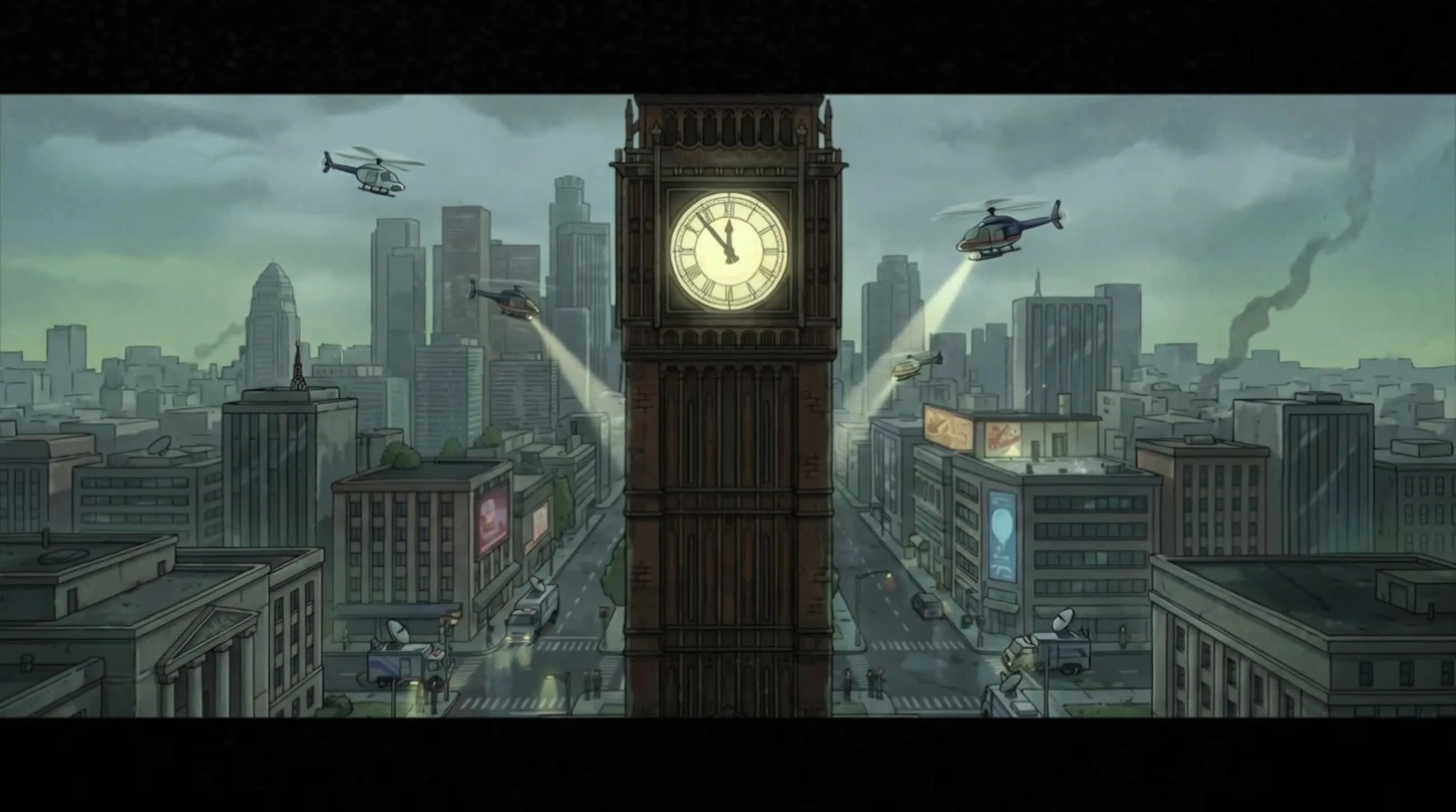
The ChargesJune 17, 1994. The LAPD had obtained enough evidence to charge O.J. Simpson with two counts of first-degree murder. His attorney Robert Kardashian was told to bring him in by 11:00 a.m. or the LAPD would send a tactical team. The deadline came. Simpson did not appear. Kardashian did not know where he was. Detectives arrived at the Rockingham estate to find both Simpson and his longtime friend Al Cowlings missing. A search of Simpson's guest bedroom found a letter he had written the previous night — a farewell letter — along with $8,000 in cash, a fake beard, a passport, and a loaded revolver.
The Note
1:05
The Note5:30 p.m. June 17, 1994. Robert Kardashian stood in front of every television camera in Los Angeles and read O.J. Simpson's farewell letter aloud to the American public. The letter contained the line — 'First, everyone understand, I had nothing to do with Nicole's murder.' It ended with the sign-off 'Peace and love. O.J.' To everyone watching, it sounded like a suicide note. Kardashian read it in a shaking voice. Behind him, the LAPD was already mobilising. Fifty minutes later, a motorist on the 405 freeway dialled 911. He was driving behind a white Ford Bronco. O.J. Simpson was in the back seat. He was holding a gun to his head.
The White Bronco
0:57
The White Bronco6:45 p.m. June 17, 1994. Ninety-five million Americans turned on their televisions and watched a white Ford Bronco crawl up the 405 freeway at 35 miles per hour. Al Cowlings was driving. O.J. Simpson was in the back seat with a .357 revolver against his own temple. Los Angeles County Sheriff's Department vehicles followed at a distance of approximately 200 yards. Helicopter news crews from every American network broadcast the pursuit live. Fans lined the freeway overpasses holding signs of support. The chase lasted 90 minutes. It became, and would remain, the most-watched live event in American television history to that point.
The Surrender
1:00
The Surrender8:50 p.m. June 17, 1994. The Bronco pulled into the driveway of Simpson's Rockingham estate. He did not exit for another 45 minutes. He remained in the back seat with the revolver against his head, negotiating by cellular phone with LAPD SWAT commander Peter Weireter. At 8:50 p.m. he stepped out onto his own driveway carrying a photograph of his mother and his passport. He was arrested on his own front lawn on two counts of first-degree murder. Bail was denied. The case was assigned to Judge Lance Ito, a 44-year-old veteran of the Los Angeles Superior Court who had just become the most famous trial judge in America.
The Dream Team
0:46
The Dream TeamWithin seventy-two hours of his arrest, O.J. Simpson had assembled the most expensive criminal defence in American history. Robert Shapiro as lead counsel. Robert Kardashian. F. Lee Bailey. Alan Dershowitz of Harvard Law School. Barry Scheck and Peter Neufeld of the Innocence Project, brought on as DNA specialists. Johnnie Cochran, who would ultimately assume the lead role. The team was, within 48 hours of formation, christened by the American press as the Dream Team. Their combined billed fees would exceed six million dollars across the following 15 months. They were, by any measure, the most powerful defence table ever assembled in an American murder trial.
Marcia and Chris
1:13
Marcia and ChrisAcross the aisle from the Dream Team sat two Los Angeles County Deputy District Attorneys. Marcia Clark, 41, a veteran of the office's special-trials unit, was assigned as lead prosecutor. Christopher Darden, 38, was brought on partly to counter the racial dynamics the case had taken. They were paid, combined, approximately $190,000 a year. They were about to be outspent thirty to one. On January 24, 1995, Clark stood in Department 103 of the Los Angeles Criminal Courts Building and told the jury that there was 'a trail of blood from Bundy through his own Ford Bronco and into his house in Rockingham.' She believed they would convict him.
The DNA
1:04
The DNAThe prosecution's case was built on DNA. Blood at the Bundy Drive murder scene. Blood in the Ford Bronco. Blood in Simpson's bedroom. Blood on his socks. Blood on the driveway leading up to his own front door. The DNA statistical probability that the blood had come from anyone other than O.J. Simpson was one in 9.7 billion. There was, at that point, only one O.J. Simpson on Earth. The prosecution presented the DNA evidence across seven weeks of expert testimony. It was, by every objective forensic measure, overwhelming. It would, however, be systematically undermined by the defence over the following two months.
The Glove
0:57
The GloveJune 15, 1995. Christopher Darden made the worst decision of his career. He asked O.J. Simpson to try on the pair of bloody leather gloves the LAPD said were the killer's. Simpson stood up. He pulled the gloves on over a pair of latex undergloves the court had required for evidence-preservation purposes. He turned his hands slowly. He looked at the jury. The gloves did not fit. Simpson repeated across the courtroom — 'They're too small.' The image would be broadcast globally for the next 25 years. That night, Johnnie Cochran sat in his Westwood office and rewrote his closing argument. He wrote a single line at the top of the fresh legal pad. By midnight, he knew he was going to win.
Mark Fuhrman's Tapes
1:03
Mark Fuhrman's TapesAugust 1995. The defence obtained twelve hours of audio tapes recorded years earlier by North Carolina screenwriter Laura Hart McKinny. The tapes contained interviews with LAPD Detective Mark Fuhrman — the officer who had discovered the bloody glove at the Rockingham estate. On the tapes, Fuhrman used the n-word forty-one times. He described planting evidence, beating suspects, and expressed openly racist views throughout. He had, during earlier trial testimony, sworn under oath that he had not used the word in the previous ten years. He had committed perjury on the witness stand. The defence played the tapes for the jury. The prosecution's key evidence-scene witness had been destroyed.
If It Doesn't Fit
1:00
If It Doesn't FitSeptember 27, 1995. Johnnie Cochran delivered his closing argument. He spoke for six hours across two days. He walked to the jury box holding up the bloody leather glove. He looked at the twelve members of the jury. He delivered the line he had written on the fresh legal pad on the night of June 15. 'If it doesn't fit, you must acquit.' He repeated the line five times across the closing argument. He built the entire summation around it. The jury retired to deliberate on October 2, 1995. Marcia Clark had been awake for 76 hours. She believed the science was on her side. She had four hours to learn how wrong she was.
Four Hours
0:54
Four HoursOctober 2, 1995. The jury deliberated for less than four hours before reaching a verdict. They sent a note to Judge Ito at 3:00 p.m. — 'We have reached a verdict.' Ito announced that the verdict would be read the following morning at 10:00 a.m. to permit the counsel and family members time to gather. Across America, everything stopped. That night, for the only time during the fifteen-month trial, the prosecution team did not sleep. Marcia Clark called her mother. Christopher Darden sat alone at the prosecution table after everyone else had gone home. He stared at the gloves. He stared at the DNA charts.
The Verdict
0:56
The Verdict10:07 a.m. October 3, 1995. The jury foreperson handed the verdict envelope to the court clerk. The clerk read it aloud. Not guilty on the count of murdering Nicole Brown Simpson. Not guilty on the count of murdering Ronald Goldman. Fifty seconds. It was, by every measure of American television history, the longest fifty seconds ever broadcast. An estimated 150 million Americans watched live. Outside the courtroom, the country split along racial lines on live television. Black audiences cheered. White audiences sat in stunned silence. The verdict had not just ended a trial. It had revealed a country that had spent the past nine months watching the same trial and seeing two different cases.
The Civil Trial
1:05
The Civil TrialFebruary 4, 1997. Fred Goldman had refused to accept the verdict. Ronald Goldman's father filed a civil wrongful-death lawsuit against O.J. Simpson in Santa Monica Superior Court. Under California civil law, the burden of proof was 'preponderance of the evidence' — 51 percent — rather than the criminal standard of 'beyond a reasonable doubt.' Simpson was compelled, in the civil trial, to testify under oath. He denied all involvement. The civil jury deliberated for two days. They found him legally liable for the deaths of Nicole Brown Simpson and Ronald Goldman. They ordered him to pay the Goldman and Brown families a combined $33.5 million in compensatory and punitive damages. He never paid.
If I Did It
1:00
If I Did ItNovember 2006. Twelve years after the killings, O.J. Simpson signed a $600,000 book deal with HarperCollins subsidiary ReganBooks. The book was titled If I Did It. In it, Simpson described in hypothetical detail exactly how he would have committed the murders, had he committed them. Fred Goldman denounced the project as psychological torture. HarperCollins cancelled the publication under public pressure. In a subsequent bankruptcy proceeding, the manuscript's rights were awarded to the Goldman family in partial satisfaction of the civil judgment. The Goldmans published the book themselves in 2007 with an added subtitle — 'Confessions of the Killer.' It became a bestseller.
The Las Vegas Raid
1:02
The Las Vegas RaidSeptember 13, 2007. Palace Station Hotel. Las Vegas. O.J. Simpson and five associates — two of them armed — burst into Room 1203, where two memorabilia dealers were displaying items from Simpson's football career. Simpson claimed the items had been stolen from him and that he was recovering his own property. The dealers filed a police report. Simpson was arrested. He was tried in Las Vegas the following year on 12 counts including armed robbery and kidnapping. On December 5, 2008, Judge Jackie Glass sentenced him to 33 years in the Nevada state prison system, with parole eligibility after nine. He served nine years and one day. He was paroled on October 1, 2017.
The Juice
0:49
The JuiceApril 10, 2024. Las Vegas, Nevada. O.J. Simpson died at his home from prostate cancer. He was 76 years old. The $33.5 million civil judgment had, at the time of his death, grown with interest to over $114 million. It remained substantially unpaid. The Goldman and Brown families had, across the 27 years since the civil trial, collected approximately $132,000. The original 1994 murder case remained officially unsolved in the criminal record of the State of California. Nicole Brown Simpson would have turned 65 in 2024. Ronald Goldman would have turned 55. They had left behind two parents, three children, and a country still arguing, thirty years later, about what it had seen in 1995.